
Lieferung heute & morgen

Qualitätsgarantie

Willkommens-Angebote freischalten: KOSTENLOSE Lieferung | Bis zu 80 % RABATT | Kostenlose 30-Tage-JoyPlus-Testphase
App herunterladen
A blender should do more in everyday life than simply puréeing fruit. Depending on your household, you may want to prepare smoothies, shakes, soups, sauces, cocktails and ice, or chop vegetables and nuts. The choice ranges from a compact smoothie maker to a versatile high-performance blender and a food processor with cutting and kneading attachments.
However, marketing claims such as “powerful”, “multifunctional” or “suitable for all ingredients” are not always enough. What matters is whether the motor power, jug, blades, controls and cleaning requirements match the tasks you actually want to perform.
A 1000-watt blender may be suitable for frozen fruit and ice. However, wattage alone does not indicate how effectively the power is transferred inside the jug. Blade design, rotational speed, jug geometry and the permitted operating time are equally important.
A 500-watt appliance may be sufficient for soft fruit, sauces and smaller quantities. For regular ice crushing or very firm ingredients, however, the product description should provide specific information about the ice-crushing function, the blades and how the appliance should be used.
A jug with a capacity of 2.1 litres does not automatically offer 2.1 litres of usable liquid capacity. With many appliances, the maximum fill level is lower. If you are cooking for a family, preparing meals in advance or making several smoothies, it is therefore worth checking the stated maximum liquid capacity.
The material also affects how the blender can be used:
An extensive range of accessories is only practical if the attachments can be stored safely and cleaned easily. Removable blades, discs and containers make maintenance easier. A dishwasher-safe blender can save time, although the instructions should clarify which parts are actually suitable for cleaning in the dishwasher.
When handling sharp blades, unplug the appliance before dismantling it, never touch the blades directly and never immerse the motor unit in water.
For smoothies made from soft fruit, a general-purpose blender with moderate power is often sufficient. If you regularly process frozen berries, nuts or ice, look for a suitable blade arrangement and an explicitly stated pulse function. Short pulses can provide more control when roughly chopping ingredients or crushing ice than continuous high-speed operation.
Models with several speed settings are useful if you want to achieve different consistencies: low settings for rough mixing and higher settings for smooth purées. A high maximum rotational speed is not a substitute for correct fill quantities and pauses to allow the motor to cool.
For a single-person household or small portions, a jug holding between approximately 1.0 and 1.5 litres is often sufficient. Families benefit from larger jugs, but must take the maximum liquid capacity into account. Also check the height of the appliance: a tall blender will not fit beneath every kitchen wall cupboard.
If you also want to chop, grate, knead or grind ingredients, consider a food processor rather than a standalone blender. These appliances generally require more storage space, but cover several preparation methods.
Look for non-slip feet, a jug locking mechanism and a lid with a secure closure. A BPA-free blender may appeal to buyers who want to avoid contact with plastics containing BPA. The specific material information should be stated directly in the product details.
For everyday use, removable parts that are suitable for the dishwasher are practical. However, glass jugs and stainless-steel blades can be heavier. With plastic jugs, follow the manufacturer’s information regarding scratch resistance, temperature limits and cleaning.
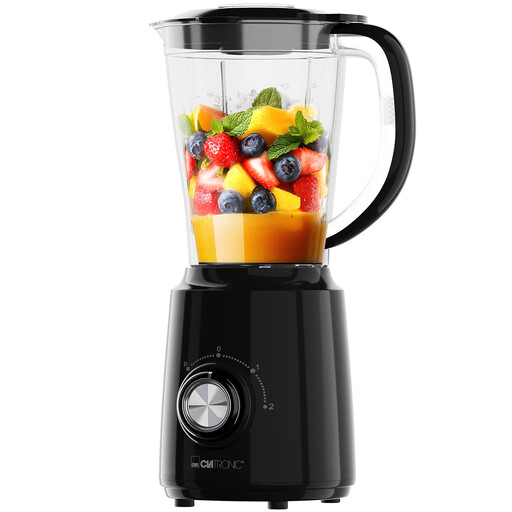
Why this product suits the profile: This general-purpose blender has a 1.5-litre jug, four speed settings, plus pulse and ice-crush functions for everyday tasks.
The product details specify the jug capacity, motor power and functions instead of relying solely on a general multifunction claim.
BPA-free, removable 1.5-litre jug; removable four-part stainless-steel blades and a filling opening in the lid.
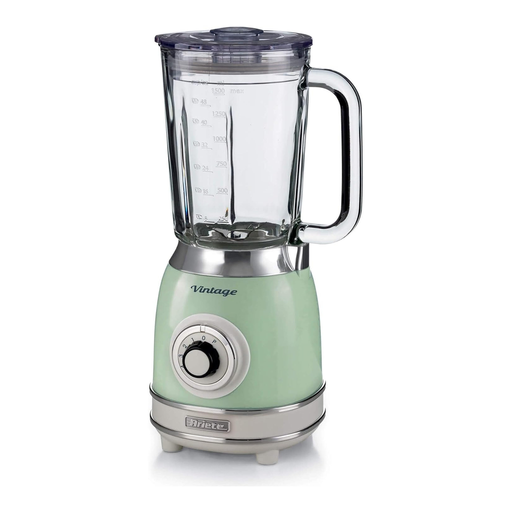
Why this product suits the profile: This blender combines a 1.5-litre glass jug with a 1000-watt motor and four speed settings for smoothies, soups and cold drinks.
The specifications list the glass jug, stainless-steel blades, four speed settings, pulse function and ice crushing separately. This makes it easier to compare the functions with your own requirements.
Glass jug; 1000-watt motor with four speeds plus pulse function; components stated as dishwasher-safe in the product details.
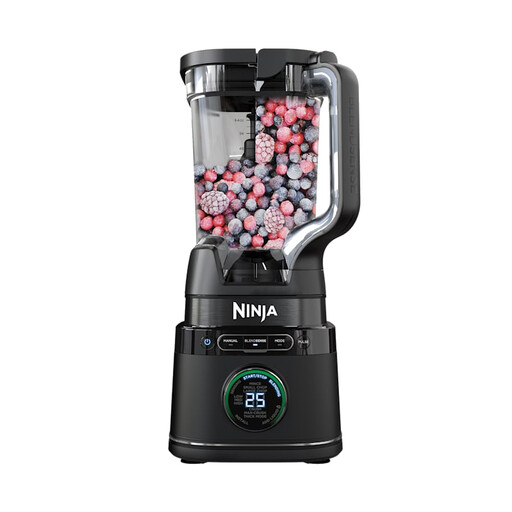
Why this product suits the profile: The 2.1-litre jug is designed for larger quantities, with a stated maximum liquid capacity of 1.9 litres.
The product details clearly distinguish between total volume and maximum liquid capacity. This reduces the risk of overfilling the jug during everyday use.
1000-watt motor; six stainless-steel blades and Total Crushing System; BPA-free jug with removable dishwasher-safe parts.
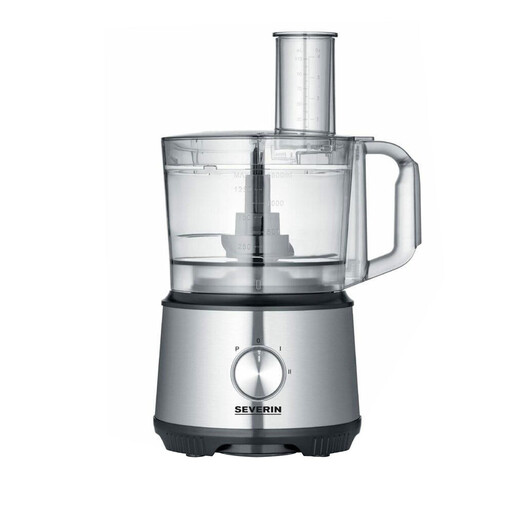
Why this product suits the profile: For households that want to knead, grind, grate, slice and emulsify as well as blend, this appliance offers several specialised attachments.
Instead of choosing a standalone blender with functions you do not need, frequent users get clearly specified tools for dough, slicing, grating and emulsifying.
1200-watt power; accessories for kneading, grinding, slicing, grating and emulsifying; parts stated as dishwasher-safe in the product details.
We have put together a complete, regularly updated list of products that fully meet these strict selection criteria and the safety regulations applicable in the EU.
Ongoing electricity costs depend on power, usage time and your electricity tariff. A 1000-watt appliance uses approximately 0.167 kilowatt-hours when operated for ten minutes. For short blending cycles, consumption is correspondingly lower. Suitable fill quantities, regular pauses and compliance with the maximum operating time are more important for the appliance’s lifespan.
Only process hard ingredients if the manufacturer permits this. A blender should not be run empty. Check the seals, blades and jug regularly for signs of wear or damage. If the jug is cracked or the blades are damaged, continuing to use the appliance is not advisable.
For smoothies, a sufficiently large jug, stainless-steel blades and several speed settings are useful. When processing frozen ingredients, the appliance should also specify a pulse or ice-crush function. A compact smoothie maker may be enough for individual portions, while families generally need a larger capacity.
That depends on how you intend to use it. Glass is heavier, taste-neutral and less prone to scratching. Plastic is lighter and often more practical for everyday handling. With both variants, check the maximum fill level, approved temperature range and cleaning instructions.
It is not possible to give a reliable general lifespan. This depends on how frequently the appliance is used, the ingredients processed, how well it is maintained and whether the operating limits are followed. Avoiding overfilling the jug, processing hard ingredients only as instructed and cleaning removable parts carefully will reduce typical strain on the motor, seals and blades.