
Lieferung heute & morgen

Qualitätsgarantie

Willkommens-Angebote freischalten: KOSTENLOSE Lieferung | Bis zu 80 % RABATT | Kostenlose 30-Tage-JoyPlus-Testphase
App herunterladen
A blender should do more in everyday life than simply process fruit. Depending on the model, you can prepare smoothies, shakes, soups, sauces, baby food, ice cubes and chopped ingredients. The range extends from compact smoothie blenders and classic jug blenders to multifunction blenders with chopping and grinding attachments.
To avoid unnecessary follow-up costs, it is worth taking a close look at the design, accessories and cleaning requirements. Marketing terms such as “High Speed”, “Professional” or a high wattage alone say little about whether a kitchen blender is right for your household.
A 1000-watt blender or a model rated at 1300 watts may offer more power reserve for certain tasks. However, wattage alone does not determine blending quality. Blade design, jug geometry, speed control and the permitted operating time are equally important.
A smaller appliance is often sufficient for soft fruit and shakes. If you regularly want to crush ice, grind nuts or process larger quantities, you should also look for the relevant stated function and suitable accessories.
A blender with a chopper, slicing discs, whisk or grinder can replace several individual appliances. This is practical if you will actually use the attachments. However, many accessories require additional storage space and must be cleaned individually.
Before buying, consider which tasks you really carry out in everyday life: is a stick blender enough for soups and sauces, or do you need a multifunction blender for dough, vegetables, spices and ice?
Dried-on residue on blades, lids and seals makes daily use more time-consuming. A dishwasher-safe blender can make cleaning easier, although the manufacturer’s instructions for each individual part must be followed. Motor units should never be put in water or in the dishwasher.
With plastic jugs, a BPA-free blender or BPA-free jug may be relevant. “BPA-free” refers to the stated material property and is not a general quality promise for the entire appliance.
A jug blender is suitable for larger portions and a straightforward process: add the ingredients, secure the lid, then select a programme or speed. Models with a usable capacity of 1.2 to 1.5 litres are often a good fit for families or for preparing several portions. However, they take up more space on the worktop.
A stick blender is used directly in a saucepan, measuring jug or bowl. It saves space and is practical for soups, purées, sauces and baby food. With a whisk and chopper, it becomes a versatile kitchen helper. For very large quantities or particularly airy smoothies, a jug blender is often the more suitable design.
The jug size should suit the size of your household. A 600-ml cup is suitable for a single portion, while a 1.5-litre jug can hold several glasses or a larger recipe quantity. The key figure is the maximum fill level, not just the total volume printed on the product.
Glass is less prone to retaining odours and becoming discoloured, but it can be heavier. Plastic is lighter and practical for portable or compact appliances. When blending hot liquids, follow the instructions in the user manual. Not every blender is designed for boiling-hot ingredients.
Stainless steel blades are standard on many appliances. Several speed settings or a pulse function are useful for achieving different consistencies. A stated ice-crushing function should only be used as instructed and with suitable quantities of ice cubes.
On some models, safety interlocks prevent operation if the jug, lid or attachment has not been fitted correctly. Overheating protection and pauses between operating cycles can support safe use. With sharp blades, always unplug the appliance before dismantling, cleaning or changing attachments.
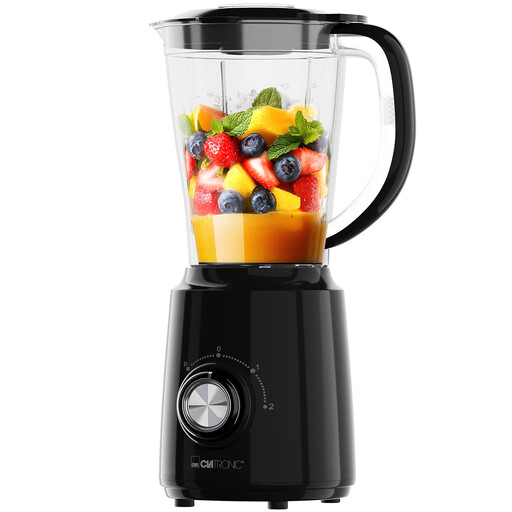
Why this product suits this profile: This jug blender offers a 1.5-litre jug, three speed settings plus Turbo, and a dedicated ice-crushing function for everyday drinks and simple dishes.
The 500-watt rating is supported by specific features: a removable BPA-free jug, stainless steel blades and an automatic safety shut-off.
1.5-litre capacity and removable four-blade assembly for smoothies, sauces, soups and cold drinks.
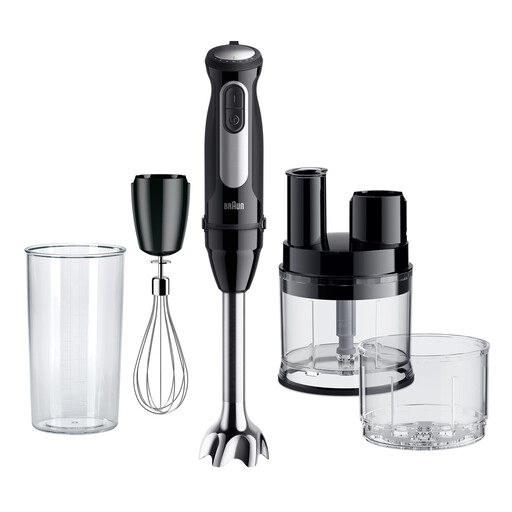
Why this product suits this profile: This 1000-watt stick blender combines 25 speed settings plus Turbo with an extensive range of accessories for different preparation methods.
Rather than simply highlighting high motor power, this set offers variable control and EasyClick Plus for changing attachments.
Metal blending foot, whisk, chopper, slicing and grating disc, plus BPA-free 600-ml measuring jug; according to the product details, removable parts are dishwasher-safe.
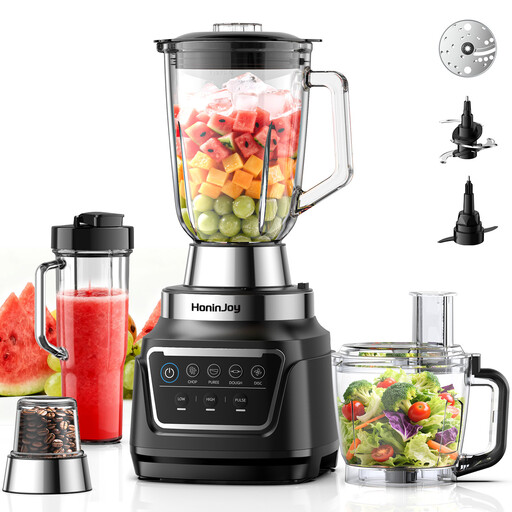
Why this product suits this profile: This system is designed for meal prep and a wide range of kitchen tasks: smoothies, soups, chopping, grinding, slicing and grating.
The functions are assigned to individual containers and programmes. This makes it easier to check before buying whether the accessories suit your own recipes.
1300-watt maximum power, 1.5-litre glass jug, 2-litre food processor bowl and 80-ml grinding container; according to the description, removable parts are suitable for the top rack of the dishwasher.
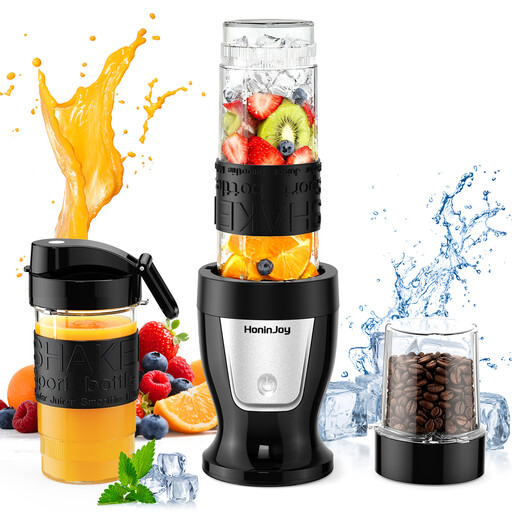
Why this product suits this profile: Two portable BPA-free cups with capacities of 20 and 14 oz are suitable for single portions at home, in the office or on the go.
The compact design avoids the need for a large jug blender when you mainly prepare shakes and smoothies for one person.
650-watt motor with pulse function, grinding cup and dishwasher-safe cups according to the product description.
We have put together a complete, regularly updated list of products that fully meet these strict selection criteria and the safety regulations applicable in the EU.
For blending soups directly in a saucepan, a stick blender with a removable metal blending foot is practical. For cold smoothies and larger quantities, a jug blender with a sufficiently large jug is a good choice. When working with hot liquids, follow the manufacturer’s instructions on temperature, lid position and fill level.
Its lifespan depends on how often it is used, the ingredients, cleaning and the pauses between operating cycles. Hard or frozen ingredients should only be processed if the instructions permit this. Overfilling and extended continuous operation can put additional strain on the motor. Regularly cleaning the blades, seals and jug helps ensure reliable use.
You can calculate the electricity cost based on the actual power consumption: power in kilowatts multiplied by operating time and the current electricity price. As a blending cycle usually lasts only a few minutes, the duration of use is often more important than the maximum wattage. Functions, portion size and cleaning effort therefore remain important points of comparison when choosing a blender.