
Lieferung heute & morgen

Qualitätsgarantie

Willkommens-Angebote freischalten: KOSTENLOSE Lieferung | Bis zu 80 % RABATT | Kostenlose 30-Tage-JoyPlus-Testphase
App herunterladen
A blender should work reliably in everyday use, be easy to clean and fit the available space in your kitchen. However, impressive wattage figures, large containers or a wide range of programmes do not automatically guarantee the right choice. What matters is how you will actually use the appliance: for individual smoothies, family-sized portions, frozen ingredients, soups or drinks on the go.
A high motor power rating may sound convincing at first. On its own, however, it says little about how the motor, blade design, container and controls work together. A personal blender with 300 to 650 watts may be sufficient for soft fruit, liquids and individual portions. For larger quantities, nuts or frequent ice crushing, a sturdy construction and suitable blade arrangement are particularly important.
The stated power rating may also be presented in different ways. Check whether it refers to the rated power or peak power. The information should be clear and verifiable in the product description and instruction manual.
A 1.5-litre container does not always offer 1.5 litres of usable capacity. The maximum fill mark must be observed to prevent pressure from building up and the contents from overflowing. For families, countertop blenders with a container capacity of around 1.5 to 2.1 litres are practical. If you usually prepare just one portion, you will generally not need a large container.
With To-Go cups, you should also distinguish between the total capacity and the maximum blending volume. For example, the Ninja Blast Blender has a 530-ml cup, with a stated maximum blending capacity of 470 ml.
A dishwasher-safe blender can make everyday life easier, but not necessarily every component will be suitable for the dishwasher. Often, only the removable container, lid and blade attachment can be placed in the dishwasher. The motor unit must never be immersed in water and should be cleaned with a damp cloth.
A blender with a glass container is robust and less prone to retaining odours, but it is heavier than Tritan or plastic. BPA-free containers are an important purchasing criterion for many households. Look for clear material specifications for the container, lid and drinking cup.
For smoothies made with soft fruit and protein shakes, a compact smoothie maker is often sufficient. Frozen fruit and ice place greater demands on the appliance. A blender with an ice-crush function should have a suitable blade arrangement and a control function designed for this purpose.
Several speed settings provide better control over the consistency. A Pulse function is useful when ingredients need a short burst of blending or ice needs to be crushed in portions. When processing hard ingredients, it is important to follow the manufacturer’s instructions and not run the motor continuously for longer than specified.
A portable battery-powered blender is suitable for the office, gym or travel, but it does not automatically replace a powerful blender for large quantities. With battery-powered appliances, check the charging time, maximum fill level and the hardness of ingredients they can process.
Look for a safety interlock, non-slip feet and a firmly locking lid. The blades are sharp and must not be touched with your fingers, either during operation or while cleaning. Hot liquids should only be processed if the instruction manual explicitly permits this. Several models carry warnings against using hot or boiling liquids.
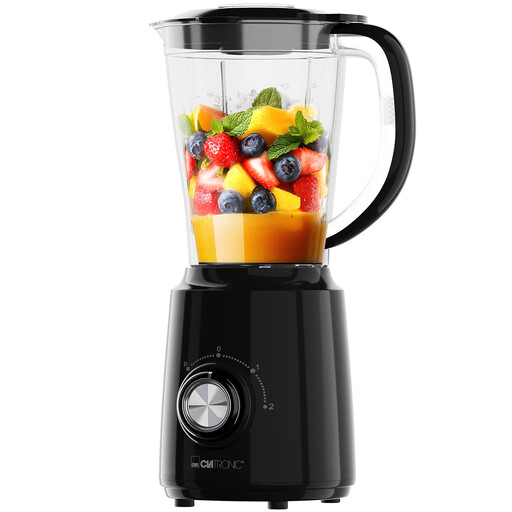
Why this product suits the profile: This countertop blender offers a 1.5-litre container, three speed settings, plus ice-crush and Turbo functions for everyday household tasks.
The BPA-free blending container specification, measurement scale and removable stainless-steel blades make important material and cleaning details clear.
500-watt motor, 1.5-litre container, refill opening and dishwasher-safe or removable components according to the product information.
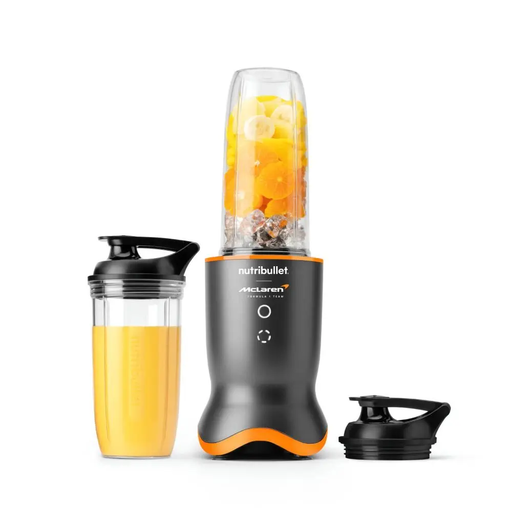
Why this product suits the profile: This personal blender combines a 1200-watt motor with two BPA-free Tritan cups with capacities of 700 and 900 ml.
The product data explicitly states the motor power, cup sizes, materials, Pulse function and limited operating time.
Two To-Go cups, titanium-coated blades according to the manufacturer, illuminated control panel and dishwasher-safe cups in the top rack.
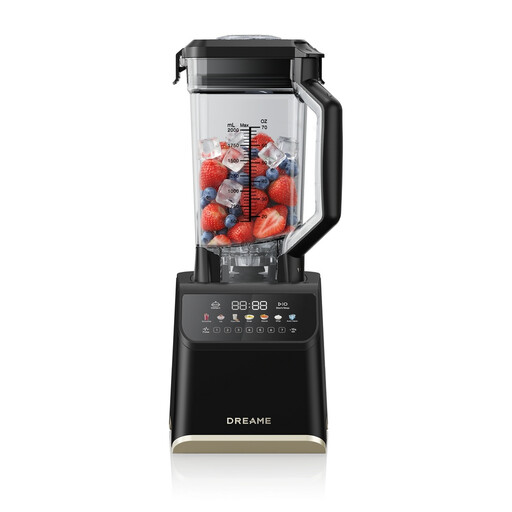
Why this product suits the profile: For larger quantities, frozen ingredients and different recipes, it offers a 2.0-litre container, a 700-ml To-Go cup and several programmes.
As well as the motor power, the product specifies maximum fill levels, a temperature limit of 60 °C and an automatic cleaning function.
2000 watts, 7 speed settings, 9 programmes, BPA-free Tritan containers and dishwasher-safe accessories according to the product information.
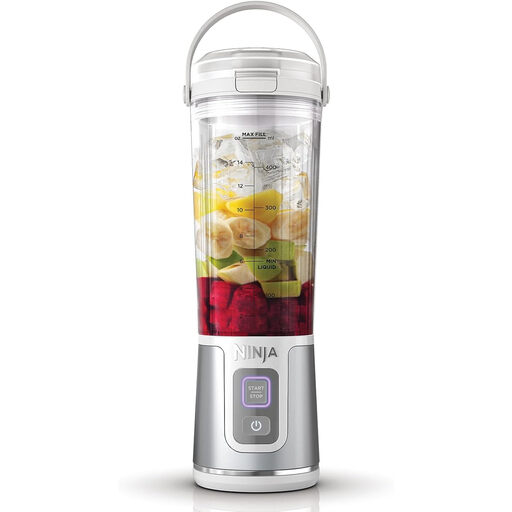
Why this product suits the profile: This portable blender works wirelessly, charges via USB-C and has an integrated 530-ml cup with a drinking lid.
The maximum blending capacity of 470 ml, charging time of around two hours and guidance on ice-cube size and cleaning are clearly specified.
USB-C battery, leak-proof lid, carrying handle and dishwasher-safe cup according to the product description.
We have put together a complete, regularly updated list of products that fully meet these strict selection criteria and the safety regulations applicable in the EU.
For individual portions, a smoothie maker or personal blender with a suitable To-Go cup is often sufficient. For frozen fruit, ice or several portions, motor power, blade arrangement and the Pulse function are more important. The maximum fill level should not be exceeded.
Its lifespan depends on how it is used, cleaned and stored. Only process ingredients that are suitable according to the instructions, follow the recommended operating times and allow the motor to cool down between multiple cycles. Blades, seals and containers should be checked regularly for damage.
Energy consumption depends on the power rating and running time. An appliance with a higher wattage uses more power while operating, but may only run for a few minutes during short blending cycles. For a household comparison, the approximate calculation is: wattage divided by 1000, multiplied by the operating time in hours, gives consumption in kilowatt-hours.