
Lieferung heute & morgen

Qualitätsgarantie

Willkommens-Angebote freischalten: KOSTENLOSE Lieferung | Bis zu 80 % RABATT | Kostenlose 30-Tage-JoyPlus-Testphase
App herunterladen
A fridge is one of those appliances that runs every day and needs to work reliably for years. Yet eye-catching product claims don't always lead to the right buying decision. Often, individual features are highlighted while important details like net capacity, noise level or installation conditions receive less attention.
This guide shows what private households, singles, families, offices and holiday-home owners should look for when buying. It's not about generic rankings, but about a clear, understandable selection based on technical data and the intended use.
The litre capacity of a fridge doesn't always describe the actual space available for food. Shelves, drawers, door compartments and the freezer compartment all reduce the usable interior space. With a fridge-freezer, you should therefore check how much volume is allocated to the fridge section and how much to the freezer section.
For a single-person household, a compact fridge can be sufficient. Families, on the other hand, usually need a different layout, especially if fresh food and frozen products are stored regularly.
A fridge runs around the clock in many homes. The figure in dB is therefore more important than a general label like "whisper-quiet". A value of 39 to 40 dB can be suitable for a kitchen or office, while in a bedroom, your personal perception of noise and the room's acoustics also play a role.
You should also consider the location: uneven floors, insufficient clearance from the wall or vibrations can increase the perceived noise level.
The energy efficiency class is a relevant comparison point, but it's not the only figure that matters. The stated annual consumption in kWh is also crucial. A larger appliance can use more electricity than a smaller model, even if it has a better efficiency class.
For running costs, here's a simple guide:
A fridge with a freezer compartment is practical if you need small amounts of frozen food. However, the freezer compartment takes up space in the fridge section and, depending on the model, only offers a limited volume. If you freeze food regularly, you should consider a fridge-freezer with a separate freezer section.
With a mini fridge, the layout is especially important. A model with a total volume of 45 litres might offer 42 litres of fridge space and a 3-litre freezer compartment. This is more suited to drinks, snacks and small supplies than a full weekly shop.
Before buying, you should measure the width, height and depth of the space where the fridge will go. The following points are also relevant:
A freestanding fridge offers more flexibility in placement than a built-in appliance. For a cellar or garage, you must also check whether the model is suitable for lower ambient temperatures.
A No-Frost fridge prevents ice from forming in the freezer section using a circulating air system, which reduces the need for manual defrosting. This is particularly useful for households that store frozen goods regularly.
Compact appliances, on the other hand, often use manual defrosting. A mechanical temperature control is simple to operate, but usually offers less convenience than an external display with touch sensors.
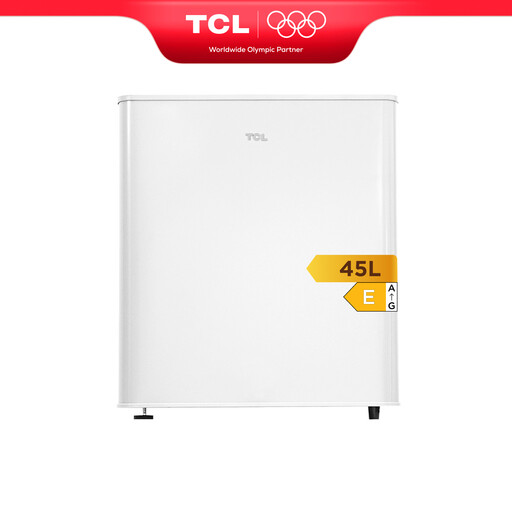
Why this product fits the profile: This compact mini fridge has a total volume of 45 litres, takes up little floor space and is ideal for single people, offices, bedrooms or small kitchens.
The clear layout with 42 litres of fridge space and a 3-litre freezer compartment makes the available storage capacity easy to understand. The product data also states 40 dB and mechanical temperature control.
Compact dimensions of 449 × 485 × 512 mm, adjustable feet and an adjustable glass shelf.
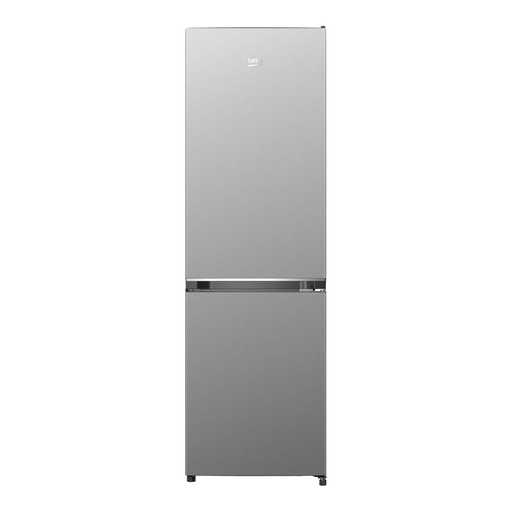
Why this product fits the profile: This fridge-freezer is aimed at households that need 250 litres of total net capacity, separate sections and features for daily organisation.
The product details separate 180 litres of fridge space and 70 litres of freezer space. No-Frost technology reduces the need for manual defrosting; the annual consumption is stated as 172 kWh.
39 dB, reversible door hinge, external temperature control and a stated operating range down to -15 °C.
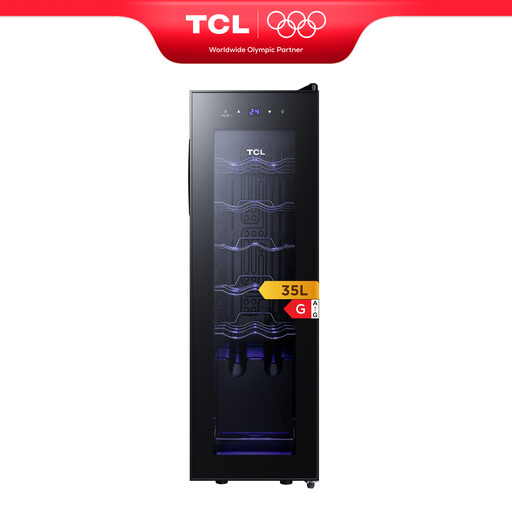
Why this product fits the profile: This wine cooler is designed to store up to 12 bottles and fits into living areas, offices or private drinks zones with limited space.
The stated capacity of 35 litres and the design for 12 bottles make it easy to check whether the interior space matches your intended stock. The ventilation openings must not be blocked.
Glass front, compact design and thermoelectric cooling. The appliance should be placed in a dry location and connected to a properly earthed socket.
We've put together a full, regularly updated list of products that fully meet these strict selection criteria and the safety regulations in force in the EU.
The need depends on your shopping habits, household size and how much you freeze. Singles or couples can manage with a compact model, while families often need more fridge space and a separate freezer zone. The litre capacity should always be considered alongside the interior layout.
The lifespan depends on factors including usage, location, ventilation, cleaning and maintenance. A general guarantee cannot be given. Regularly removing dust from accessible areas, keeping the door seal in good condition and ensuring the appliance is level can help support trouble-free operation.
To do this, multiply the stated annual consumption in kWh by your individual electricity price per kWh. The result is a guide, as actual consumption, room temperature, loading and frequency of use can vary. An energy-efficient fridge should therefore be chosen to match the size you need.