
Lieferung heute & morgen

Qualitätsgarantie

Willkommens-Angebote freischalten: KOSTENLOSE Lieferung | Bis zu 80 % RABATT | Kostenlose 30-Tage-JoyPlus-Testphase
App herunterladen
A fridge is one of those appliances that often remains in use for many years. That is why the consequences of a poor choice may not become apparent when you unpack it, but only during everyday use: the door may not open fully, energy consumption may be higher than expected or the interior may not be large enough for your weekly shop.
Three common purchasing pitfalls occur particularly often:
For a one-person household, office or guest room, a small fridge with a capacity of around 45 to 100 litres may be sufficient. A mini fridge can often be placed under a worktop or in an ancillary room. Models with a small freezer compartment offer extra flexibility, but do not replace a full-size fridge freezer.
Depending on their shopping habits, couples often need around 150 to 250 litres of usable capacity. Families can benefit from a fridge freezer with separate compartments and an easily accessible freezer section. Larger households may wish to consider an American-style fridge freezer, a side-by-side fridge freezer or a French-door fridge freezer. However, these appliances require more floor space and sufficient room for the doors to open.
Before buying, check the following dimensions:
A freestanding fridge usually protrudes slightly beyond the kitchen units. This is normal for deeper appliances, but should be taken into account when planning the space.
The energy efficiency classes on the EU label range from A to G. The stated annual consumption in kWh is particularly relevant to running costs. This calculation provides a simple guide:
Annual consumption in kWh × your electricity price per kWh = approximate annual electricity costs
Actual consumption depends on factors including ambient temperature, how full the fridge is, the selected temperature and how often the door is opened. An energy-efficient fridge with a smaller capacity may use less electricity than a larger model in the same class.
A No Frost fridge freezer removes moisture from the freezer compartment, thereby largely preventing ice build-up. This reduces the need for manual maintenance. With Low Frost appliances, ice can still form, although usually at a slower rate. A fridge that requires manual defrosting may be cheaper to buy, but needs regular maintenance.
Noise levels are stated in dB(A). Levels of around 35 to 40 dB can be important for open-plan kitchens, living areas or offices. The climate class indicates the ambient temperatures the appliance is designed to operate in. If you want to place a fridge in a garage, cellar or utility room, make sure you check the permitted minimum temperature.
For cars, camping and travel, a car fridge, portable cool box or compressor cool box is more suitable than a domestic appliance. Thermoelectric models can cool, and in some cases also heat, depending on the ambient temperature. Compressor models generally offer a wider temperature range and, with the right features, can also be used as portable freezers.
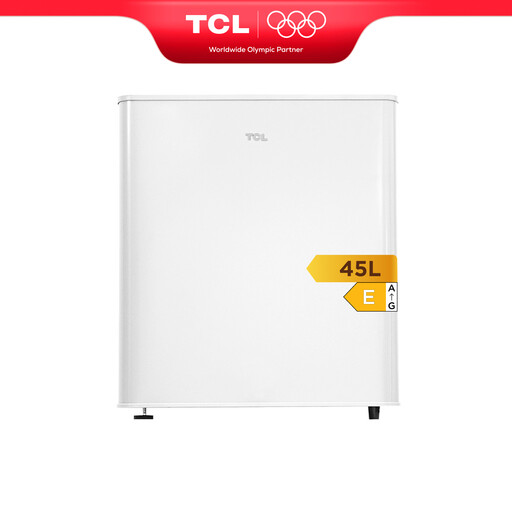
Why this product suits the profile: This 45-litre mini fridge is designed for small kitchens, offices, student flats or bedrooms. Its width of around 45 cm makes it easier to position in limited spaces.
The compact dimensions and mechanical thermostat make the space requirements and operation straightforward. Before buying, make sure the small 3-litre freezer compartment is sufficient for your needs.
45 litres of total capacity, adjustable feet, a glass shelf and a large door compartment. The stated energy efficiency class is E.
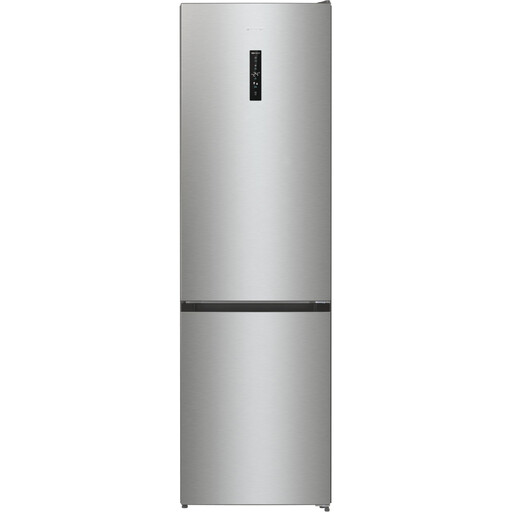
Why this product suits the profile: This model combines 235 litres of fridge capacity and 96 litres of freezer capacity with No Frost in both compartments. It is therefore suitable for families and households that want separate storage zones with minimal defrosting.
The technical specifications list usable capacity, annual consumption and noise level separately. At 158 kWh per year and energy efficiency class C, the running costs are easier to assess.
331 litres of total capacity, 35 dB, reversible doors, Super Cool and Fast Freeze functions, plus temperature and door alarms.
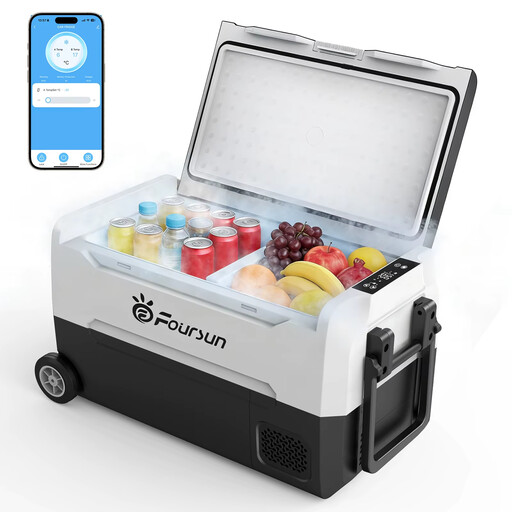
Why this product suits the profile: This compressor cool box is designed for camping, motorhomes, cars, boats and longer journeys. It operates on 12/24-V DC power and, according to the product specifications, can also be connected to 100–240-V AC power.
Unlike basic thermoelectric cool boxes, this model specifies a temperature range of -20 °C to +20 °C. When planning its use, take the power source, weight and dimensions of approximately 69.1 × 39 × 37 cm into account.
35 litres of capacity, app control, ECO mode, wheels and an external cup holder. Actual operating time depends on the power supply and ambient temperature.
We have put together a complete, regularly updated list of products that fully meet these strict selection criteria and the safety regulations applicable in the EU.
Its lifespan depends on the compressor, usage, installation location, care and ambient temperature. There is therefore no single reliable figure in years. Regular cleaning, unobstructed ventilation openings and avoiding unnecessarily long periods with the door open can help support efficient operation. When making your purchase decision, check the warranty and service conditions for the specific model.
Consumption is shown on the EU energy label in kWh per year. Small appliances generally have a lower absolute annual consumption than large side-by-side or French-door fridge freezers. For a meaningful comparison, you should therefore consider both kWh/year and usable capacity.
A fridge needs a level, stable location with sufficient air circulation. Direct sunlight and positioning it close to a cooker or radiator can be unsuitable. For a garage or cellar, the stated climate class is crucial. With portable appliances, you should also consider the vehicle socket, cable routing and secure fastening.