
Lieferung heute & morgen

Qualitätsgarantie

Willkommens-Angebote freischalten: KOSTENLOSE Lieferung | Bis zu 80 % RABATT | Kostenlose 30-Tage-JoyPlus-Testphase
App herunterladen
A highchair becomes part of daily life for many families once your little one can sit up independently. However, models differ significantly when it comes to safety features, space requirements, ease of cleaning, and how long they can be used. A high number of functions doesn't automatically mean a chair will suit your home or your child's age.
Terms like "growing highchair" or "multifunctional highchair" sound convincing at first. What really matters, though, is which age and weight limits apply to which configuration. A model may be approved as a highchair for only 15 kg, while it can bear a higher load as a junior chair. These figures must not be confused with one another.
A highchair with a tray offers space for plates, cups and toys. However, the tray is not a restraint system. For babies and toddlers, a correctly adjusted 5-point harness – or the restraint system provided by the manufacturer – is essential. Your child should always be supervised while using the chair.
A foldable highchair can be handy for storage and travel. Nevertheless, check the dimensions when it is unfolded, as well as the footprint. A model that folds up slim can take up a lot of space when opened. In small kitchens, it is also important to consider whether the chair is easy to move and whether the folding mechanism clicks securely into place.
A highchair from 6 months is generally intended for children who can sit up without support. Age alone is therefore not a sufficient selection criterion. Also pay attention to the manufacturer's information on maximum height or weight.
For everyday use, a stable backrest, a suitable seat width and a well-positioned footrest are also important. An adjustable-height highchair can adapt the seating position to both the table and your child. With a wooden highchair or a traditional wooden model, you should carefully check the construction for a firm stance, seat adjustment and harness attachment.
Look out for:
The product details should clearly state whether compliance with a standard is declared. For accessories such as a separate tray, compatibility with the specific highchair model must also be correct.
A highchair for babies and toddlers will regularly come into contact with purees, drinks and finger foods. Smooth, wipe-clean surfaces and removable covers reduce cleaning effort. For fabric seat covers, a specific washing temperature is more helpful than a general statement like "easy care".
A wooden highchair made from beech or bamboo can seem durable, but it requires different care than plastic or faux leather surfaces. Wood should not remain wet for long periods. Also check whether the tray, seat reducer or padding are included or need to be purchased separately.

Why this product fits the profile: This foldable highchair is designed for children from 6 months up to 15 kg and can be folded away for visits or storage.
The product details clearly state the age, maximum weight and folding function. The 5-point harness remains the designated restraint system, independent of the XL tray.
Height-adjustable, removable tray, storage basket and wipe-clean cover; the cover can be washed at 40 °C according to the information provided.
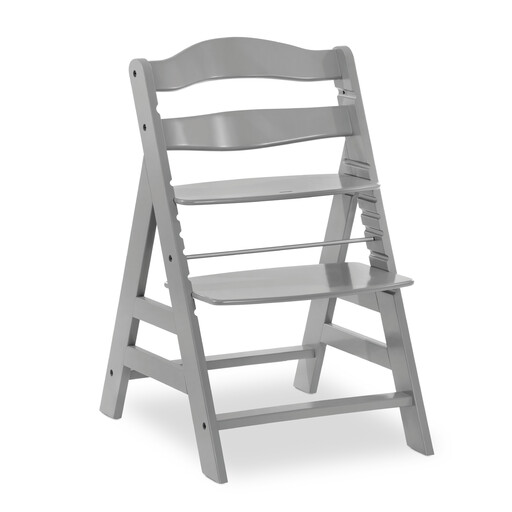
Why this product fits the profile: This height-adjustable wooden highchair is designed for long-term use at the family table and features adjustable seat and foot plates.
The usage limits and included features are listed separately. The tray is optional and is not confused with the restraint system.
European beech wood is sourced from FSC-certified suppliers according to the product information; a maximum load capacity of 90 kg and EN 14988:2017+A1:2020 are stated.

Why this product fits the profile: The 6-in-1 concept offers different seating options from a baby highchair to a junior stool, potentially replacing several pieces of furniture.
The six usage modes come with different age and weight limits. This makes it clear when the highchair configuration applies and when the junior stool configuration is valid.
5-point harness, double tray, footrest and non-slip feet; 15 kg is stated for highchair mode and up to 25 kg as a junior stool.
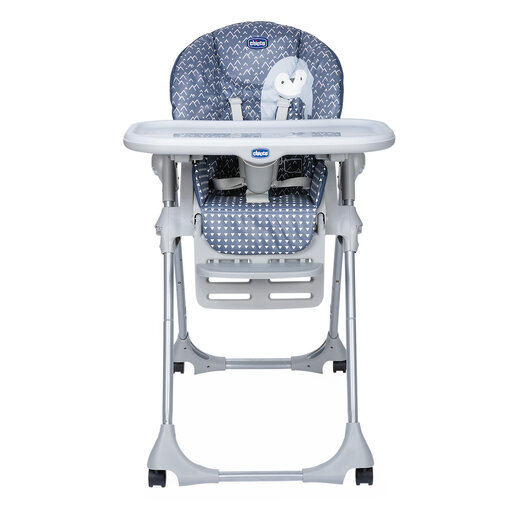
Why this product fits the profile: This model is aimed at families who need plenty of adjustment options for mealtimes and different table heights.
The seven seat heights, three backrest positions and three footrest positions are specific adjustment values. This makes customisation easier compared to vague comfort promises.
Four wheels make it easy to move around, two of which have brakes; the cover is machine washable at 30 °C according to the product information.
We have put together a complete, regularly updated list of products that fully meet these strict selection criteria and the safety regulations in force in the EU.
Many models are intended from around 6 months. However, the crucial factor is that your child can sit up independently and without support. You must also adhere to the age and weight limits specified by the manufacturer.
That depends on the construction. A classic highchair often reaches its limit at around 15 kg or approximately three years. A growing highchair can then be converted into a child's chair or stool. Check the separately stated maximum load capacity for each variant.
Smooth plastic or faux leather surfaces can usually be wiped down with a damp cloth and mild detergent. Removable fabric covers are practical if they can be washed according to the care instructions. Before buying, also check whether the tray is removable and whether it is dishwasher safe.