
Lieferung heute & morgen

Qualitätsgarantie

Willkommens-Angebote freischalten: KOSTENLOSE Lieferung | Bis zu 80 % RABATT | Kostenlose 30-Tage-JoyPlus-Testphase
App herunterladen
A juicer can make fresh juice from oranges, apples, carrots or leafy greens. However, appliances vary considerably in terms of operation, cleaning, noise levels and space requirements. If you focus only on wattage or bold marketing claims, you can easily end up buying a machine that hardly gets used in everyday life.
Typical buying pitfalls include:
Before buying, you should establish which ingredients you regularly want to process.
A citrus press, orange press or lemon press is designed specifically for citrus fruits. Electric models usually press the halved fruit without blades. This is practical if you often prepare orange, lemon or grapefruit juice in the morning.
Manual models do not require electricity and can be stored neatly, taking up very little space. A compact 2-in-1 citrus press with a 200 ml container is more suitable for individual portions than for larger family quantities.
An electric juicer with a centrifugal system often operates at a higher speed and can process larger quantities quickly. A model with 600 W, a wide feed chute and two speed settings is designed for fruit and vegetables.
Preparation is important here: oranges and grapefruits should be peeled. Ingredients that are very starchy or fibrous, such as bananas, mangoes, avocados, sugar cane or sweetcorn, can put strain on or block the sieve and cutting mechanism. The instructions provided by the respective manufacturer take precedence.
A slow juicer uses a slowly rotating pressing screw. The system separates the juice from the pulp and is suitable for users who regularly want to combine different types of fruit and vegetables. A 1-litre appliance with an 80 mm feed chute can reduce preparation time.
Pay attention to the operating time specified by the manufacturer. When processing several portions, the appliance should not run continuously for longer than stated in the instruction manual.
A portable juicer with a rechargeable battery and 300 ml cup can be useful for the office, travelling or a single portion. These appliances are often more like blenders than traditional juicers: the ingredients are processed with liquid, and the result may contain pulp. For clear juice made from carrots or apples, a countertop juicer is generally the more suitable design.
Compare at least the following details:
A wide opening does not eliminate the need to remove tough stones or skins. With citrus presses, the fruit is normally halved and placed directly onto the pressing cone.
For plastic components, a BPA-free juicer may be an important selection criterion. This should be explicitly stated in the product description. The Bear CZJ-A04B1 is listed as being made from BPA-free material according to the product information. This is manufacturer information and is not a general indication of the quality of the appliance as a whole.
Electrical appliances should only be operated with a suitable power supply. Check the following:
An easy-to-clean juicer should be able to be dismantled without tools. Smooth, easily accessible sieves and a small number of individual parts make everyday use easier. The WOOX model has removable components; the Bear Slow Juicer is described as having three main components and a cleaning brush.
Rinse the sieve and pressing chamber as soon as possible after use. Dried-on fruit fibres increase the cleaning effort. Whether parts are dishwasher-safe must be expressly stated in the relevant instructions.
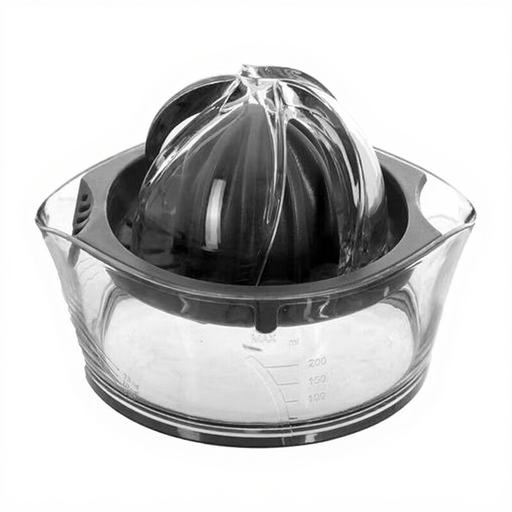
Why this product suits the profile: The manual 2-in-1 press is designed for small portions of lemon and orange juice and does not require a power connection. The integrated 200 ml container makes it easier to collect the juice.
The simple design avoids unnecessary motor, cable and sieve components. This keeps its space requirements manageable, although its capacity is limited to individual portions.
Compact dimensions, low weight and a container with a 200 ml capacity.
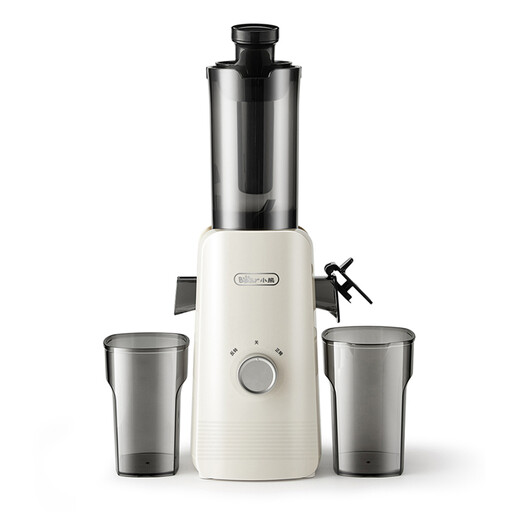
Why this product suits the profile: The slow juicer operates at 130 W, has an 80 mm feed chute and separates juice from pulp. It is suitable for households that regularly want to process fruit and vegetables.
The specified operating time of no more than 15 minutes per use sets a clear limit, helping to prevent continuous overloading. The three main components make assembly and cleaning easier.
1-litre capacity, an 80 mm feed chute, and separate juice and pulp containers.

Why this product suits the profile: This centrifugal juicer is designed for users who want to process fruit and vegetables quickly. The wide feed chute and two speed settings support a range of ingredients.
The usage instructions explicitly identify unsuitable ingredients such as bananas, avocados, sugar cane and sweetcorn. This helps prevent incorrect use and unnecessary blockages.
600 W motor, wide feed chute and removable components for cleaning.
We have put together a complete, regularly updated list of products that fully meet these strict selection criteria and the safety regulations applicable in the EU.
A citrus press is designed for halved citrus fruits. Depending on its design, a fruit and vegetable juicer can also process apples, carrots, cucumbers and other ingredients. If you mainly want to juice oranges and lemons, an orange press is usually sufficient. If you want to combine different ingredients, you should choose a centrifugal juicer or slow juicer.
Its lifespan depends on how it is used, cleaned and whether ingredients are processed correctly. The instruction manual, permitted operating time and the way you handle hard stones or fibrous foods are all important. Clean the appliance after every use and store it in a dry place. Wear parts such as sieves, seals or pressing screws should be replaced when necessary in accordance with the manufacturer’s instructions.
Consumption depends on the motor power and running time. A 30 W citrus appliance used for a short period requires considerably less energy than a 600 W centrifugal juicer. You can calculate the actual cost by multiplying the power in kilowatts by the operating time in hours and your electricity price. For occasional individual portions, a manual press may therefore be the more suitable solution.