
Lieferung heute & morgen

Qualitätsgarantie

Willkommens-Angebote freischalten: KOSTENLOSE Lieferung | Bis zu 80 % RABATT | Kostenlose 30-Tage-JoyPlus-Testphase
App herunterladen
A juicer can make preparing fruit and vegetable juices much simpler. But not every appliance is right for every household. Small feed chutes, hard-to-reach filters, or unrealistic claims about juice yield often mean a juicer ends up gathering dust after only a short time.
So before you buy, don’t just focus on wattage or marketing promises. What really matters is the type of juicer, the feed chute size, capacity, how easy it is to clean, and the ingredients you plan to use regularly.
Motor power alone doesn’t tell you much about real-world performance. A centrifugal juicer is usually fast, but it can struggle with fibrous vegetables or soft fruits. A slow juicer or cold press juicer works more slowly, feeding ingredients through a sieve via an auger.
More important than the wattage alone are:
A juicer with a large feed chute can reduce the amount of chopping needed. However, apples, carrots, or larger pieces of veg may still need preparing, depending on the model. Hard pips, large stones, and particularly fibrous ingredients can block the feed chute or the sieve.
So check the actual width of the opening and the instructions in the user manual. The feed chutes on the appliances featured here range from 80 to 135 millimetres.
A juicer that’s easy to clean should be made up of a few, easily accessible parts. Filter sieves with fine holes in particular can trap pulp. Removable juice and pulp containers make cleaning simpler. Whether parts are dishwasher-safe must be clearly stated in the manufacturer’s instructions.
After each use, you should rinse the removable parts promptly. Dried-on fruit residue makes cleaning harder, no matter what type of appliance you have.
A slow juicer crushes and presses fruit and vegetables using an auger. This type is ideal for anyone who regularly wants to make mixed juices from apples, carrots, cucumber, or leafy greens. Processing usually takes longer than with a centrifugal juicer.
Look out for:
A centrifugal juicer shreds ingredients with a grating disc and separates the juice through rapid spinning. These appliances are suitable for households that want to process larger quantities quickly. The ingredients need to fit into the feed chute, and the sieve must be thoroughly cleaned after use.
The model from WOOX features a 600-watt motor, a 3-inch feed chute, and a stainless steel sieve, according to the manufacturer. The manufacturer’s instructions state that bananas, avocados, sugar cane, and corn should not be processed.
An electric citrus juicer is designed specifically for oranges, lemons, limes, and similar fruits. It doesn’t work like a fruit and vegetable juicer, so it isn’t a suitable choice for carrots, apples, or leafy greens.
For households that regularly make orange juice, factors like the reamer, juice container, drip-stop feature, and ease of cleaning are more important than high motor power. Another safety feature is a design without freely accessible cutting blades. Even so, you should always follow the safety instructions provided by the manufacturer.
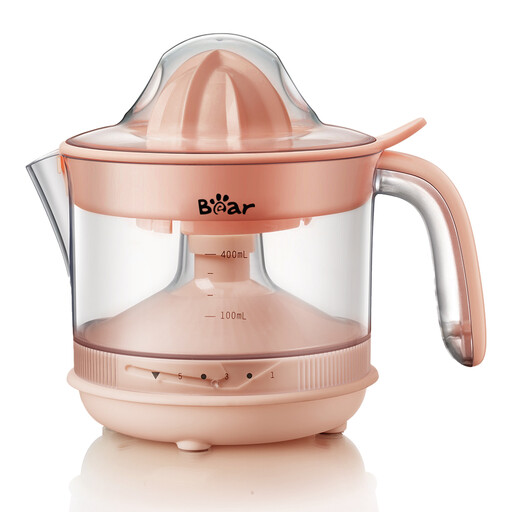
Why this product fits the profile: This electric citrus juicer is designed for oranges and lemons, and with a 400 ml capacity it takes up very little worktop space.
The five adjustable settings let you choose how much pulp you want. The removable parts make cleaning easy.
30 watts of power, a 400 ml container, five juicing settings, and a blade-free design according to the manufacturer.
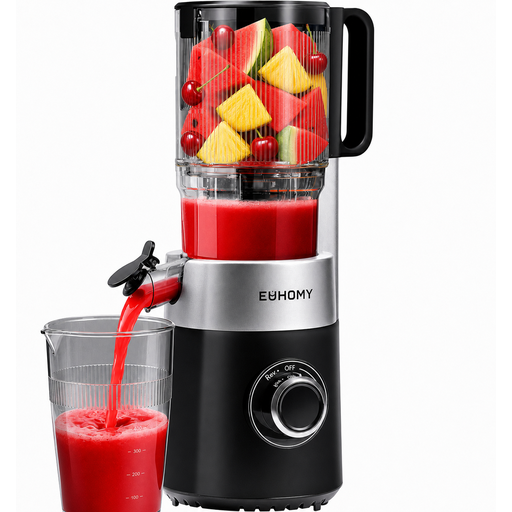
Why this product fits the profile: This model is aimed at households that want to make larger quantities of fruit and vegetable juice and prefer a 135 mm feed chute.
The large opening reduces preparation time. The manufacturer also mentions three assembly steps and cleaning with removable parts.
220-watt motor, 1.8 litre capacity, stainless steel augers, and an operating noise of around 60 decibels according to the manufacturer.
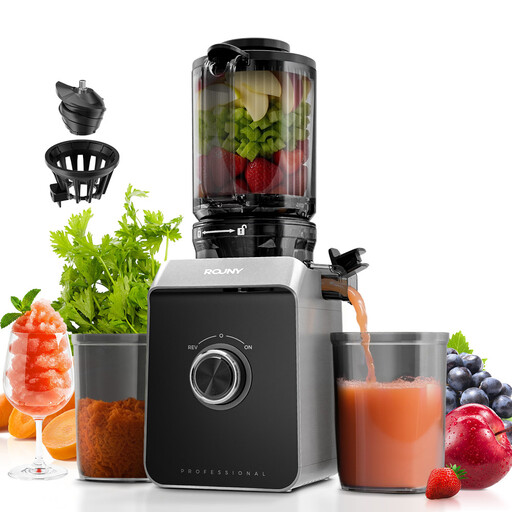
Why this product fits the profile: This appliance combines a 130 mm feed chute with a 1.8 litre capacity and is designed for regular household use.
The filter-free design is said by the manufacturer to make rinsing easier. A reverse function can help if ingredients get stuck.
50 revolutions per minute, 150 watts maximum power, reverse function, and also suitable for frozen fruit pieces according to the manufacturer.
We’ve put together a full, regularly updated list of products that fully meet these strict selection criteria and the safety regulations in force in the EU.
For versatile processing, a slow juicer or cold press juicer is generally more suitable than a citrus juicer alone. Check whether the model you want is explicitly approved for the ingredients you have in mind. Hard pips, fibrous stalks, and very firm ingredients often come with restrictions.
The lifespan depends on how often you use it, how you clean it, and whether you stick to the recommended operating times. Don’t run the motor for longer than stated in the instructions, and remove any fruit and vegetable residue after every use. A reverse function, sturdy containers, and easily accessible parts can make daily life easier, but they don’t replace proper use.
Electricity consumption is mainly influenced by the motor power and how long you run the appliance. Since a juicer usually only runs for a few minutes per batch, the energy used per session depends on these two factors. For the total cost, you should also factor in cleaning accessories, any replacement sieves, and the availability of spare parts.