
Lieferung heute & morgen

Qualitätsgarantie

Willkommens-Angebote freischalten: KOSTENLOSE Lieferung | Bis zu 80 % RABATT | Kostenlose 30-Tage-JoyPlus-Testphase
App herunterladen
Freshly pressed juice can be a practical addition to breakfast or a snack. However, when buying a juicer, it is not just the wattage and advertising claims that matter. The key factors are the right type of appliance, build quality, ease of cleaning and the types of fruit and vegetables you plan to process regularly.
An electric juicer with a powerful motor is not automatically suitable for every application. With a centrifugal juicer, the wattage mainly indicates the available motor power. The actual juice yield also depends on the filter, grating surface, speed, ingredients and their water content.
A slow juicer or cold-press juicer uses a slowly rotating auger to press the ingredients. With certain types of fruit and vegetables, this can produce a different consistency and less foam. However, preparation usually takes longer, and the ingredients may need to be prepared depending on the size of the feed chute.
A juicer with a large feed chute reduces the amount of chopping required. However, this does not mean that whole, hard or fibrous ingredients can be processed without restrictions. Seeds, tough skins and very fibrous foods can put strain on the filter or pressing mechanism.
The product description for the 600-watt WOOX model specifically states that oranges and grapefruits should be peeled before juicing. Bananas, mangoes and avocados are not intended for this appliance because of their starchy or fatty consistency. Sugar cane and sweetcorn can place considerable strain on the blades. Dragon fruit and kiwi should also not be processed on their own, as the seeds can become lodged in the filter.
A juicer for fresh juice consists of several parts that come directly into contact with pulp and juice. If these residues are allowed to dry, cleaning becomes considerably more time-consuming. Before buying, check the following:
An easy-to-clean juicer is particularly practical for everyday use if you prepare juice several times a week.
Centrifugal juicers are suitable for many firm types of fruit and vegetables and usually work quickly. They are a good choice for households wanting to make larger quantities from apples, carrots or cucumbers.
Slow juicers and cold-press juicers press ingredients using a slowly rotating auger. According to the product information, models such as the Bear YZJ-F01D6 are designed for fruit and vegetables and feature an 80-mm feed chute. The stated usage limit for this appliance is a maximum of 15 minutes per use.
A citrus press is the practical choice if oranges, lemons, mandarins or grapefruits make up most of your juice menu. However, it cannot process leafy greens, carrots or apples.
A small juice container is sufficient for a single serving. Families should also consider the size of the pulp container, so that it does not need emptying after only a few ingredients. The available models show clear differences:
The container size should match your actual consumption. A large appliance requires more worktop space and may be unnecessarily bulky for occasional individual servings.
For a BPA-free juicer, this feature should be explicitly stated in the product information. In the information provided, this applies, among others, to the Bear CZJ-A04B1 model and the ROUNY slow juicer. For other appliances, check the material specifications in the relevant listing.
You should also look for:
The appliance must be unplugged before dismantling, moving or cleaning it. The motor unit must not be immersed in water. Buyers should also check that electrical appliances carry the legally required markings and include information about the responsible party in the EU.
The following recommendations group specific models according to typical requirements. Performance data and features are based on the respective product information.

Why this product suits this profile: The 600-watt power rating and wide feed chute are aimed at users who want to process firm ingredients easily, without extensive preparation.
The product description specifically lists unsuitable ingredients and highlights the need to clean the filter when processing seeded fruit.
600-watt motor, stainless-steel construction, stated BPA-free specification and three-part feed chute, according to the product information.
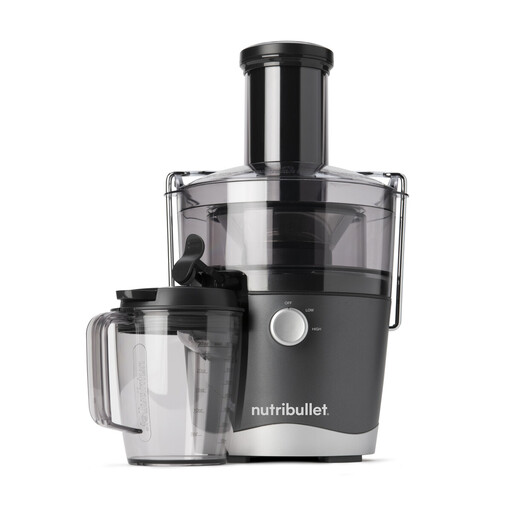
Why this product suits this profile: This model combines 800 watts, two speed settings and a 1.5-litre pulp container for regular household use.
The removable parts and the pulp container, which is described as dishwasher-safe, address the cleaning effort that is often underestimated.
3-inch feed chute, two speeds, 1.5-litre pulp container and 800-ml juice glass.
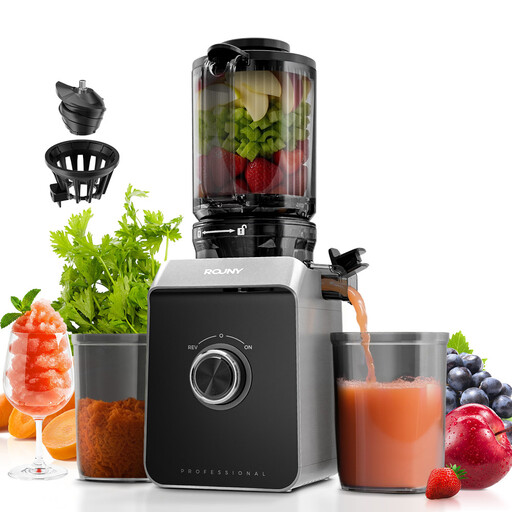
Why this product suits this profile: The combination of 1.8-litre capacity, 50 revolutions per minute and a design described as filter-free is aimed at households that juice frequently.
The reverse function can help when ingredients become stuck; the filter-free design is also intended to make rinsing easier.
130-mm feed chute, 1.8-litre capacity, reverse function, stated BPA-free specification and rinse-clean design, according to the listing.
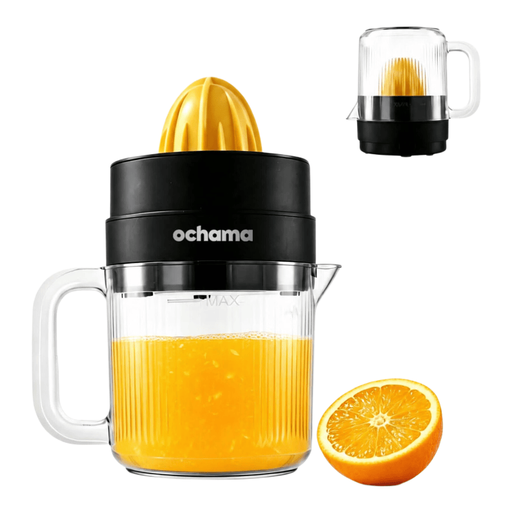
Why this product suits this profile: If you mainly juice oranges, lemons or mandarins, this compact solution is designed specifically for citrus fruit and features a 30-watt motor and removable parts.
Its clearly stated citrus-only use helps prevent the appliance from being mistakenly used as a juicer for fruit and vegetables containing hard ingredients.
1.4-litre capacity, pulp separation, blade-free design and removable cleaning parts, according to the product description.
We have put together a complete, regularly updated list of products that fully meet these strict selection criteria and the safety regulations applicable in the EU.
Wash fruit and vegetables before processing, and remove hard stones and unsuitable skins. Soft or sticky ingredients should only be used if the operating instructions explicitly permit them. With a slow juicer, feed ingredients in slowly to prevent unnecessary blockages in the auger.
After each use, rinse the removable parts as soon as possible. Keep the motor unit dry. With citrus presses, only the removable attachment may be cleaned; the electrical base is not waterproof either. Also observe the specified maximum operating time. Regular overloading can shorten the motor’s service life.
A centrifugal juicer or slow juicer is generally more suitable for apples and carrots than a citrus press designed solely for citrus fruit. Nevertheless, check the feed chute, permitted ingredients and guidance on hard pieces in the relevant operating instructions.
Freshly pressed juice should ideally be drunk soon after preparation and kept chilled and sealed until then. For the supplied glass, NutriBullet NBJ100G recommends consumption within 48 hours. This is not a general guarantee of shelf life: cleanliness, ingredients and refrigeration temperature all affect quality.
Energy consumption depends on the motor power and the actual operating time. In theory, a 600-watt appliance uses less energy when operated for ten minutes than when run for an hour. To calculate running costs, you can convert the power consumption into kilowatts and multiply it by your local electricity price. The maximum power rating is therefore less important than how long the appliance takes to process your usual quantity.