
Lieferung heute & morgen

Qualitätsgarantie

Willkommens-Angebote freischalten: KOSTENLOSE Lieferung | Bis zu 80 % RABATT | Kostenlose 30-Tage-JoyPlus-Testphase
App herunterladen
A juicer can make it easier to prepare fruit and vegetable juices every day. However, appliances vary considerably in what they can handle, how easy they are to clean, how noisy they are and how much they hold. If you focus only on wattage or eye-catching design, you may overlook important details.
Common buying and marketing pitfalls include:
Your choice should start with the ingredients you plan to use.
An electric citrus press, also known as an orange juicer, uses a pressing cone. It is designed for halved citrus fruit and is usually easy to use. Depending on the model, two cones may be included to suit small and large fruit. A spout with a drip-stop helps prevent spills when pouring.
A centrifugal juicer grates ingredients, then separates the juice from the pulp. These appliances are suitable for many hard and soft fruit and vegetables. A wide feed chute can reduce the amount of chopping needed. However, they often produce more pulp and require more cleaning around the filter.
A slow juicer uses a slowly rotating auger to press the ingredients. Depending on its design, it can handle both soft and hard fruit and vegetables. These appliances are often versatile, but may have more separate parts and need careful cleaning.
Check which foods the manufacturer specifically says the appliance can handle. For a fruit and vegetable juicer, look for information about soft and hard ingredients, fibrous vegetables and frozen fruit. Bananas, avocados and very tough fibres are unsuitable for many centrifugal juicers.
A juicer with pulp separation should have an easy-to-access filter or a separate pulp container. Capacity matters for families, too: smaller containers of around 400 to 600 ml are suitable for single servings, while 1 to 1.4 litres are more practical for several glasses.
A juicer that is easy to clean should have removable juice, pulp and filter components. Look for:
Glass containers can feel sturdy, but are heavier than plastic ones. Some slow juicers come with stainless steel filters; the manufacturer’s specific care instructions are what matter most.
Wattage is only one part of the technical picture. A compact 30- or 40-watt electric juicer may be enough for citrus fruit, while an appliance for carrots and apples needs a different motor design. When choosing, also consider the speed, recommended running time and overload warnings.
Vertical designs or slim appliances with an integrated juice container can work well in small kitchens. If you plan to make juice early in the morning, check the stated motor noise level, too. A low noise rating is only useful if the measurement conditions are clearly explained.
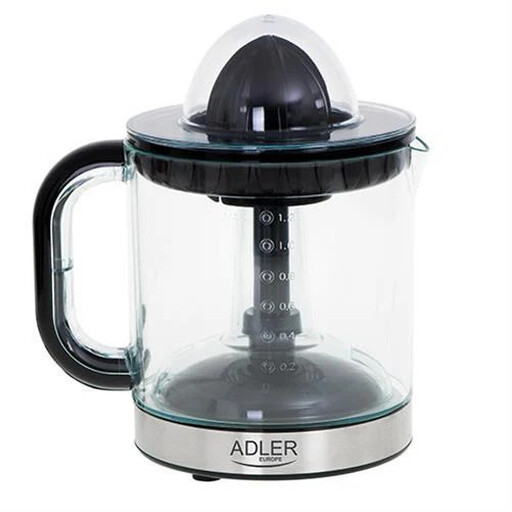
Why this product suits this profile: This electric citrus press is designed for lemons, oranges and grapefruit, and has a 1.2-litre glass container for several servings.
Choosing an appliance for the right type of fruit helps prevent using a citrus juicer for hard vegetables. The automatic start-stop system also means fewer steps when using it.
Two pressing cones, bidirectional rotation, a pulp filter and removable parts that are dishwasher-safe, according to the product description.
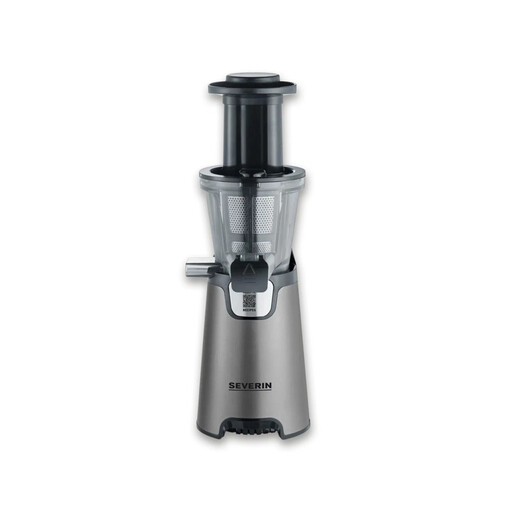
Why this product suits this profile: This slow juicer is designed for anyone planning to use a variety of fruit and vegetables, as well as make other things such as sorbet or passata.
The product information clearly sets out which ingredients it is designed for. Its Easy-Clean design and limited number of parts help address the common issue of time-consuming cleaning.
150 watts, a 1-litre juice container, two filter inserts and an attachment for frozen fruit, according to the product description.
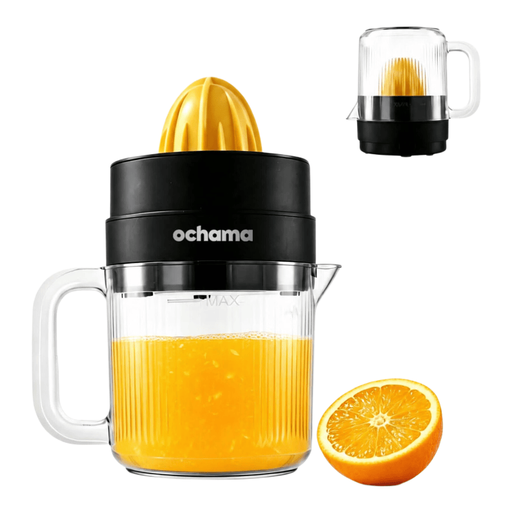
Why this product suits this profile: This semi-automatic orange juicer is designed for larger households and regular servings of citrus juice.
Its clear focus on citrus fruit helps prevent misuse. The removable design makes cleaning easier after pressing several pieces of fruit.
1.4-litre capacity, pulp separation, a 30-watt motor and a blade-free design, according to the product information.
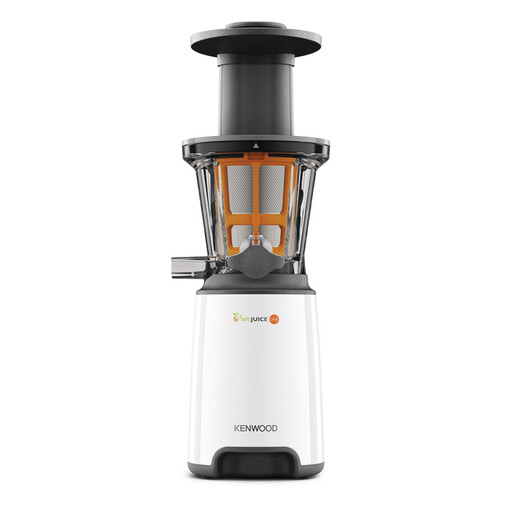
Why this product suits this profile: Its slim 15 cm-wide body suits limited worktop space and comes with a 700 ml juice container.
Its slim design and anti-drip spout help avoid unnecessary use of space and extra cleaning. A rinse function complements manual cleaning.
55 revolutions per minute, according to the product description, a 700 ml juice jug, a 1.3-litre pulp container and a cleaning brush.
We’ve put together a complete, regularly updated list of products that meet these strict selection criteria and fully comply with the safety regulations in force in the EU.
For several people, a large juice container and a suitably sized pulp container are useful. If you only plan to juice citrus fruit, a capacity of 1.2 to 1.4 litres may be a good choice. For mixed fruit and vegetable juices, also check that the feed chute and filter are suitable for the ingredients you plan to use.
Lifespan depends on how often you use it, how well you clean it and whether you stick to the recommended running times. Remove pulp promptly, use only the pusher provided and let the motor cool down during longer juicing sessions. Regularly checking the filter, auger and seals can help you spot wear early.
Running costs depend on the appliance’s power and how long you use it for. A 30-watt appliance running for ten minutes uses around 0.005 kilowatt-hours. A 150-watt appliance would use around 0.025 kilowatt-hours over the same period. You’ll also need to factor in the cost of fruit and vegetables, and any replacement parts. So wattage isn’t the only thing to consider: how often and for how long you use the appliance matters, too.