
Lieferung heute & morgen

Qualitätsgarantie

Willkommens-Angebote freischalten: KOSTENLOSE Lieferung | Bis zu 80 % RABATT | Kostenlose 30-Tage-JoyPlus-Testphase
App herunterladen
Buying a mattress may seem straightforward at first. In practice, however, several technical details determine whether a model is suitable for your bed, body shape and personal sleeping habits. If you focus solely on the price, height or terms such as “ergonomic”, you may overlook important differences.
This guide explains what adults, couples, families, students and tenants in Germany should consider when buying a mattress. It covers size, firmness, core construction, breathability and motion isolation.
The designations H2, H3 or H2/H3 are intended as a guide, but they are not a fully standardised measurement system. An H3 mattress may feel different depending on its construction, padding and the sleeper’s body weight. Your sleeping position also affects how firm a mattress feels: side sleepers often need a more yielding shoulder zone, while back sleepers may prefer firmer support.
For this reason, you should consider not only the firmness level, but also the combination of body weight, sleeping position, mattress height and material.
A 7-zone mattress divides the sleeping surface into areas for the head, shoulders, back, pelvis and legs. This can allow for a more precisely tailored construction. However, the key question is whether the zoning suits your height. For very petite people, the shoulder and pelvic zones may not line up with the intended areas of the body.
A pocket-sprung mattress with five zones may therefore suit some users better than a model with seven zones. The number of zones is a technical feature, not proof of quality on its own.
A well-ventilated cover helps manage moisture, but says little about the core. A memory-foam mattress may feel closely moulded to the body, yet depending on the foam construction, it can retain more heat than an open-structure sprung design. If you tend to get hot at night, you should therefore assess the cover, foam density, spring core and ventilation together.
Before placing your order, measure the internal dimensions of the bed frame and check the permitted mattress height. Common sizes include:
The bed slats must also be compatible with the mattress. A mattress that is too high can make getting in and out of bed more difficult. If you have an adjustable slatted base, the product details should explicitly state that the particular core is suitable for it.
A pocket-sprung mattress consists of individually wrapped springs. These respond independently and can limit movement across the sleeping surface. This is particularly useful for couples when one person moves frequently during the night.
A hybrid mattress combines springs and foam. It can pair the support of springs with a softer comfort layer. With a memory-foam mattress, buyers should pay attention to the types of foam used, the overall height and the ventilation. The term “orthopaedic mattress” is widely used by retailers, but on its own it does not constitute medical evidence or indicate therapeutic suitability.
Look for a removable cover, or at least one that is easy to clean. Specific washing instructions vary: some covers can be hand-washed, while others must not be soaked in water. Vacuum-rolled mattresses generally need 24 to 48 hours to expand after unpacking; according to the product details, some mattress toppers may require up to 72 hours.
Remove the packaging film completely, allow the product to expand in a well-ventilated room and use a mattress topper or mattress protector if required. A topper changes the feel of the bed, but it cannot replace a mattress that has become worn or sagging.
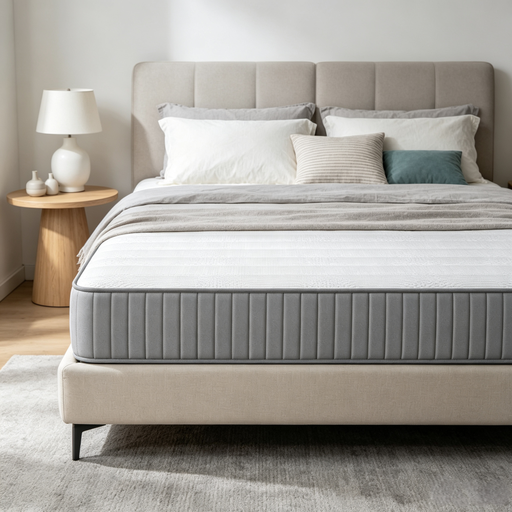
Why this product suits the profile: The single-bed format is suitable for students, guest rooms and smaller homes. The H2/H3 construction offers a medium to medium-soft firmness guide.
The specifications state that it has five zones, reinforced edges and a knitted, moisture-wicking cover, rather than making only general comfort claims.
24 cm height, pocket springs, reinforced edges and motion isolation according to the product details.
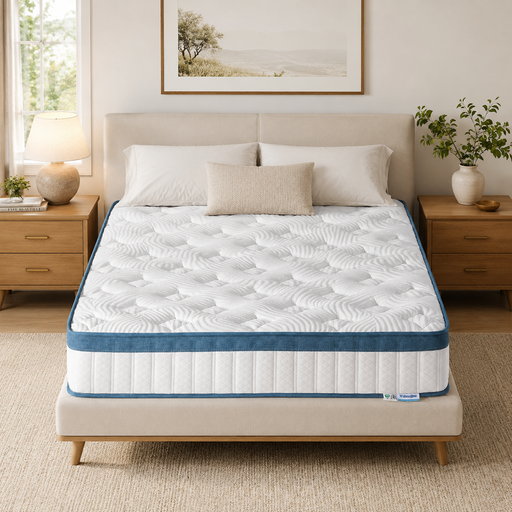
Why this product suits the profile: This 25 cm-high hybrid model combines individually wrapped springs with gel memory foam and a Tencel Lyocell cover.
The product details list the core, comfort layer, cover and firmness level separately. This makes it easier to compare the construction with other models.
Seven zones, 25 cm height, Tencel cover, plus 100 nights’ trial and a ten-year guarantee according to the supplier.
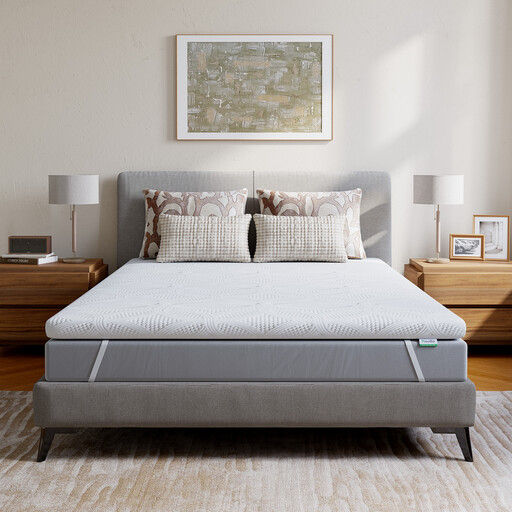
Why this product suits the profile: The 5 cm-high topper is designed for existing mattresses, sofa beds, motorhomes and rented homes.
The topper is not presented as a replacement for a damaged mattress core, but as a way to change the feel of the existing sleeping surface.
180 x 200 cm, 5 cm height, compressed delivery and a washable cover according to the product details.
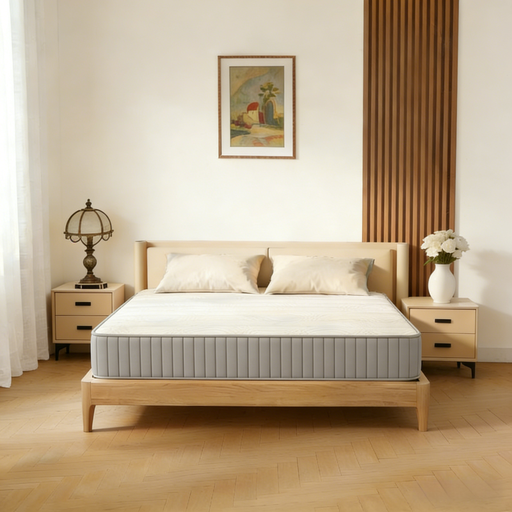
Why this product suits the profile: The 160 x 200 cm format gives two people a larger shared sleeping surface without taking up as much space as an 180 cm bed.
The construction specifies individually wrapped springs, H2/3 firmness and reinforced edges. This information makes it easier to check compatibility with your bed size and intended use.
Four layers, H2/3 firmness, reinforced edges and, according to the product description, a construction designed to reduce motion transfer.
The service life depends on the material, level of use, care and any visible changes. Check regularly for dips, damaged covers or reduced stability. Turn the mattress according to the manufacturer’s instructions and use a suitable mattress protector. Because constructions vary, it is not possible to give a reliable blanket lifespan for every model.
Medium-firm models with differentiated zones are often suitable for back and side sleepers. Side sleepers should pay particular attention to a yielding shoulder zone, while back sleepers should check the level of support around the pelvis. A 7-zone mattress or hybrid mattress may meet these requirements in different ways. Body weight, height and your individual comfort preference remain the decisive factors.
Place the mattress directly on a suitable, sturdy base, remove the film and allow it to expand in a well-ventilated room. Depending on the product, 24 to 48 hours may be required; according to the product details, a mattress topper may need up to 72 hours. Before using it for the first time, follow the instructions provided by the relevant manufacturer.