
Lieferung heute & morgen

Qualitätsgarantie

Willkommens-Angebote freischalten: KOSTENLOSE Lieferung | Bis zu 80 % RABATT | Kostenlose 30-Tage-JoyPlus-Testphase
App herunterladen
Baby wipes are an essential item for many families. Whether for nappy changes, out and about, or cleaning hands and faces, you need them to be reliably on hand. At the same time, baby wipes differ significantly in their ingredients, material, moisture content, pack size and closure.
If you only focus on a low price per wipe or big marketing claims, you can easily miss important details. Our selection highlights the features that really matter before buying sensitive baby wipes, fragrance-free options and bulk packs.
The term “sensitive” is helpful in everyday life, but it doesn’t replace a proper look at the ingredients list. Some products for delicate skin still contain fragrances or nourishing additives that not every baby tolerates equally well. If you prefer to minimise potential sources of irritation, you should specifically look for fragrance-free wipes and alcohol-free formulas.
Likewise, “natural” or “with water” doesn’t always describe the full formulation. What really matters are the specific details on the packaging and product page.
A bulk pack of baby wipes can reduce how often you need to reorder. However, if you open several packs at once and don’t seal them properly, the wipes will dry out more quickly. For your changing bag, car and travel, smaller individual packs are often more manageable.
Before you buy, it’s worth calculating the price per wipe. A pack of 1,200 wipes isn’t automatically cheaper than several smaller packs if the individual wipes are very small or thin.
Biodegradable wipes are often made from plant-based fibres. This can improve the material choice, but it doesn’t mean they belong down the toilet. Even biodegradable wipes should be disposed of in your household waste, unless the manufacturer explicitly states otherwise. Most baby wipes are single-use products and are not reusable.
For newborns or skin prone to irritation, simple formulations are particularly easy to assess. 99% water wipes or products with 99.9% water content usually contain only a few additional ingredients besides water. While this doesn’t automatically eliminate every individual risk of intolerance, it does make comparison easier.
Look for the following details:
If you have a known allergy or recurring skin problems, you should discuss product choice with a medical professional. Wipes are intended for external cleaning and do not replace individual skincare.
The size, thickness and surface texture of the wipes affect how many you need for each nappy change. According to product information, Bc Babycare wipes are three times thicker than many standard wipes and are made from plant-based fibres. Chicco Soft Wet Wipes, on the other hand, feature one textured side and one smooth side. This can be practical for different cleaning steps.
For wipes for sensitive skin, the material should be soft and not easily fall apart. An embossed surface can pick up dirt better, but it shouldn’t feel rough. Because manufacturer claims about “thicker” or “more moisture” may be based on internal comparisons, you should treat these as a guide rather than as a universal mark of quality.
A sturdy flip-top lid or a well-sealing closure helps keep the wipes moist after opening. You should close the pack immediately after each use and store it in a cool, dry place away from direct sunlight.
For everyday use, the following sizes work well:
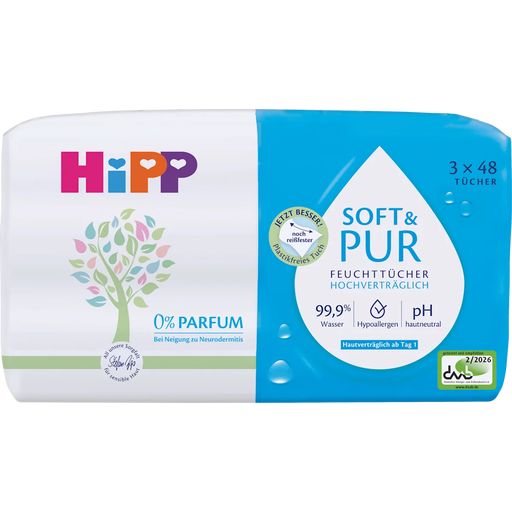
Why this product fits the profile: The pack of 144 wipes is ideal for trying out a simple formulation in everyday use without having to stock up on a very large quantity straight away.
According to product information, the wipes contain 99.9% water and 0% perfume, parabens and mineral oils. The manageable pack size limits the risk of unnecessary stockpiling.
Water-rich content, plant-based fibres and a skin-neutral pH according to the manufacturer.
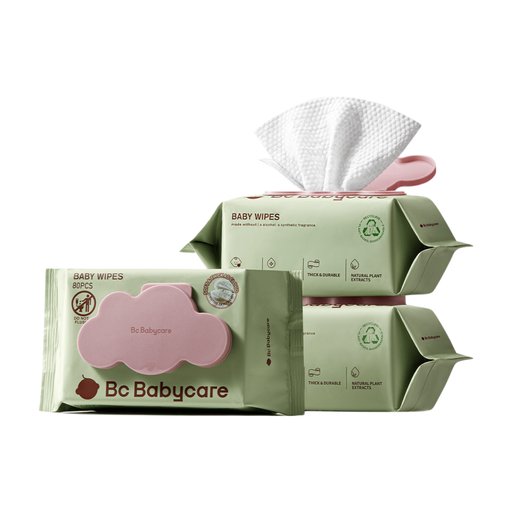
Why this product fits the profile: If you pay attention to material details, moisture content and certification information, you get a clearly described set for regular nappy-changing routines.
The wipes are fragrance-free, OEKO-TEX certified and made from 100% plant-based, plastic-free fibres according to the supplier. The certificate number is listed on the product page.
240 wipes, three times thicker construction according to the supplier and plant-based wipe material.
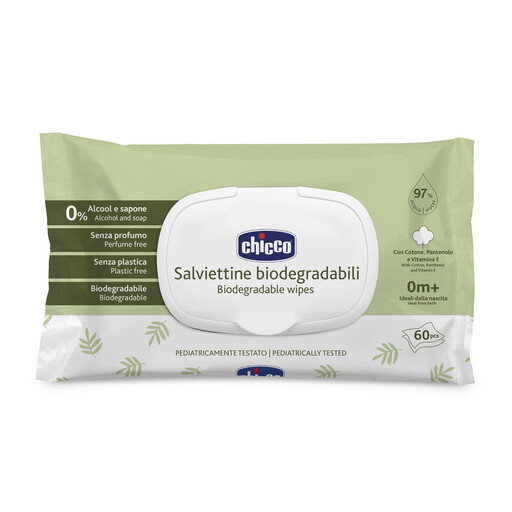
Why this product fits the profile: The bulk pack of 720 wipes suits families who regularly need baby wipes for nappy changes as well as for hands and face.
The product description mentions 100% biodegradable natural fibres as well as an alcohol-free and soap-free formula. Even so, the wipes should not be flushed down the toilet.
720 wipes, plant-based fibres plus panthenol, vitamin E and cotton extract according to product information.
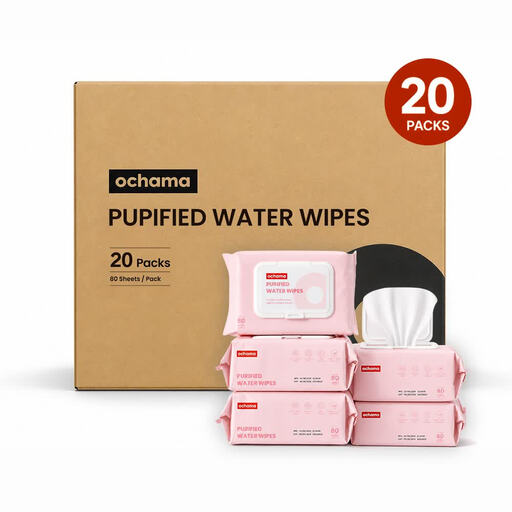
Why this product fits the profile: With 20 packs, this jumbo bulk pack is ideal for families with high usage, provided you have dry, protected storage space.
The wipes are advertised with EDI-purified water and, according to product information, are offered without alcohol, fragrances, dyes and certain preservatives. The closure should be sealed consistently.
1,600 wipes, pearl embossing and individual packs of 80 wipes according to the manufacturer.
We’ve put together a complete, regularly updated list of products that fully meet these strict selection criteria and the safety regulations in force in the EU.
Unopened packs have a best-before or expiry date printed on the packaging, which varies by brand and product. Once opened, how long they last depends mainly on the closure and storage. Close the pack after every use and don’t use any wipes that smell unusually dry, are discoloured or whose packaging is damaged.
Many products with a high water content are advertised as suitable from birth. However, the water content alone doesn’t guarantee individual tolerance. Check the full ingredients list, look for information on fragrances and alcohol, and carefully test a new product on a small area of skin first.
This depends on the baby’s age, number of nappy changes, additional use for hands and face, and the size of the wipes. For a realistic estimate, you could count your usage for a week and multiply it by four. If you buy a bulk pack, also consider your storage space and how long opened packs will stay fresh.