
Lieferung heute & morgen

Qualitätsgarantie

Willkommens-Angebote freischalten: KOSTENLOSE Lieferung | Bis zu 80 % RABATT | Kostenlose 30-Tage-JoyPlus-Testphase
App herunterladen
A baking tin needs to hold your batter reliably, withstand the heat of the oven, and release your bake cleanly afterwards. In practice, however, it’s not flashy designs that lead to poor purchases, but unclear information about material, temperature limits and cleaning. This applies just as much to a single cake tin as it does to a comprehensive baking tin set.
A non-stick baking tin can make it easier to release cakes, muffins or bread. Even so, the coating isn’t automatically suitable for metal knives, abrasive scourers or the dishwasher. Several of the tins featured here are expressly intended for hand washing. If you ignore this information, you can damage the surface more quickly.
“Oven-safe” doesn’t mean that every tin can be used at any temperature or on any heat source. A baking tin may be suitable for the oven, but not for the microwave, hob, induction or open flames. Always check the maximum temperature and the permitted usage range.
A springform tin with a 22 cm diameter behaves differently with the same amount of batter compared to a 26 cm tin. With a tin that’s too large, your cake may turn out flatter; with one that’s too small, the batter can overflow. The height also matters: a loaf tin for bread needs different dimensions to a shallow muffin tin or a madeleine tin.
Carbon steel is relatively light and is used in many cake tins, muffin trays and bread tins. The product details should include specific measurements and information about heat conduction. For coated tins, it’s also important to know which cleaning method is recommended and whether sharp or metal kitchen tools should be avoided.
Silicone is flexible and can make releasing your bakes easier. At the same time, a soft silicone baking tin needs enough stability when you’re transporting it to the oven. For large cakes or runny batter, a sturdy baking sheet underneath can be a good idea.
Ceramic and stoneware retain heat for longer than thinner metal tins and are often suitable for serving from too. However, temperature shocks should be avoided. Putting a cold tin directly into a very hot oven can be problematic, depending on the material.
Measure the internal width of your oven before you buy, especially for rectangular tins or a large muffin tray. The external dimensions, including the rim and handles, determine whether the tin will fit on the shelf.
Pay attention to:
A baking tin set is practical if you regularly need different sizes. However, it’s only worth it if the tins included match your recipes and your available storage space.
Not every oven-safe baking tin is dishwasher-safe. Coated carbon steel tins should often be cleaned with warm water and a soft sponge. For silicone tins, the manufacturer’s advice on dishwasher use is crucial. Ceramic and stoneware tins are dishwasher-safe depending on the model, but should be allowed to cool down before cleaning.
Before first use, it’s always a good idea to check the care instructions. With some tins, a light greasing can help with release, even if a non-stick coating is present.
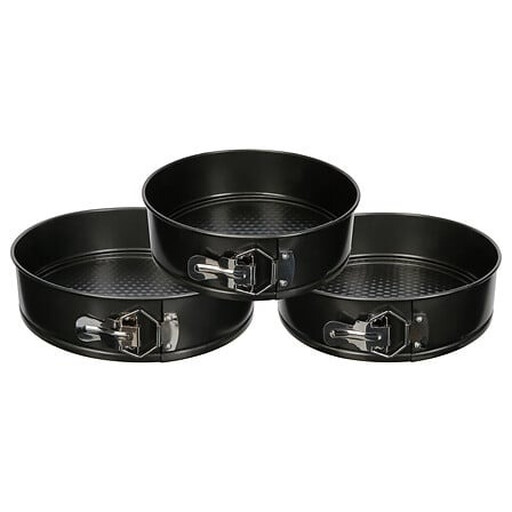
Why this product fits the profile: Three sizes cover different cake quantities and are suitable for baking beginners, families and recipes with varying diameters.
The sizes 22 cm, 24.5 cm and 26 cm are clearly stated. The stackable design reduces the space needed in your kitchen cupboard.
Set of three steel tins with non-stick coating, hinge mechanism and removable base; oven-safe up to 280 °C according to the product details.
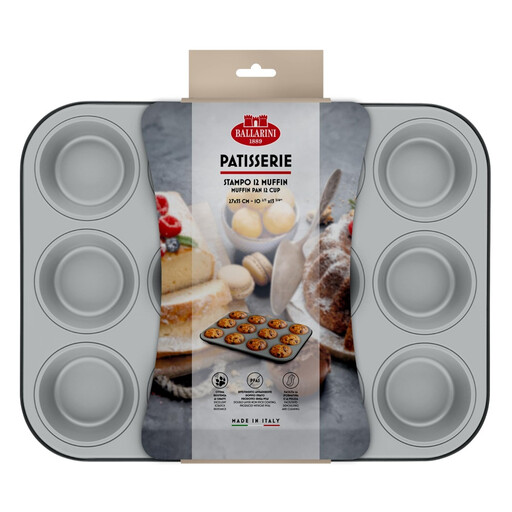
Why this product fits the profile: The twelve cavities support even portions for muffins and cupcakes, ideal for family celebrations or small baking batches.
The product details state the dimensions, number of cavities, material, care instructions and temperature limit. This allows you to check your oven space and recipe quantity before buying.
Carbon steel, twelve round cavities and a PFAS-free two-layer non-stick coating according to the product description; oven-safe up to 230 °C.
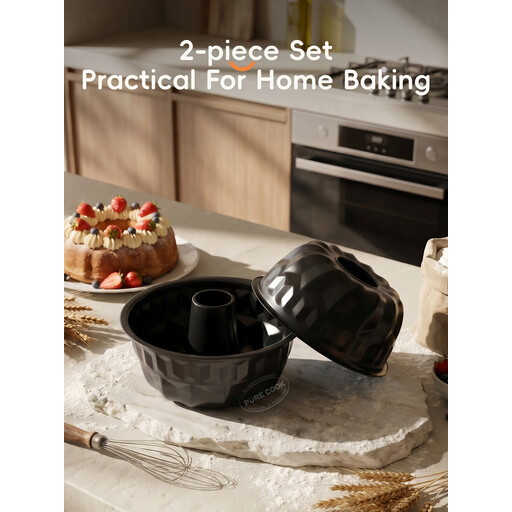
Why this product fits the profile: The 3D pumpkin design is intended for seasonal cakes, themed parties and decorative desserts.
The details explicitly state 230 °C as the temperature limit and restrict use to the oven. Microwave, hob and open flame are excluded.
Two carbon steel tins measuring 23 × 11.5 cm, with a ribbed 3D shape and coated surface; hand washing with a soft sponge is recommended.

Why this product fits the profile: The small individual portions are ideal for family activities, gifts, cupcakes, jellies and chocolate desserts.
The usage range is clearly defined: the silicone tins are suitable for oven, microwave and freezer from −40 °C to 230 °C.
Six flexible silicone tins, each measuring 8 × 7.5 × 3.1 cm; dishwasher-safe according to the product details and space-savingly stackable.
We’ve put together a complete, regularly updated list of products that fully meet these strict selection criteria and the safety regulations in force in the EU.
For getting started, tins with clear dimensions, simple care and straightforward release are a good choice. A springform tin with a removable base or a muffin tray with coated cavities can be used for a variety of bakes. With silicone, make sure you have a stable base underneath when filling.
The lifespan depends on the material, usage and care. Coated tins should not be used with metal utensils or abrasive cleaners. Allow the tin to cool down before releasing your bake and washing it. If you see visible scratches, peeling coating, cracks or warping, it should not be used any further.
Check the maximum temperature, the external dimensions and the permitted heat sources. A baking dish made of ceramic or a metal tin may be suitable for the oven, but not for the hob. Information such as “not microwave-safe” or “hand wash only” should be factored directly into your buying decision.