
Lieferung heute & morgen

Qualitätsgarantie

Willkommens-Angebote freischalten: KOSTENLOSE Lieferung | Bis zu 80 % RABATT | Kostenlose 30-Tage-JoyPlus-Testphase
App herunterladen
If you’re looking to buy baking tins, you’ll be faced with a huge choice: cake tins, loaf tins, springform tins, tart tins, quiche tins or baking dishes. Many models look similar, but they differ significantly in material, cleaning, heat resistance and intended use. A cheap tin can quickly become impractical if the cake sticks, the rim warps, or cleaning takes more effort than you expected.
A non-stick baking tin makes it easier to release cakes and bread. However, the coating will only stay intact for longer if you follow the care instructions. Metal knives, abrasive scourers and high temperatures can damage the surface. What’s more, “non-stick” doesn’t automatically mean the tin is dishwasher-safe.
So look out for specific details on:
A 20 cm baking tin holds considerably less batter than a 30 cm baking tin. If you use a recipe designed for a larger tin in a smaller one, the batter may overflow or remain underbaked in the middle. In a tin that’s too large, the cake will be flatter and can dry out more quickly.
With loaf tins, it’s not just the length that matters, but also the width, height and capacity. A 30 cm loaf tin can suit different amounts of batter depending on its design. The stated volume is therefore a more reliable guide than the length measurement alone.
Not every baking tin can be used on the hob, on an induction hob or under a direct flame. Many steel tins are intended for oven use only. Even with stoneware and cast iron, you should avoid sudden temperature changes. Placing a hot tin straight from the oven onto a cold or wet surface can cause material stress.
Steel heats up relatively quickly and is suitable for cakes, bread and tart bases. A sturdy wall thickness helps protect the tin against warping. Coated steel tins should be used with wooden, plastic or silicone utensils.
Silicone is flexible and makes it easier to release delicate baked goods. A silicone baking tin with an integrated steel frame offers more stability than a completely soft model. Check the temperature limits: the 5five Silitop model is stated as suitable for the oven up to 220 °C and for the freezer down to -20 °C, and can be cleaned in the dishwasher.
Stoneware retains heat and is also suitable for serving. For small portions, the stated capacity is particularly important. The Le Creuset Mini Cassoulet Dish holds 180 ml and is described as suitable for the fridge, microwave, oven, grill and dishwasher. Even so, sudden temperature changes should be avoided.
Enamelled cast iron retains heat for a particularly long time and, depending on the product, can also be used on suitable hobs. However, the heavier weight and longer cooling time are part and parcel of using it.
With springform tins, a reliably closing rim and a base that is as leak-proof as possible are important. A damaged closure can allow liquid to escape. A removable base makes it easier to transfer cakes, tarts or quiches.
Also practical are:
A dishwasher-safe baking tin saves time, but it isn’t automatically the gentlest option for every coating. With many coated models, hand washing is recommended, even if individual parts can go in the dishwasher. So check whether the information refers to the whole tin or just the base.
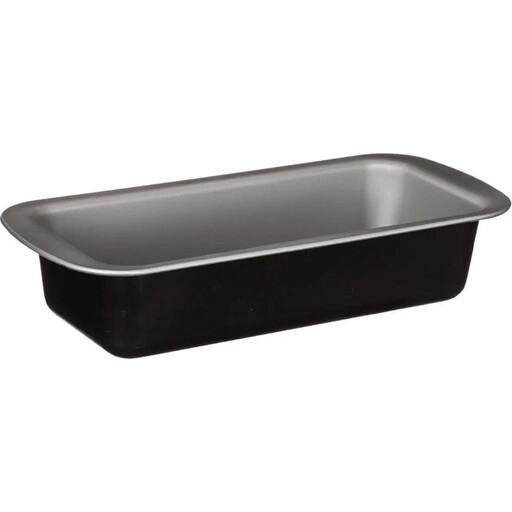
Why this product fits the profile: This compact loaf tin with a 1.3-litre capacity is ideal for smaller households and simple cake or bread recipes.
The product details clearly state that the tin is not dishwasher-safe and not microwave-safe. This means you can plan the care routine realistically.
Metal construction, oven suitability and a weight of around 230 g. Cleaning is done by hand.
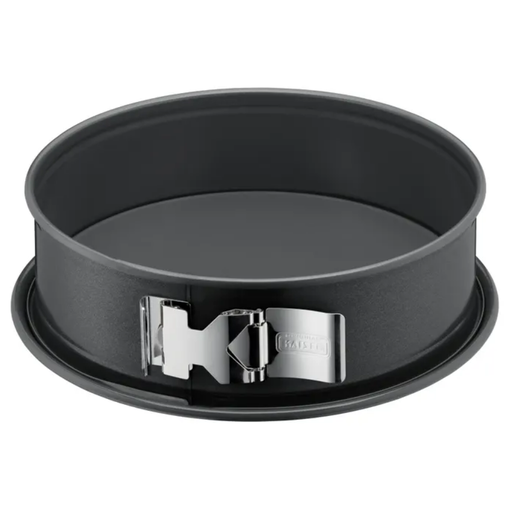
Why this product fits the profile: This 20 cm baking tin is ideal for smaller cakes, cheesecakes and households where controlled portion sizes are important.
The product data indicates a SafeClick closure, a leak-proof base and heat resistance up to 250 °C. The ring is not intended for the dishwasher.
Steel with KAIRAMIC coating, enamelled base, and separate cleaning of the base and ring.
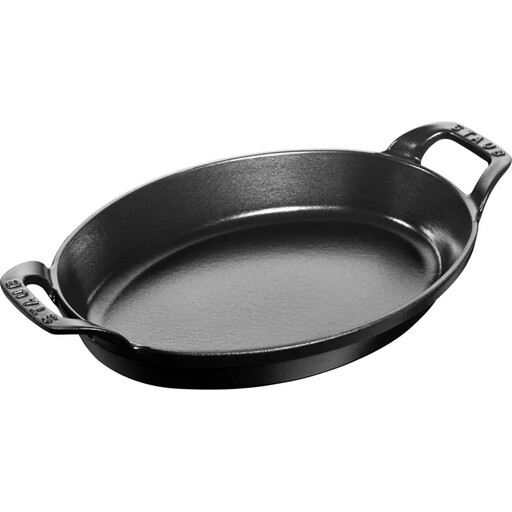
Why this product fits the profile: This oval baking dish is designed for gratins, casseroles and serving straight from the oven to the table.
The details state specific limits of 240 °C to -20 °C and warn against sudden temperature changes. This means the dish is not classified as having unlimited temperature resistance.
Enamelled cast iron, 1.6-litre capacity, two side handles and suitability for various hobs including induction according to the product information.
We’ve put together a complete, regularly updated list of products that fully meet these strict selection criteria and the safety regulations in force in the EU.
For bread, a loaf tin or bread tin with sufficient height is a good choice. For longer loaves, models with a length of 25 to 35 cm are suitable. What matters most is the capacity, heat resistance and suitability for acidic doughs such as sourdough.
That depends on the use. Silicon is easy to release from and saves space when storing. Metal usually offers a more shape-retaining construction and responds more quickly to temperature changes. An integrated steel frame can improve the handling of a silicone tin.
It’s impossible to give a fixed lifespan. It depends on the temperature, frequency of use, cleaning method and the utensils used. Hand washing, soft sponges and avoiding metal objects can help protect the coating. As soon as it is visibly damaged, flaking or scratched, the tin should no longer be used.