
Lieferung heute & morgen

Qualitätsgarantie

Willkommens-Angebote freischalten: KOSTENLOSE Lieferung | Bis zu 80 % RABATT | Kostenlose 30-Tage-JoyPlus-Testphase
App herunterladen
Whether it’s a cake tin, bread tin or muffin tray, the right baking tin plays a key part in ensuring your bake releases cleanly, bakes evenly and is easy to clean. Hobby bakers, families and small dessert shops are faced with a huge choice of materials, coatings and shapes.
When buying a baking tin, eye-catching colours or bold promises don’t automatically lead to the right choice. Three common pitfalls are particularly worth noting:
Carbon steel and coated steel conduct heat relatively evenly and hold their shape if the material is thick enough. They are suitable for cakes, bread, brownies and savoury bakes. With coated versions, always observe the maximum temperature stated by the manufacturer.
Aluminium is lightweight and distributes heat quickly. A coating can make releasing easier. The Tefal Success Baking Pan combines recycled aluminium with a ProBaking non-stick coating; according to the product details, this tin is dishwasher-safe.
Silicone is flexible and can make unmoulding easier. A silicone baking mould should be placed on a sturdy baking tray when filled, so it can be safely put into the oven. Temperature ratings, dishwasher suitability and whether it is suitable for the freezer or oven must be checked for each individual product.
Before buying, you should check the internal dimensions, external dimensions, height and capacity. For a standard oven, width and depth are crucial, especially if you also want to use a rack or baking tray at the same time.
“Dishwasher-safe” and “dishwasher-proof” should not be treated as the same thing. Some products can go in the machine, but the manufacturer recommends hand washing to protect the coating. For other baking tins, the dishwasher is expressly not suitable.
For coated baking tins, the following rules generally apply:
With a tin that has an enamel base, cut resistance and ease of handling can be important. Even so, you should still avoid hard knocks and unsuitable kitchen tools.
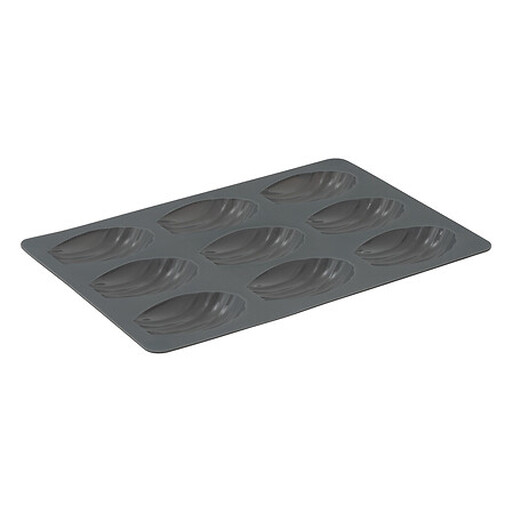
Why this product fits the profile: This 36 x 21.5 x 2 cm silicone mould is designed for shell-shaped madeleines and offers an affordable introduction to specialist baking tins.
The product details clearly state the material, dimensions and intended use. This means you can check before buying whether the shallow mould suits the bake you have in mind.
Flexible, food-grade silicone; designed for madeleines and, according to the product description, also suitable for chocolate and small bakes.

Why this product fits the profile: This bread tin is designed for loaves of up to around 1,000 grams and combines coated steel with an enamelled base.
The product data states a heat resistance of up to 250 °C and recommends hand washing. This means the temperature and care limits are clear before you buy.
Dimensions of 30 x 10.01 x 8.51 cm; according to the product description, it is acid-resistant and comes with a ten-year guarantee on the non-stick coating.
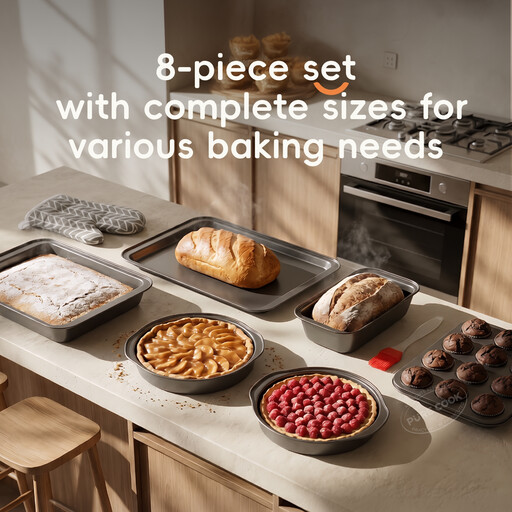
Why this product fits the profile: This set covers several square and rectangular formats and is aimed at households, baking classes or small dessert operations with changing recipes.
The different dimensions are listed. Buyers can therefore check whether their storage space, oven and typical dough quantities are a good match for the set.
Eight pieces made from carbon steel with a non-stick coating; stackable design and suitable for both sweet and savoury bakes according to the product description.
We’ve put together a full, regularly updated list of products that fully meet these strict selection criteria and the safety regulations in force in the EU.
For occasional baking, a single cake tin or a baking tray with clear dimensions is often enough. Families will benefit from a muffin tray or a baking tin set when making several portions at once. If you bake bread regularly, choose a suitable bread tin with sufficient height and a clear temperature limit.
For delicate cakes, tortes or quiches, a loose base or a springform mechanism is a good idea. For small desserts and decorative bakes, silicone moulds can offer advantages when unmoulding. Storage should also be considered: deep tins and sets need more space than flat baking trays.
A coated cake tin, a baking tray or a muffin tray with clear size specifications is usually straightforward. What matters is an understandable care guide, a suitable temperature range and a tin size that matches the recipe quantities you use most often.
The lifespan depends on use, temperature and care. Gentle hand washing, soft kitchen utensils and avoiding empty overheating can protect the coating. A general durability figure isn’t possible; you should check the manufacturer’s warranty terms separately.
Many silicone baking moulds are designed for the oven, but not every mould has the same temperature range. Before use, you must check the product details for heat resistance, oven type, support base and cleaning instructions. For flexible moulds, a sturdy baking tray is recommended as a support.