
Lieferung heute & morgen

Qualitätsgarantie

Willkommens-Angebote freischalten: KOSTENLOSE Lieferung | Bis zu 80 % RABATT | Kostenlose 30-Tage-JoyPlus-Testphase
App herunterladen
When you’re buying baking tins, you want to bake cakes, bread, tarts or muffins reliably, and clean the tin afterwards without too much hassle. In practice, however, unclear size specifications, unsuitable materials or exaggerated promises often lead to the wrong purchase. The following selection from the Joybuy Product Recommendation Officer shows what home bakers in the UK should look out for.
A cake tin marked “26 cm” doesn’t automatically suit every recipe. For round tins, this measurement usually refers to the diameter; for loaf tins, it’s the length. However, the usable depth and actual capacity can differ significantly.
When choosing, you should therefore check:
A springform tin with a 22 cm diameter, for example, is suitable for smaller cakes, while a 26 cm tin can hold more batter. With a bread tin, it’s also important whether it’s designed for roughly 500 g or 1 kg of dough.
A non-stick baking tin can make releasing your bakes easier, but it isn’t automatically durable. Metal utensils, harsh scouring pads and aggressive cleaning agents can damage the coating. What’s more, a tin with a non-stick coating isn’t necessarily dishwasher-safe.
Look for specific cleaning instructions and, with coated tins, prefer using:
Not every silicone baking mould is suitable for every heat source. Most models are designed for the oven, but not for hob rings, open flames or grill surfaces. Use in the microwave and freezer must also be explicitly stated.
With coated steel tins, you should note the maximum temperature. A higher oven temperature than stated can unnecessarily stress the material and coating.
Steel is dimensionally stable and suitable for even heat distribution. Particularly thick-walled models retain their shape even with frequent use. Coated steel can make releasing easier, but requires gentle care.
Silicone is flexible and can be stored to save space. The soft material makes it easier to release delicate bakes. With very soft silicone moulds, placing them on a sturdy baking tray underneath can be helpful. Models with an integrated steel frame combine flexibility with extra stability.
The tin should match the bake you have in mind:
Compare the manufacturer’s specifications for oven, microwave, freezer and dishwasher. For example: the 5five Silitop loaf tin is stated to be suitable for temperatures from -20 °C to 220 °C and is dishwasher-safe. The KAIRAMIC loaf tins from Original Kaiser, on the other hand, are oven-safe up to 250 °C, but should be washed by hand.
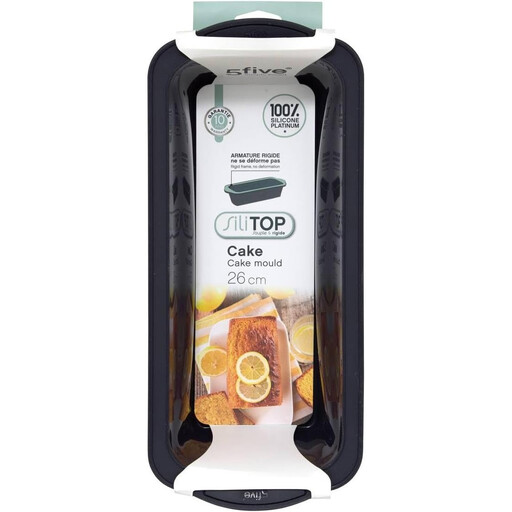
Why this product suits the profile: The combination of steel and silicone offers a flexible loaf tin with added frame stability. It’s suitable for bread, cakes and other oblong bakes.
The dimensions of 26 cm and the capacity of 1.59 litres are clearly stated. The integrated frame reduces the risk of the tin warping when filled.
According to the product information, the tin is oven-safe up to 220 °C, freezer-safe down to -20 °C and dishwasher-safe.
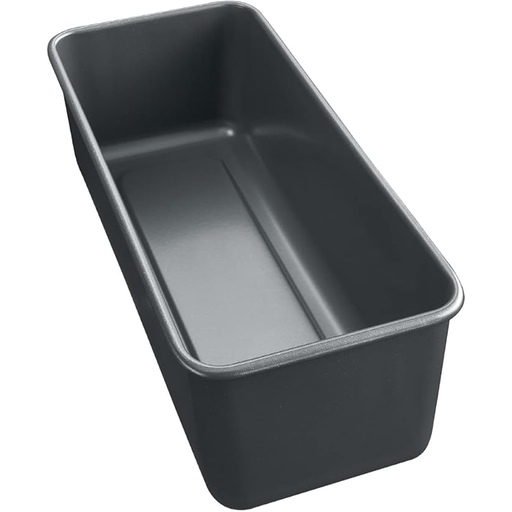
Why this product suits the profile: This steel loaf tin is designed for dimensional stability and features an enamelled base and a KAIRAMIC coating.
The care instructions are clear: hand wash, mild detergent and no metal utensils. This allows you to protect the coating effectively.
30 × 11 × 8 cm, 2.4 litre capacity and a stated heat resistance of up to 250 °C.
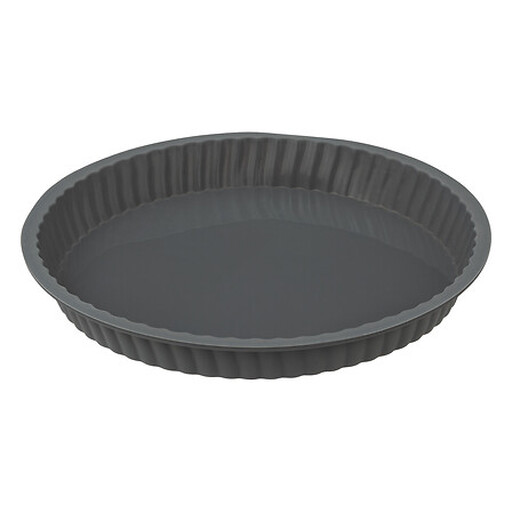
Why this product suits the profile: The shallow, square mould measuring 31 × 31 × 4 cm is designed for tarts, quiches, flans and shallow savoury bakes.
The material and intended uses are clearly stated. The mould is not designed for direct heat sources, but for the oven, microwave and freezer.
100% food-grade silicone, flexible handling and, according to the product information, dishwasher-safe.
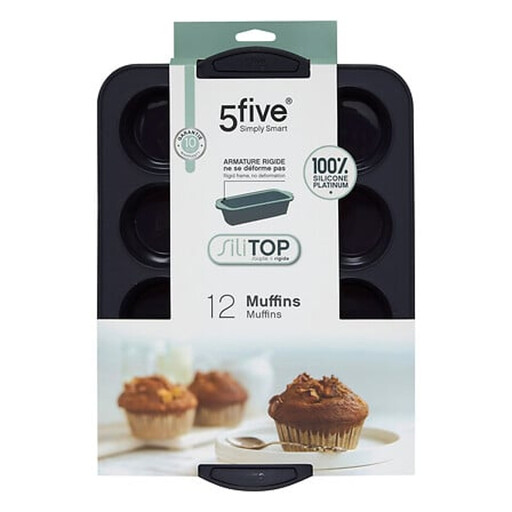
Why this product suits the profile: The muffin tin with 12 wells is suitable for multiple individual portions in one bake and is reinforced with a steel frame.
The number of wells, the 6.5 cm diameter and the total volume of 0.85 litres are stated. The frame makes it easier to insert and remove.
12 individual baking wells, silicone material and a weight of 0.345 kg for relatively easy handling.
We’ve put together a complete, regularly updated list of products that fully meet these strict selection criteria and the safety regulations in force in the EU.
The lifespan depends not only on the material, but also on how you handle it. Allow the tin to cool after baking before you release your bake. With coated models, avoid using knives and metal spatulas. Silicone moulds can be stored to save space, but shouldn’t be permanently folded if this creates creases in the material.
Before buying a baking tin set, it’s also worth considering your actual usage. Three springform tins are practical if you frequently need different cake sizes. For occasional baking, a single, versatile cake tin can be the more space-saving solution.
For bread, sturdy loaf tins made of steel or coated metal are suitable. Check the intended dough or bread quantity. For a loaf of around 1 kg, the tin should have a corresponding capacity.
Both materials have different properties. Silicone is flexible and easy to release from, while steel is dimensionally stable and transfers heat directly to the batter. The right choice depends on the recipe, oven temperature, storage and desired care.
A fixed lifespan can’t be given universally. Coated tins can be used for a long time with gentle cleaning and suitable kitchen utensils. Visible scratches, peeling coatings, warping or rust are signs that it’s time to replace the tin.