
Lieferung heute & morgen

Qualitätsgarantie

Willkommens-Angebote freischalten: KOSTENLOSE Lieferung | Bis zu 80 % RABATT | Kostenlose 30-Tage-JoyPlus-Testphase
App herunterladen
The right baking tin can make all the difference to how your recipe turns out. The material, dimensions, fastening and cleaning requirements all affect whether your cake comes out intact, bakes evenly and how long the tin will last. So if you’re buying baking tins, don’t base your choice solely on the colour, brand name or a deal that looks too good to miss.
A baking tin with a non-stick coating can make it easier to remove your bake. However, the coating won’t necessarily stay in perfect condition indefinitely. Metal knives, forks, scouring pads and harsh cleaners can scratch the surface. And even if a tin is described as dishwasher-safe, that may not apply to every part.
So check the details carefully:
A 20 cm springform tin holds considerably less mixture than a 30 cm one. If you use a recipe intended for a larger cake tin in a smaller one without adjusting it, the mixture may sit too high and bake unevenly. On the other hand, in a tin that’s too large, the cake will be flatter and may dry out more quickly.
Check the diameter, height, capacity and internal dimensions. For rectangular tins, length and width are key; for Bundt tins, also check the height and the diameter of the central tube.
A silicone baking tin is easy to store and can make it easier to release your bake. However, a flexible tin filled with runny mixture can tip when you carry it to the oven. It’s therefore a good idea to place it on a sturdy baking tray. Very shallow silicone tins may also produce different browning results from metal tins.
Metal tins made from steel or carbon steel conduct heat differently from silicone ones. They’re sturdy and often suitable for cakes, cake bases and quiches. Check the maximum temperature specified by the manufacturer. Depending on the product, the metal tins featured in this guide are suitable for temperatures up to 240 or 250 °C.
Silicone tins are lightweight and flexible, and are often designed for use in the oven, freezer and microwave. However, this must be explicitly stated in the product information. Don’t use a tin over an open flame or on a hob unless it’s specifically approved for that purpose.
For a springform tin, a smooth-action fastening and a well-fitting base are particularly important. A leakproof base can be useful for runny cheesecake mixtures, but it doesn’t remove the need to prepare the tin properly. For tart and quiche tins, a removable base makes it easier to transfer your bake to a serving plate.
According to the product information, an enamelled base may be resistant to cuts. Even so, always read the specific care instructions before use, and don’t use sharp utensils directly on the coated inner surface.
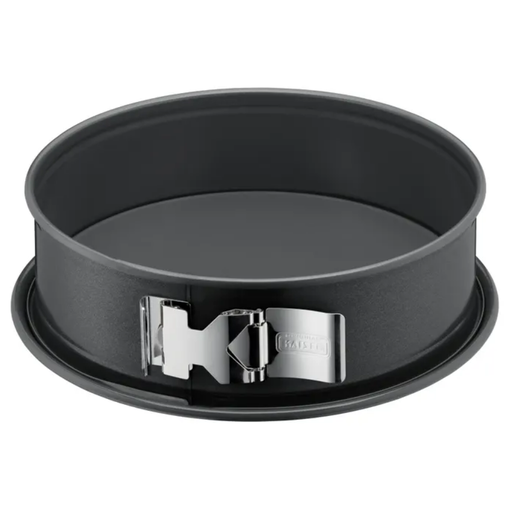
Why it suits this type of baker: This compact 20 cm springform tin is ideal for smaller households, everyday cakes and beginners who want a versatile tin to start with.
The product information specifies a SafeClick fastening, a leakproof, cut-resistant base and a clear maximum temperature of 250 °C.
Steel construction, Kai-Ramic non-stick coating and a dishwasher-safe base; the ring and fastening should be washed by hand.
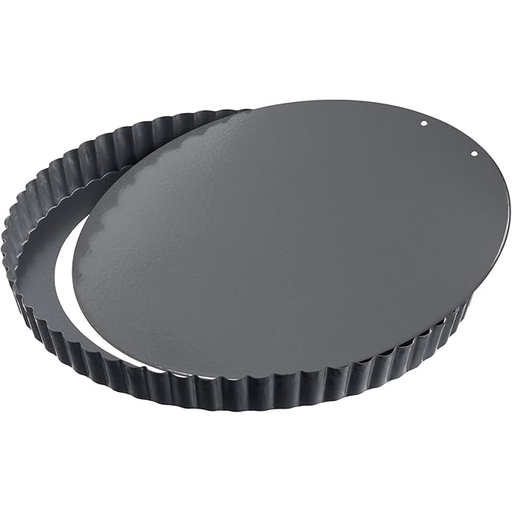
Why it suits this type of baker: This large round tin is made for anyone who regularly bakes tarts and quiches and wants to serve them straight from the base.
The removable base reduces the risk of damaging delicate bakes when you take them out of the tin. The product information gives a maximum temperature of 250 °C.
Steel tin with KAIRAMIC coating and an enamelled, cut-resistant base; hand washing is recommended to protect it.
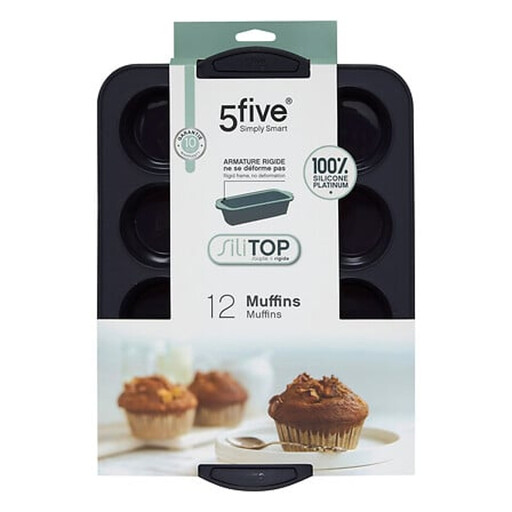
Why it suits this type of baker: Its 12 individual cups are ideal for families, school events and anyone who wants to bake several portions in one go.
According to the product information, the silicone tin has a reinforcing steel structure. This makes it easier to handle than a completely soft tin.
12 cups, each measuring 6.5 cm in diameter; overall dimensions of 33.1 × 23.7 × 4.1 cm; easy-care silicone surface.
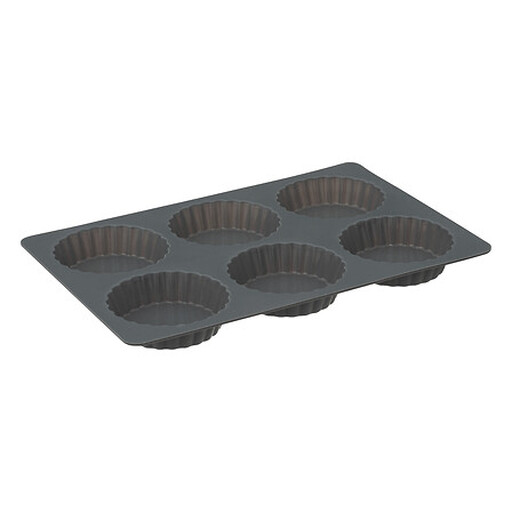
Why it suits this type of baker: According to the description, this flexible tin can be rolled or folded, making it a good choice for smaller kitchens and limited storage space.
Its rectangular dimensions of 37 × 22 × 3 cm are clearly stated. If you’re using runny mixture, place the tin on a sturdy baking tray.
Food-safe silicone, flexible storage and, according to the product description, suitable for use in the oven, microwave and freezer.
We’ve put together a complete, regularly updated list of products that meet these strict selection criteria and fully comply with the safety regulations in force in the EU.
Follow these basic guidelines to keep your baking tins in good working order for longer:
Don’t continue using a baking tin if its non-stick coating is damaged or its springform ring no longer closes securely.
A 20 cm springform tin is suitable for many smaller cakes and tortes. If you often bake muffins, a 12-cup muffin tin lets you make several portions in one go. Look for clear size information, straightforward care instructions and a fastening that’s easy to use reliably.
Its lifespan depends on the material, how often you use it and how well you care for it. Coated tins can wear out more quickly if they’re scratched, overheated or cleaned with abrasive products. Hand washing, suitable kitchen utensils and sticking to the temperature limit can all help protect the surface. There’s no reliable one-size-fits-all estimate for how long a tin will last.
Energy consumption depends mainly on your oven, the temperature, the baking time and the recipe, rather than the tin material alone. Silicone tins are often lighter and take up less storage space. Metal tins are generally more rigid and may produce different browning results depending on the recipe. So before buying a baking tin, consider what you’ll use it for rather than comparing material prices alone.