
Lieferung heute & morgen

Qualitätsgarantie

Willkommens-Angebote freischalten: KOSTENLOSE Lieferung | Bis zu 80 % RABATT | Kostenlose 30-Tage-JoyPlus-Testphase
App herunterladen
Board games are a firm favourite for spending time together in many British households. There’s plenty to choose from, from classic games and family games to card games, strategy games, party games and co-operative escape room games. But with so much choice, it can be difficult to know what to buy.
The label “for families” doesn’t tell you much if the game actually needs at least four players. Games for couples or smaller groups are different from those suited to a birthday party with ten people. So check the minimum and maximum number of players, and think about how many people usually join you for game night.
“Age 8+” is a guide, but it doesn’t replace your own judgement about the children who’ll be playing. Some board games for children involve a good level of reading, maths or concentration. Strategy and escape room games can also be quite complex. Always keep small parts out of reach of younger children.
The language of the instructions is an important factor when choosing a board game. Some card games come with English instructions or use very little language, while others can be hard to play without knowing the rules in German. If a game has digital extras, also check whether you’ll need a smartphone, an app, an account or an internet connection.
A game for two to five players suits couples and smaller family groups, while party games for four to twelve players are better for larger groups. Playing time also affects how well a game fits into your routine: you can start a quick card game at a moment’s notice, while longer board games need more time and a clear space to play.
Check the age recommendation from the manufacturer, as well as any warnings about small parts. Games with cards, counters or dice are often unsuitable for children under three. For children aged eight and over, family games with clear rules can be a good choice, as long as the theme and difficulty suit the group.
Keep game boards, cards and counters somewhere dry and protected. Cardboard, paper and plastic are common materials for board games; wooden games may also include information about the type of wood and how it’s finished. An integrated storage compartment can make set-up easier and help prevent small parts from going missing. Check the packaging and playing area dimensions too, especially if you live in a smaller home or take your games along with you.
The products below cater to different gaming preferences. Details about the number of players, age, materials and use are based on the information provided for each product.
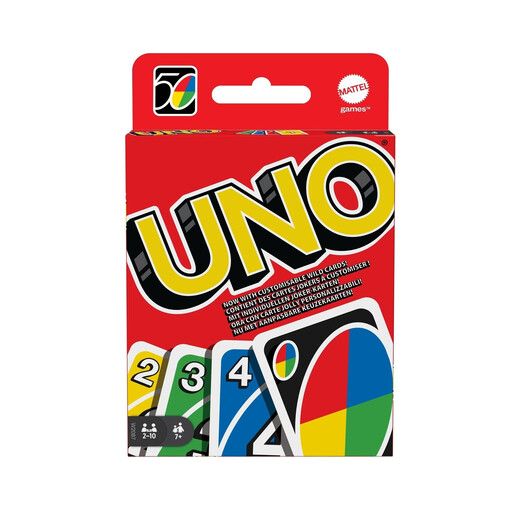
Why this product suits this type of player: This card game is designed for 2 to 10 players, making it a good choice for quick games with family and friends or at parties. The basic rule is to match cards by colour or number.
The number of players is clearly stated. The deck also includes action cards and customisable Wild Cards that you can write on to adapt the rules.
It has 112 cards, needs no batteries and is compact. The product information recommends it for ages 7 and over.
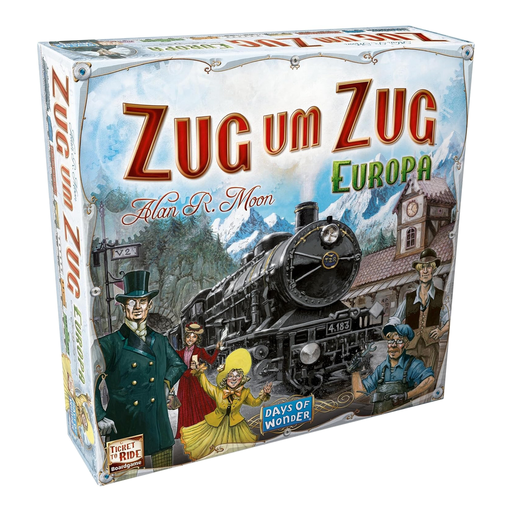
Why this product suits this type of player: This strategy game combines route planning with a European railway theme. It’s designed for 2 to 5 players aged 8 and over.
The product description says the rules are quick to explain and that games take around 45 minutes or longer. This helps you get a better idea of the time commitment before you buy.
Building routes, completing destination tickets and using stations offer several ways to make decisions. According to the product information, the game components are made from paper, cardboard and plastic.
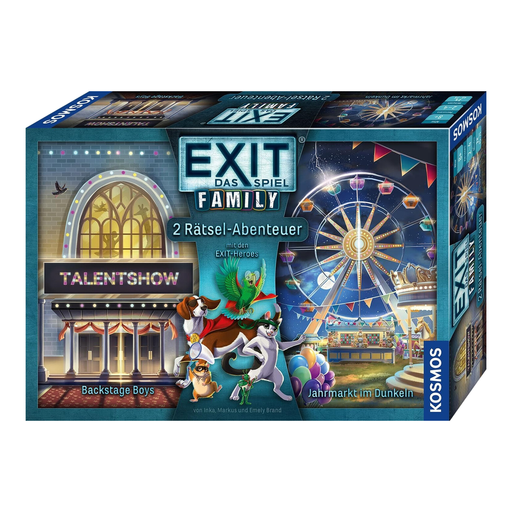
Why this product suits this type of player: This box contains two puzzle adventures for 2 to 4 players aged 8 and over. It’s a good choice for co-operative play without any competitive mechanics.
The target audience, number of players and age recommendation are all clearly stated. The optional KOSMOS app is described as an extra and isn’t essential to play.
Logical thinking and teamwork are at the heart of the game. The box contains two scenarios and doesn’t need batteries.
We’ve put together a complete, regularly updated list of products that meet these strict selection criteria and fully comply with the safety regulations in force in the EU.
For larger groups, look for games with a high maximum player count. UNO is listed for up to ten players. A suitable party game such as City Country Fool is another option for four to twelve players. Before you buy, also check that everyone can understand the language and rules.
A game’s lifespan depends on its materials, how often it’s played and how it’s stored. Keep cards and game boards dry and clean, and protect them from direct sunlight. Liquids can warp paper and cardboard components. Check that everything is back in the box after each game so you can spot missing pieces early.
For family gifts, look for games with clear rules, a flexible player count and an age recommendation of around eight and over. Card games are usually easy to store, while strategy games and themed family games can make for longer game nights. When choosing a gift, make sure the language, playing time and any app requirements suit the family you’re buying for.