
Lieferung heute & morgen

Qualitätsgarantie

Willkommens-Angebote freischalten: KOSTENLOSE Lieferung | Bis zu 80 % RABATT | Kostenlose 30-Tage-JoyPlus-Testphase
App herunterladen
Board games can structure a family afternoon, a games night with friends, or a larger celebration. However, the selection is vast: family games, party games, strategy games, card games and quiz games differ significantly in age range, number of players, playing time and difficulty level.
If you decide based only on well-known names or flashy advertising promises, you often overlook important details. Three typical buying pitfalls are particularly relevant:
A factual check of the product details helps you avoid buying mistakes and choose a game that genuinely suits the intended occasion.
The stated number of players is an essential selection criterion. For a quiet games night for two, compact strategy games or classic games with two roles are ideal. For a family round of four, many classic board games are suitable. For a party with ten or more participants, party games with short turns and parallel tasks are more practical.
Also check whether the game works with teams. For quiz games or party games for several players, a team variant can expand the group size. However, the manufacturer's recommendation should not be exceeded, as waiting times and game dynamics can otherwise change.
The age rating describes not only safety but also the expected rule and reading comprehension. Board games for ages 8 and up may contain tasks, texts or tactical decisions that are difficult for younger children to understand. For games with small parts, the warning labels on the packaging also apply.
For children aged 6 and over, short, easy-to-explain family games such as Connect 4, Hands Up! or certain dexterity games are suitable. With cooperative board games, participants work together on a task; this can be interesting for families when competition within the group is to be avoided.
Check before you buy:
A game with a playing time of 15 to 30 minutes is easier to fit into everyday life than a session of 90 minutes. For longer strategy games, you should consider the table space required and the possibility of safe storage.
The materials are also relevant. Cards and game boards made of paper or cardboard should be stored in a dry place. Plastic parts can usually be cleaned easily with a dry cloth. Electronic games require batteries and may use sounds or light signals. This is attractive for some users, but an additional effort for others.
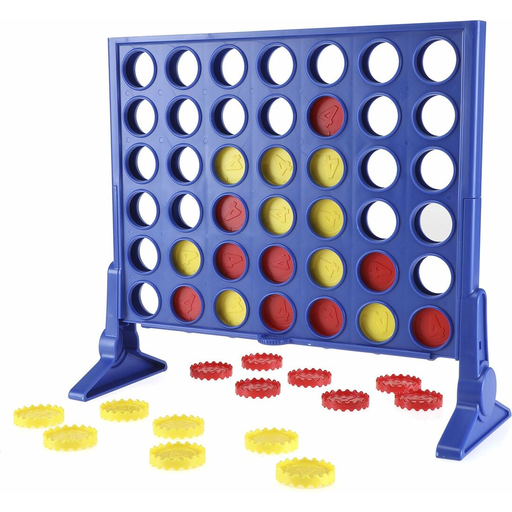
Why this product suits the profile: The game is designed for two players aged 6 and over and has a clearly understandable objective. This makes it suitable for first board game sessions with children and adults.
The number of players, age and simple setup are clearly stated. Neither batteries nor an app are required.
For 2 players, ages 6 and up, no batteries required and made of plastic game material.
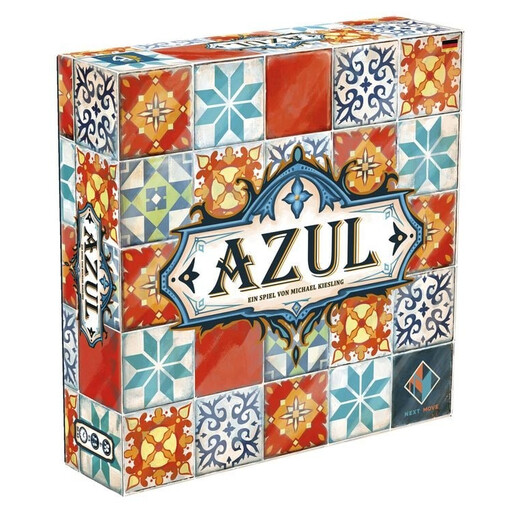
Why this product suits the profile: Azul combines a manageable number of players with tactical selection and a stated playing time of around 30 to 45 minutes. It is designed for 2 to 4 players aged 8 and over.
The product details state the material, number of players, age and duration. This makes it easier to assess the space and time required before buying.
German edition, 2–4 players, ages 8 and up and no batteries required.

Why this product suits the profile: This cooperative game is ideal for joint investigation sessions from ages 10 and up. A large textile map and 16 cases offer varied tasks for repeated games nights.
The cooperative structure reduces competitive pressure. Age, number of cases, map format and required magnifying glass are specified in the product details.
16 cases, textile playing surface measuring 75 × 110 cm and German instructions.
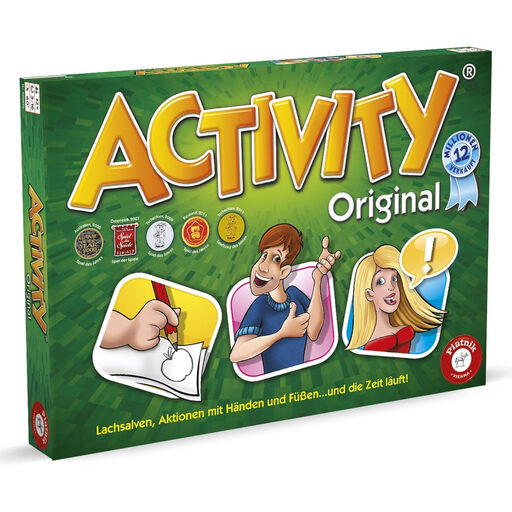
Why this product suits the profile: This party game combines drawing, acting and explaining and is designed for 3 to 16 players aged 12 and over. This makes it ideal for groups of friends and larger games nights.
The high number of players is explicitly stated. The 2,640 terms provide variety without needing to buy additional cards.
3–16 players, 2,640 terms and three game modes: drawing, acting and explaining.
We have compiled a complete, regularly updated list of products that fully meet these strict selection criteria and the safety regulations in force in the EU.
Look for understandable instructions, a flexible number of players and an age rating that matches the youngest player. Board games for children aged 6 or 8 and over should have short rules and clearly recognisable game materials. For mixed age groups, simple strategy games, classic party games and cooperative board games are often more accessible than complex games for adults.
The lifespan depends mainly on the materials, storage and handling. Cards and game boards should be stored in a dry, light-protected place and as flat as possible. You can check for completeness after each session. For frequently used games with small parts, a sorting box or storage in the designated compartments is recommended.
Many classic board games require neither batteries nor additional software. Ongoing costs can arise if expansions, replacement parts or an app are planned. Therefore, check the scope of delivery, power supply and any digital requirements before buying. For products such as electronic memory games or music-related games, batteries or a compatible smartphone may be necessary.