
Lieferung heute & morgen

Qualitätsgarantie

Willkommens-Angebote freischalten: KOSTENLOSE Lieferung | Bis zu 80 % RABATT | Kostenlose 30-Tage-JoyPlus-Testphase
App herunterladen
Board games are one of the easiest ways to spend time together. However, the wide selection does not automatically guarantee the right purchase. A game may appear suitable for families on the packaging, yet still be unsuitable for your group when it comes to the number of players, playing time or age range.
There are three common pitfalls that frequently lead to disappointing purchases:
If you want to buy board games, card games or family games, you should therefore check the key practical details first.
The age recommendation on the packaging is a useful guide, but it does not replace looking at the game mechanics. For board games for ages 8 and over, you should check whether children need to read, do calculations or plan longer turns. A game with simple basic rules may also be entertaining for adults, while a strategy game with lots of exceptions can quickly overwhelm younger players.
For households with children, safety information about small parts is also important. Many board and card games are unsuitable for children under three because of the risk of swallowing small pieces. This age limit should be observed even when older siblings are playing too.
A stated range of, for example, 2 to 4 people does not always indicate the ideal number of players. The dynamic in a two-player game can be very different from that of a four-player round. Party games are often designed for larger groups, while strategy games or cooperative games frequently work well with just a few participants.
Before buying, it is worth asking yourself these questions:
Pack size is also important when travelling. Compact card games and games with a carry pouch are easier to fit into a rucksack or suitcase than larger board games.
A short playing time is ideal for spontaneous rounds and families with limited attention spans. When buying, however, playing time and preparation time should be considered separately. A title lasting 45 to 90 minutes may be well suited to a planned games night, but less suitable for a quick game while travelling.
The materials also affect how practical a game is for everyday use:
The following board games meet a range of requirements, from quick card games and classic board games to a cooperative escape-room game.
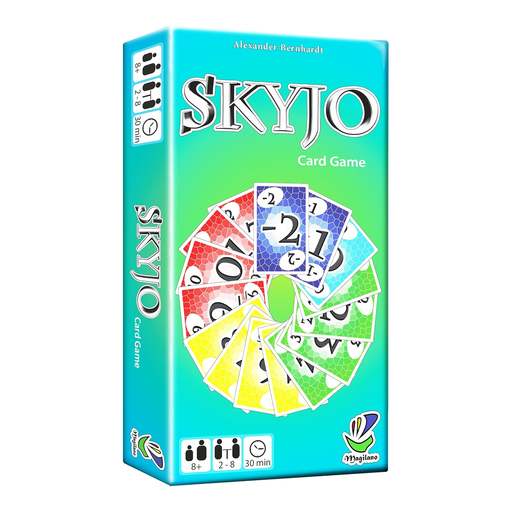
Why this product suits the profile: SKYJO is designed for 2 to 8 players, is suitable for ages 8 and over, and can be added to a family games night without complicated set-up.
The player range suits both small and larger groups. The rules are based on revealing cards, swapping them and collecting points, making it easy to get started.
2–8 players, recommended for ages 8 and over, compact card format and multilingual instructions including German.
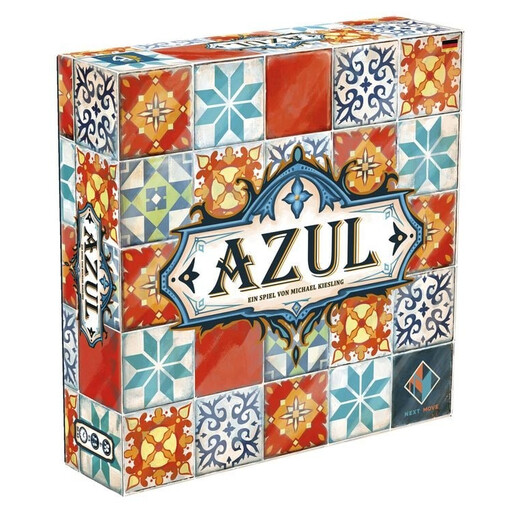
Why this product suits the profile: Azul is designed for 2 to 4 players aged 8 and over, combining a clearly defined set of components with tactical decisions.
The details for player numbers, age and playing time are specific: 2–4 players, ages 8 and over, and around 30–45 minutes. This makes planning a games night easier.
German edition, 2–4 players, recommended for ages 8 and over, with a stated playing time of 30–45 minutes.

Why this product suits the profile: The version with a fabric pouch is designed for 2–4 players aged 7 and over, making it suitable for holidays, visits or playing on the go.
The storage solution is designed specifically for taking the game with you. This means the pieces do not need to be carried in an additional box.
2–4 players, ages 7 and over, fabric pouch for transport and no batteries required.
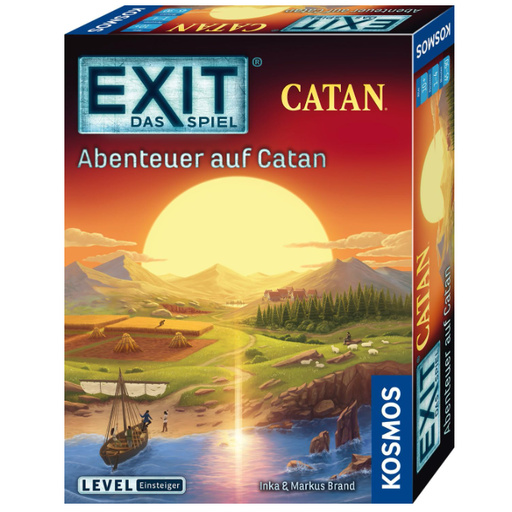
Why this product suits the profile: This cooperative escape-room game is designed for 1–4 players aged 10 and over, combining puzzles with a Catan scenario.
The difficulty level is listed as ‘Beginner’. It is also clearly stated that the materials can be altered, meaning the game is designed to be played only once.
Cooperative game for 1–4 players, recommended for ages 10 and over, with an optional app featuring a tutorial and timer.
We have put together a complete, regularly updated list of products that fully meet these strict selection criteria and the safety regulations applicable in the EU.
Games with clear rules, manageable playing times and an age recommendation of 8 and over are often practical for families. Card games such as SKYJO or classic games such as Rummikub can be suitable for mixed groups. Before buying, you should check whether younger children can manage the necessary number, reading or planning tasks.
Lifespan depends on the materials, storage and frequency of use. Cards should be stored in a dry place and protected wherever possible. Plastic tiles and plastic holders are designed for repeated rounds when handled with care. Escape-room games with materials that are altered, on the other hand, are often intended for one-time use.
The cost depends less on the playing time than on the equipment, number of players and reusability. A compact card game can provide several short rounds, while a substantial strategy game offers longer-lasting entertainment. The key is to choose a game that suits your regular group size and the level of difficulty you want.