
Lieferung heute & morgen

Qualitätsgarantie

Willkommens-Angebote freischalten: KOSTENLOSE Lieferung | Bis zu 80 % RABATT | Kostenlose 30-Tage-JoyPlus-Testphase
App herunterladen
Board games should suit your group, the occasion and the time you have available. But product descriptions don’t always make it easy to choose the right game. They often highlight large card collections, app features or supposedly simple gameplay, while important details are mentioned only in passing.
The phrase ‘for several players’ isn’t very helpful if it doesn’t give you an exact number. A card game for 2 to 6 players won’t necessarily work for a birthday party with 12 guests. When choosing family board games or games for 2 to 10 players, check the minimum and maximum player count before you buy.
Some card games work perfectly well without any extra devices. Others need a smartphone, an app, an account or an internet connection. For music-based games such as Hitster, you’ll need a smartphone with iOS or Android and a Spotify account to play the music. According to the product description, a Premium account isn’t essential for every game mode, but it can make things easier.
A game rated for ages 8 and up isn’t necessarily a classic family game for younger children. Strategic decisions, reading skills, small parts or potentially unsuitable content can limit who can play. For board games for adults, it’s also worth checking that the humour, language and themes suit your group. Some party games have their own age ratings of 16 or 18 and up.
The player count helps you decide whether a game is right for a quiet game night or a larger party. For two players, for example, you could try a tactical game such as a multi-stage version of tic-tac-toe. For larger groups, party games involving roles, communication or music are often more practical. The dynamic can vary too: a game for 2 to 5 players usually offers a different kind of interaction from one for 8 to 28 players.
Check the stated playing time and how much preparation is needed. A quick card game is ideal for an impromptu round, while strategy games with a board need more space and time. ‘No assembly required’ doesn’t always mean there’s no preparation at all. You may still need to shuffle the cards, lay out the components and explain the rules.
Card and board games are usually made from paper, cardboard or plastic. Store them somewhere dry and out of direct sunlight to help prevent cards and boards from warping or fading. Age recommendations are especially important for products with small parts. Always follow the manufacturer’s guidance on the packaging and in the instructions rather than relying on general marketing claims.
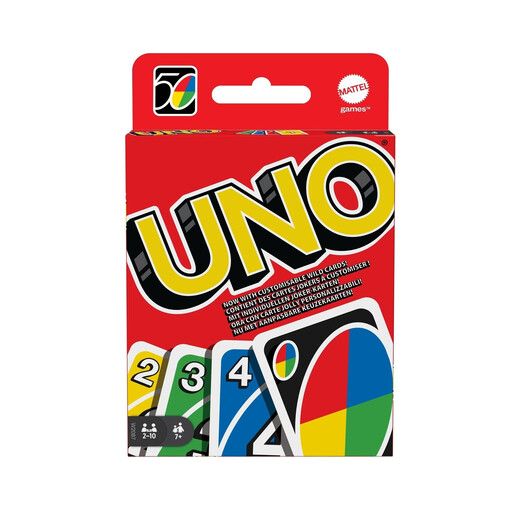
Why this product suits this playing style: The rules are quick to explain, the card game supports 2 to 10 players and, according to the product information, is suitable for ages 7 and up.
The player count and age recommendation are clearly stated. No batteries or app access are needed.
112 cards, special cards such as Skip and Reverse, plus customisable Wild Cards.
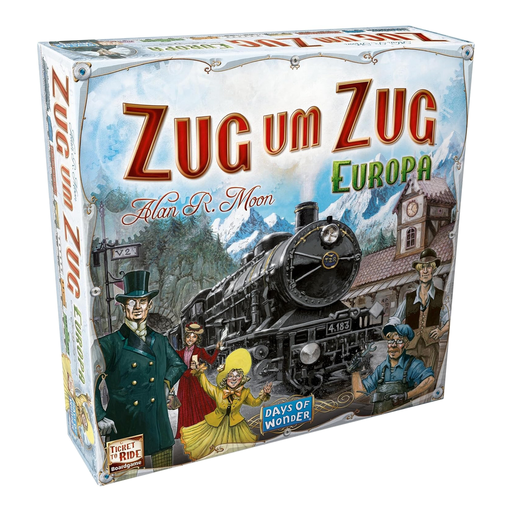
Why this product suits this playing style: This board game combines a structured game board with route planning and is suitable for 2 to 5 players aged 8 and up.
The playing time of around 45 minutes or more and the recommended player count help you plan a realistic game night.
A game board, destination tickets and train routes make for satisfying decisions, with no app or batteries required.

Why this product suits this playing style: This music-based card game is designed for 2 to 10 players aged 16 and up, making it ideal for lively get-togethers.
The technical requirements are clearly set out: a smartphone, the Hitster app, a Spotify account and an internet connection for streaming music.
Over 300 music cards and a chronological timeline bring music, memory and discussion together.
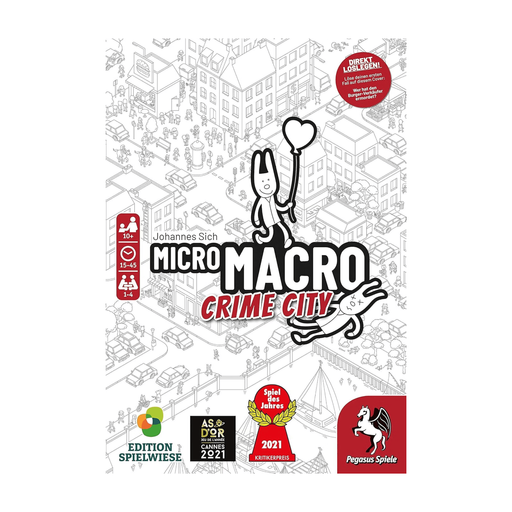
Why this product suits this playing style: This cooperative detective game is designed for players aged 10 and up, with 16 cases to solve on a large cloth map.
The product details list the materials, number of cards, accessories and space required to play. This helps you work out how much room you’ll need in advance.
A 75 × 110 cm map, a magnifying glass and extra online cases make for plenty of repeat cooperative play.
We’ve put together a complete, regularly updated list of products that meet these strict selection criteria and fully comply with the safety regulations in force in the EU.
For families, clear rules, an appropriate age recommendation and a flexible player count are important. UNO is listed for 2 to 10 players aged 7 and up. Ticket to Ride: Europe is designed for 2 to 5 players aged 8 and up, and involves more strategic decisions. For younger children, check for small parts and follow the manufacturer’s guidance.
For larger groups, party games with quick explanations and a high player count are a good choice. According to the product details, The Werewolves of Millers Hollow – Best of supports 8 to 28 players aged 10 and up. Activity Original is designed for 3 to 16 players aged 12 and up. Both games focus more on communication and interaction than on a traditional game board.
A game that connects to an app may require a smartphone, internet access and an account. Hitster requires Spotify to play the music; a Premium account can make it easier to use, depending on the game mode. According to the product information available, classic board and card games such as UNO and Ticket to Ride: Europe don’t need batteries or a streaming service.