
Lieferung heute & morgen

Qualitätsgarantie

Willkommens-Angebote freischalten: KOSTENLOSE Lieferung | Bis zu 80 % RABATT | Kostenlose 30-Tage-JoyPlus-Testphase
App herunterladen
Board games differ in more than just their theme and design. Playing time, number of players, age recommendation, rule complexity and materials all matter. If you choose based only on familiar names or eye-catching product images, you may end up with a game that’s too long, too complicated or simply not right for your group.
This buying guide will help you compare board games objectively and avoid common buying mistakes – whether you’re shopping for families, children aged 8 and over, adults, couples or a game night with friends.
‘Ages 8 and up’ is more than just a guide to suitability. It also gives you an indication of the reading skills, understanding of rules, attention span and ability to handle small pieces the game requires. A strategy game may be suitable for children aged 8 and over, while an escape room game may be better suited to those aged 10 and over.
It’s also important to distinguish between the minimum age and the actual target audience. A game for 2 to 6 players won’t automatically suit a family of eight. Before buying card and party games, check the maximum number of players they support.
A stated playing time of 30 to 45 minutes is quite different from a game that takes 45 minutes or more – particularly on a game night. Longer strategy games may also need extra time for setting up, explaining the rules and scoring.
Family games with a straightforward introduction are often a good choice. If you regularly play with experienced players, you can plan for more complex rules and longer games.
Small cards, playing pieces or tokens can pose a choking risk for children under 3. Always follow the safety information on the packaging. If you’re buying a second-hand game or one that’s been played often, check that all the pieces are included.
For games with digital extras, check what technology you’ll need. Some require a smartphone, an app or an account with a streaming service. This can affect how the game is used, particularly if you’re buying it as a gift.
Choose a game that suits the size of your group:
In cooperative games, everyone works towards the same goal. They can be a good choice for families who want to avoid competition. Competitive games, on the other hand, give players individual goals and a winner, which may suit some game nights better.
Check the official age recommendation and look out for warnings about small parts. For games aimed at children aged 8 and over, the recommendation usually reflects a certain level of rule complexity and reading ability. Younger children should not use games with small parts unsupervised.
Materials such as paper, cardboard, plastic and wood affect how a game should be cared for. Keep cardboard components dry and clean them with a soft, dry cloth only. Liquids can warp game boards and cards.
A compact game is easier to store and works well in smaller homes or when travelling. Larger boards need a sturdy table with plenty of space. Built-in storage can be useful when a game includes lots of cards, play money or playing pieces.
Also check whether you’ll need batteries, an app or any extra materials. Traditional board games can usually be played without any technology.
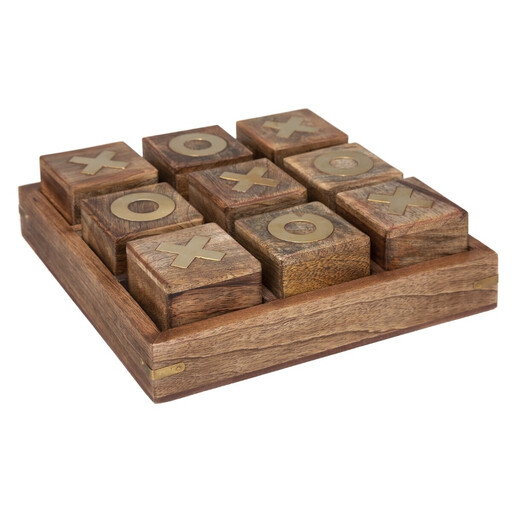
Why it’s a good fit: This classic noughts and crosses game needs no batteries, app or lengthy explanation. Measuring 23 × 23 × 7 cm, it fits neatly on a coffee table or shelf and is ready for a quick game whenever you are.
The rules are simple, games are short and the set consists of a wooden board and nine counters. There’s no lengthy set-up involved.
Mango wood, a metal stand and a weight of 1.05 kg; made for two players and easy to display in your living space.
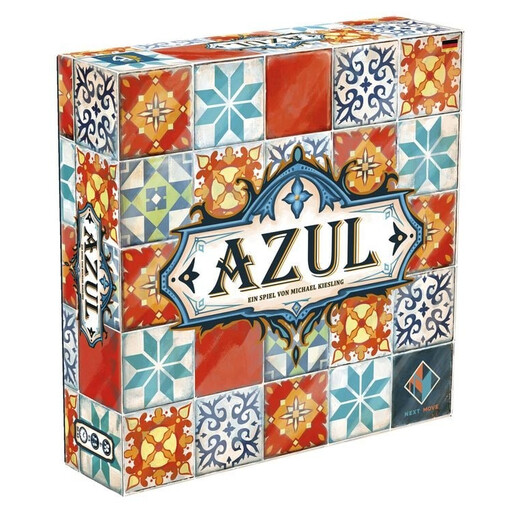
Why it’s a good fit: Azul combines a structured tile-laying system with tactical decision-making. It’s designed for 2 to 4 players aged 8 and over, with games lasting around 30 to 45 minutes.
The number of players, age recommendation and approximate playing time are all clearly stated. The German-language edition is easy to use in German-speaking families.
Tactical choices of colours and tiles; a good choice for families and adults looking for a strategy game with a predictable playing time.
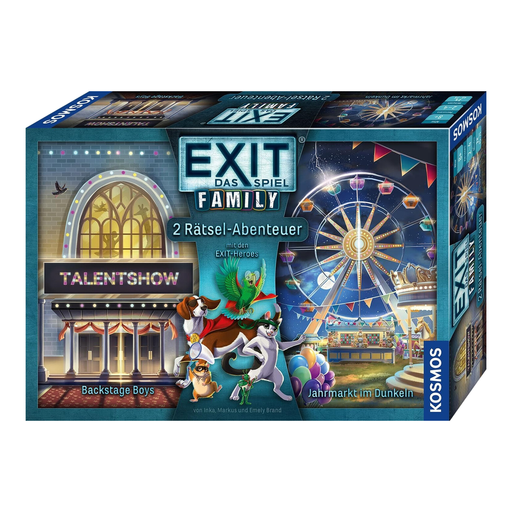
Why it’s a good fit: This box contains two escape room adventures for 2 to 4 players aged 8 and over. Work together to solve the puzzles – ideal for families or small groups of friends.
The number of players and age recommendation are clearly specified. The optional KOSMOS app can be used as a tutorial, but according to the product information, it isn’t essential.
Two scenarios, cooperative puzzles and compact packaging measuring 17,7 × 5,8 × 26 cm.
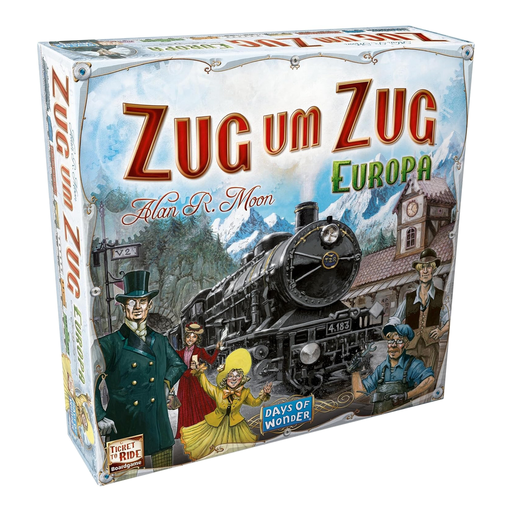
Why it’s a good fit: This board game is designed for 2 to 5 players aged 8 and over. Collecting cards, building routes and completing destination tickets combine easy-to-learn rules with strategic decisions.
The German-language edition, stated player count and age recommendation make it easier to choose. No batteries or assembly are needed.
Around 250 components, a game board featuring European cities and a stated playing time of 45 minutes or more.
We’ve put together a complete, regularly updated list of products that meet these strict selection criteria and fully comply with the safety regulations in force in the EU.
Look for games with a clear age recommendation of 8 and over, straightforward rules and a suitable playing time. Azul and Ticket to Ride: Europe are recommended for 2 to 4 and 2 to 5 players respectively, aged 8 and over. Keep small parts away from younger children.
It depends on how you plan to use it. Games for 2 players are ideal for couples. Families often choose games for 2 to 4 or 2 to 6 players. For parties and larger groups, card games for up to 10 players are more practical. Before buying, check that the manufacturer’s recommended player count suits the size of your group.
Store board games somewhere dry and clean, either flat or standing securely. Protect cards and cardboard pieces from moisture and direct sunlight. A box with an organised interior makes it easier to check that all the pieces are there and helps you get set up more quickly for your next game night.