
Lieferung heute & morgen

Qualitätsgarantie

Willkommens-Angebote freischalten: KOSTENLOSE Lieferung | Bis zu 80 % RABATT | Kostenlose 30-Tage-JoyPlus-Testphase
App herunterladen
Board games are available in Germany in many different formats, including family games, strategy games, card games, educational games and cooperative board games. The wide range does not always make choosing easier. Often, it is not the eye-catching cover but the combination of player count, age recommendation, playing time and material quality that determines whether a game becomes a regular favourite.
“2 to 8 players” sounds versatile. However, it does not automatically mean that the game works equally well with every group size. Some games change considerably when only two people are playing. If you regularly play as a pair, look specifically for games for 2 players or a clearly stated two-player variant.
“From 8 years” is a recommendation from the manufacturer, but it does not promise that every child will understand the rules without help. Strategic decisions, the amount of text and the required level of concentration can all affect how easy the game is to get into. When choosing board games for children aged 8 and over, it is worth checking the length of the rules, playing time and reading skills required.
Game pieces, cards, marbles and magnets can pose a risk to younger children. Check the warnings on the packaging before buying. Games containing cardboard components should also be stored in a dry place. Liquids and high humidity can warp game boards and cards.
First, be clear about who will be playing: a family, a couple, a larger group, or children with adults. Cooperative board games are suitable when everyone needs to work towards a shared objective. Competitive strategy games are a better fit for groups that enjoy direct decisions and different chances of winning.
The objective of the game is also important. In Ticket to Ride: Europe, players build railway connections between European cities and complete destination tickets. In SKYJO, the aim is to collect as few points as possible. These different mechanics create a different playing experience, even though both titles can be used as multiplayer party games.
For children aged 6 and over, short rules and manageable turns are often more suitable than complex strategy games. A compact educational game may be ideal for travelling or short periods of play, while a longer family game is better suited to a planned game night.
Pay attention to specific details:
A sturdy box, well-made playing pieces and clear storage make regular use easier. With compact games, a folding board can simplify transport. If a game contains small parts, heed the warning about choking hazards. Products with strong magnets should be kept out of the reach of young children and checked regularly for damaged parts.
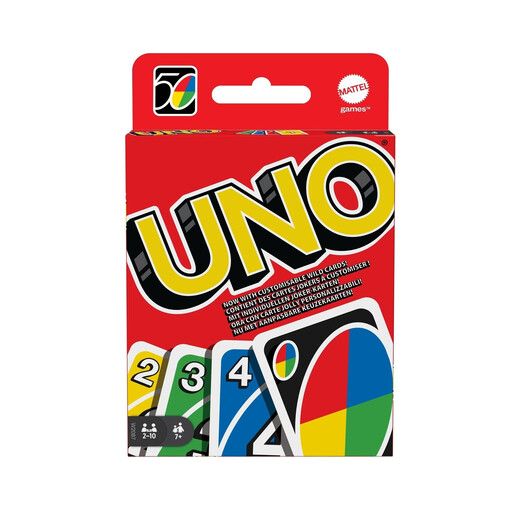
Why this product suits the profile: This card game is designed for 2 to 10 players aged 7 and over. The basic rule – match the colour or number – is quick to explain and works well for families, travelling and spontaneous games.
The clearly stated player count and compact card format make it easier to assess before buying. No large game board or batteries are required.
112 cards, action cards and writable Wild Cards; suitable for family and party games.
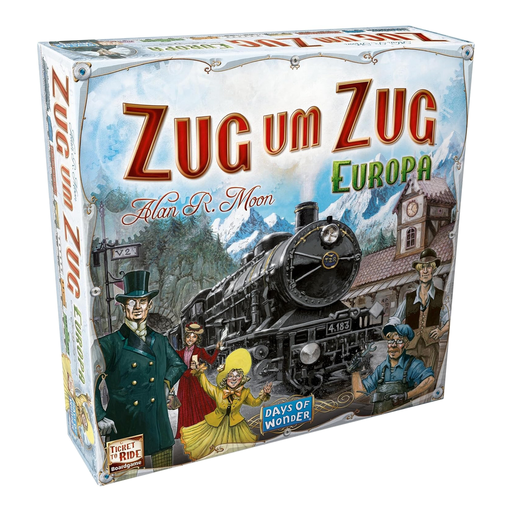
Why this product suits the profile: The German edition supports 2 to 5 players aged 8 and over. It combines an accessible introduction with route planning, making it suitable for families and regular game nights.
The product details specify the player count, age, materials and an approximate playing time of 45 minutes or more. This makes it easier to plan the space and time required realistically.
For 2 to 5 players; game materials made from paper, cardboard and plastic; German edition.
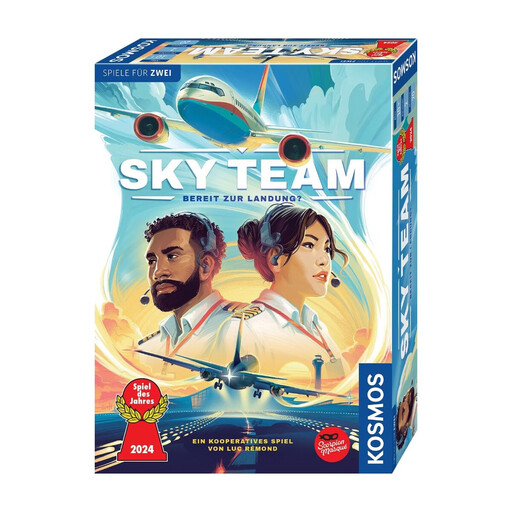
Why this product suits the profile: This cooperative board game is specifically designed for 2 players aged 10 and over. The pilot and co-pilot work together to land a plane, making decisions through a dice-placement mechanic.
The game is not aimed at large groups but clearly at a team of two. 21 airport scenarios provide different challenges and make its suitability for repeated play clear.
Cooperative gameplay; 21 missions; no batteries required; compact packaging measuring approximately 25,7 × 18,6 × 5,3 cm.
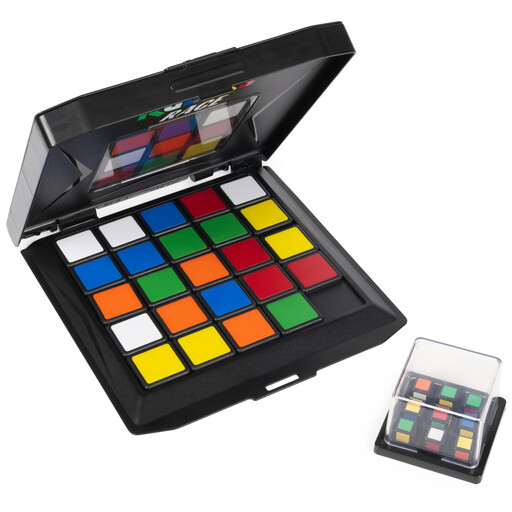
Why this product suits the profile: This head-to-head game is designed for 2 players aged 7 and over, and requires neither batteries nor set-up. The folding game board, measuring approximately 17,5 × 19 × 2,1 cm, is ideal for taking on the go.
The player count is clearly limited to two, rather than suggesting that it is suitable for an unspecified group size. The 48 coloured pieces and the Scrambler included are manageable and easy to store.
Both players play simultaneously; folding travel board; manual play without a power supply.
For children aged 6 and over, compact logic games can be a suitable addition to traditional board games. According to the product details, SmartGames IQ Mini is designed for children aged 6 and over, includes a portable playing board and offers additional challenges, hints and solutions via a QR code. The colour is supplied at random.
Magnetic components require particular care. The XINQIYUAN set contains 28 magnetic components made from ABS plastic and is described as suitable for children aged 3 and over. At the same time, the product description expressly warns about small, strong magnets. Such products must not be put in the mouth; stop using them if any parts are damaged or magnets become exposed.
For larger groups, party games such as DENKRIESEN “City Country Fool” may be worth considering. The product details state that it is suitable for 4 to 12 players, includes more than 700 categories and comes with a junior expansion. Buyers should check the different age recommendations in the product description and on the packaging before planning to use the game with younger children.
We have put together a complete, regularly updated list of products that fully meet these strict selection criteria and the safety regulations applicable in the EU.
Games that explicitly state support for two players are suitable. SKYJO is designed for 2 to 8 players, while Rubik’s Race and Sky Team are intended exclusively for two players. With larger family games, check whether the rules can be adapted for two players.
Their lifespan depends mainly on how they are used and stored. Cards and game boards should be kept dry, clean and, wherever possible, protected from direct light. With games containing plastic parts, regular checks for cracks are advisable. Missing or damaged components can affect gameplay, so it is recommended that you check all the contents after purchase.
Apart from the purchase price, traditional board games generally have no ongoing costs and do not use electricity. One exception may be games with an optional app, such as certain EXIT variants. For budgeting purposes, the main factors are the number of players, expected usage, the amount of material included and whether expansions will need to be purchased separately later.