
Lieferung heute & morgen

Qualitätsgarantie

Willkommens-Angebote freischalten: KOSTENLOSE Lieferung | Bis zu 80 % RABATT | Kostenlose 30-Tage-JoyPlus-Testphase
App herunterladen
Board games are a type of social game where the product description and the actual gameplay do not always promise the same thing. A large box may contain very little material, an advertised multiplayer mode may only work with a specific group size, and with escape-room games, single-use play is often a crucial factor.
If you are looking to buy board games for families, children, teenagers or adults, you should therefore consider more than just the theme and design. Three common purchasing misconceptions are particularly important:
The age recommendation is a practical guide to the intended level of difficulty. Games for children aged 5 and over should offer easy-to-understand rules and manageable tasks. Younger children may still benefit from adult supervision, particularly if the game includes an app, several stages of play or small accessories.
For a game night, it is also worth checking the actual group size:
“Cooperative” means that players work together against a task or scenario. This suits families who would rather play without direct competition. In strategy games, on the other hand, resource management, planning and decisions made over several rounds are often key.
When choosing an escape-room game, pay particular attention to the following details:
A children’s game advertised as “replayable” is not automatically comparable to a classic board game. Check whether it actually includes new tasks or variants, or whether it simply allows the components to be sorted again.
Look for a clearly visible age marking, the CE marking and the safety information on the packaging. Small parts can present a choking hazard and, where a warning is provided, products are not suitable for children under three. The age recommendation does not replace supervision if game materials may be lost or damaged, or if the game can be combined with an app.
Storage also affects usability. Cards, decoders, dice and playing pieces should be stored complete in the original box after each game. Large-format game boards, such as those used in detective games, also require a sufficiently large, well-lit playing surface.
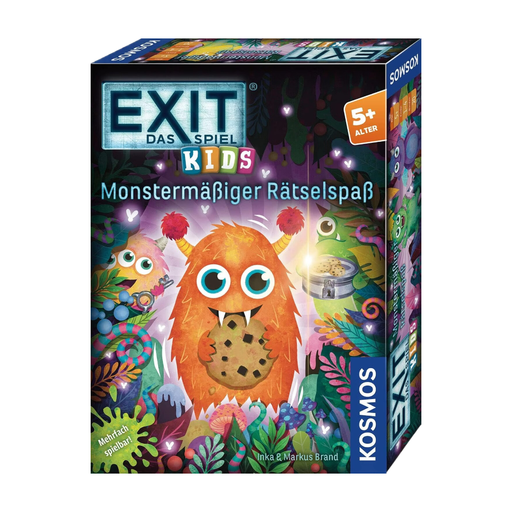
Why this product suits this profile: For children aged 5 and over, this game offers an accessible introduction to puzzles and escape-room games. It is designed for 1 to 4 players and does not require batteries.
The age recommendation, simple rules and adapted puzzles make the intended use clearer than with a game aimed at an undefined audience. Small parts and the warning for children under three should be taken into account.
1 to 4 players, ages 5 and over, optional KOSMOS app and, according to the product description, a replayable gaming experience.
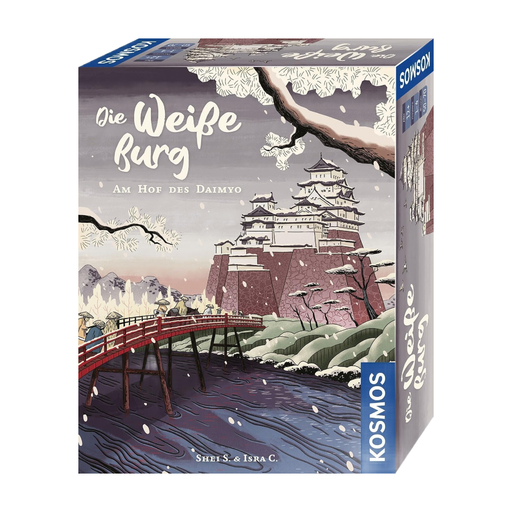
Why this product suits this profile: This strategy game is aimed at players aged 12 and over and combines nine rounds with a dice-placement mechanism. It is suitable for solo players as well as groups of up to four people.
The product details specify the player count, age range, round structure and an approximate playing time of 50 to 70 minutes. This makes it easier to assess the space and time required before buying.
Solo and multiplayer modes, nine game rounds, cardboard components, plus dry cleaning and storage in the original packaging.
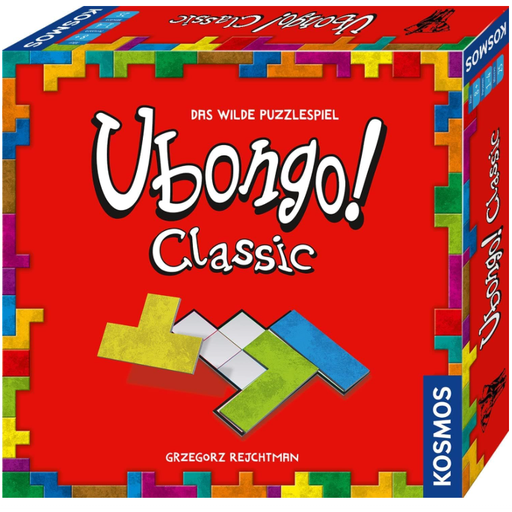
Why this product suits this profile: For regular game nights with family or friends, Ubongo combines simultaneous puzzling with time pressure. Two difficulty levels make it easier to adapt the game to different levels of experience.
The details covering 1 to 4 players, two difficulty levels and 648 puzzles clearly show how the game can be used. The app is optional, so the game does not depend on a digital device.
648 challenges, two difficulty levels, no batteries required and a game board measuring 29,5 × 29,5 cm.
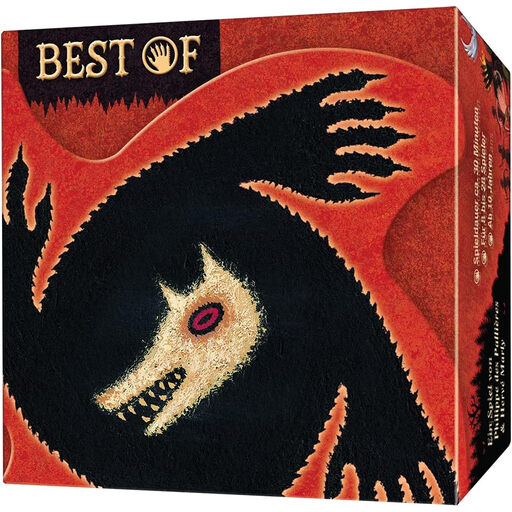
Why this product suits this profile: This party game is designed for 8 to 28 players aged 10 and over, making it ideal for celebrations, larger family gatherings and chatty game nights.
The high minimum player count is clearly stated. If you usually play with only two or four people, you should choose a different social game. A game leader is required to run the game.
Suitable for 8 to 28 players, roles with different objectives, no batteries and a stated playing time of at least 30 minutes.
We have put together a complete, regularly updated list of products that fully meet these strict selection criteria and the safety regulations applicable in the EU.
For a birthday or Christmas present, it is not enough for the theme to appeal. Age, group size and the desired playing time are all important. For children aged 5 and over, child-friendly puzzle games are a good option. Teenagers and adults may prefer more advanced escape-room games, strategy games or detective games. If you are buying for a large group, party games with a high player count are more practical than a game for a maximum of four people.
Also check whether the recipient already owns a game from the same series. With EXIT games, the scenario and difficulty level may be more important than the product range itself. A beginner’s game is more suitable for new puzzle players, while a game marked “Advanced” or “Pro” may require greater tolerance for frustration.
That depends on the group size and the time available. For a household, a small selection consisting of a short family game, a cooperative game and a longer strategy game may be enough. For parties, it is also useful to have a game for at least eight players.
Not necessarily. With many EXIT games, the game materials are altered during the puzzles, for example by folding, writing on or cutting them out. Before buying, you should therefore check whether the specific product is described as single-use or reusable.
The recommended age range, number of players, complexity of the rules and any small parts are all important. The safety warnings apply particularly strictly to children under three. For children aged between five and seven, an adult can help with reading, sorting and explaining the tasks.