
Lieferung heute & morgen

Qualitätsgarantie

Willkommens-Angebote freischalten: KOSTENLOSE Lieferung | Bis zu 80 % RABATT | Kostenlose 30-Tage-JoyPlus-Testphase
App herunterladen
Board games should suit the group playing them – yet this is exactly where people often make the wrong choice when buying. An elaborately designed box says little about whether a game works with two players, is suitable for children or will end up permanently sitting on the shelf after a short time. Terms such as “for the whole family” are not always clear either.
Three common pitfalls are particularly important:
If you want to buy board games, games or card games, you should therefore compare more than just the theme and packaging design. The number of players, playing time, age rating and required accessories are more practical criteria for making your choice.
First, consider how many people will actually be playing. A household of two will need different games from a family gathering or a party with ten guests.
The stated maximum number of players should not be considered in isolation. With some games, the dynamics change noticeably when only the minimum number of people takes part.
The manufacturer’s age recommendation is an important safety and usage guide. If a game contains small cards, counters, figures or playing pieces, it must not be given to children under three years of age. Also follow the information on the product packaging.
For children’s board games, the following factors matter alongside the age rating:
A game for ages 8 and over may be accessible to children who are used to playing, while beginners may need more time to learn the rules. For games rated 10+, 12+, 13+ or 16+, the content, amount of text and level of concentration required should be appropriate for the group.
A realistic playing time makes it easier to choose a game for your game night. Rummikub is listed as taking around 20 minutes per game, while Ticket to Ride: Europe can take around 45 minutes or more, requiring a much greater time commitment. Party games often consist of several short rounds, but can take longer with a larger group.
Also pay attention to:
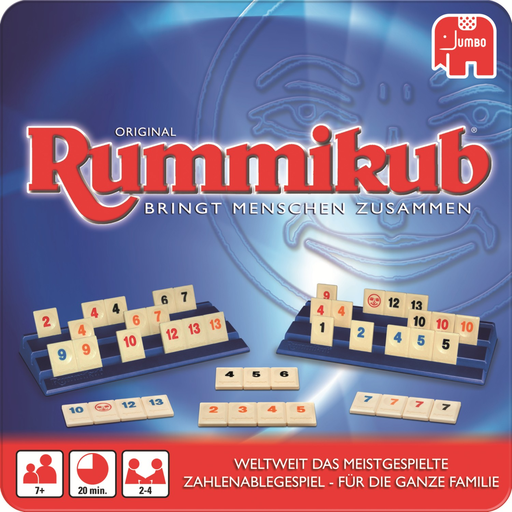
Why this product suits this profile: Rummikub offers a relatively straightforward introduction for 2 to 4 people. With a stated playing time of around 20 minutes, it is ideal for quick games with children aged 8 and over and adults.
The number of players, age rating and playing time are clearly stated. No batteries or app are required.
106 plastic tiles, four racks and German instructions; suitable for creating sequences and groups of numbers.
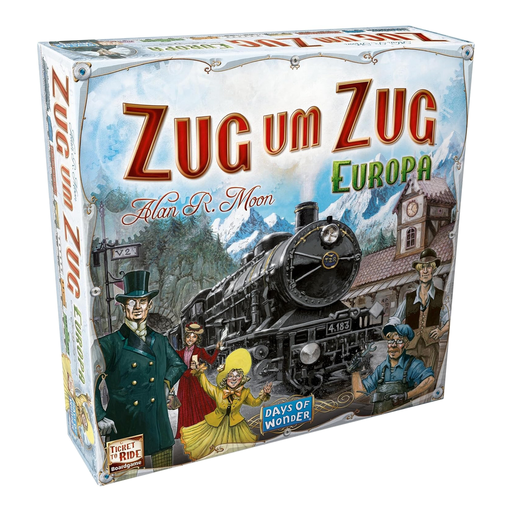
Why this product suits this profile: The game combines accessible rules with route planning for 2 to 5 players aged 8 and over. With a stated playing time of around 45 minutes or more, it is a good fit for planned game nights.
This edition is designed for 2 to 5 players and requires no batteries. The only factor to consider before buying is the longer playing time.
German edition, 2 to 5 players, materials made from paper, cardboard and plastic, plus a game board featuring European cities.
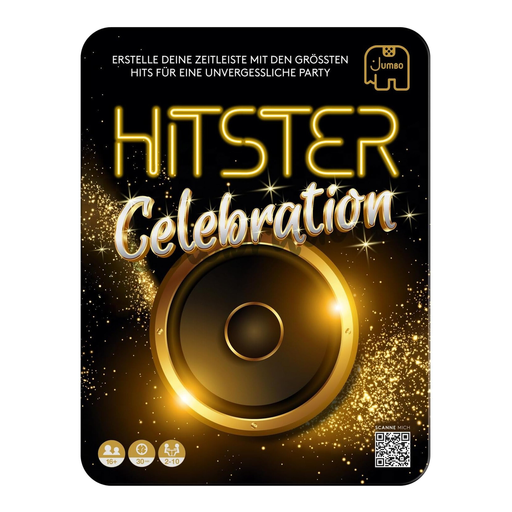
Why this product suits this profile: This edition is designed for 2 to 10 people aged 16 and over, making it ideal for party hosts or music-focused gatherings. More than 300 music cards are arranged in chronological order.
The age limit of 16 years is clearly stated. This edition can be played on its own or used as an expansion for other Hitster editions.
For up to 10 people, with German game materials and a clear objective: the first player to correctly place ten songs in chronological order wins.

Why this product suits this profile: The Junior edition is intended for 2 to 4 players aged 6 and over. Simplified trading rules and a pirate theme make it easier to get started with a board game featuring elements of planning.
The age group and number of players are suited to family game nights. Adult support is recommended for the first set-up and explaining the rules.
2 to 4 players, no batteries required, and game materials made from cardboard and plastic.
We have put together a complete, regularly updated list of products that fully meet these strict selection criteria and the safety regulations applicable in the EU.
Games with an age rating of 6+ or 8+, clear rules and a moderate playing time are often a good starting point. Catan Junior is designed for 2 to 4 people aged 6 and over, while Rummikub is listed for 2 to 4 people aged 8 and over. What matters most is whether the children understand the rules and can handle small parts safely.
Their lifespan depends on the materials, storage and how they are used. Cards and game boards should be stored somewhere dry and clean, protected from direct sunlight. Plastic tiles and figures can usually be stored easily under normal conditions. Check regularly for missing or damaged components, and keep the instructions with the game.
Many classic board games and card games work without any technology. Music games such as Hitster, however, may require a smartphone, an app, an internet connection and a streaming subscription to play the music. Before buying, check which features are available without additional accounts or devices.