
Lieferung heute & morgen

Qualitätsgarantie

Willkommens-Angebote freischalten: KOSTENLOSE Lieferung | Bis zu 80 % RABATT | Kostenlose 30-Tage-JoyPlus-Testphase
App herunterladen
Anyone looking to buy bottles online will find a wide range for sport, everyday use, travel and the kitchen. However, the differences go beyond colour and shape. The material, closure, cleaning requirements and intended use all determine whether a drinking bottle remains practical in the long term or ends up unused in the cupboard after a short while.
The description leak-proof bottle is only useful if the closure is suitable for how you intend to use it. A screw cap with a silicone seal works differently from a drinking opening with a flip mechanism or a squeeze function. You should therefore check:
Sports bottles are often advertised as easy to use. However, this does not automatically mean that every design is suitable for carrying water in a rucksack or transporting it over longer distances.
A glass bottle is transparent and does not affect the taste, but it can break if knocked. A stainless steel bottle is sturdy and easy to transport, although not every version is suitable for hot drinks. Plastic models are often lighter, but their temperature range and care requirements must be checked.
The description BPA-free bottle should also be considered alongside the rest of the product information. BPA-free refers to one specific aspect of the material. It does not replace checking the closure, cleaning instructions and permitted drinks.
Narrow sections, mouthpieces, straws and silicone seals can collect residue. Thorough cleaning is particularly important when using sweet drinks, milk-based beverages or juices. A dishwasher-safe bottle may be more practical for everyday use than a model that can only be washed by hand.
For commuting or short errands, 380 to 500 ml is often sufficient. If you want to refill less frequently during sport, hiking or longer journeys, you could choose a sports bottle with a capacity of 600 ml to 1 litre. You should also consider:
A larger bottle is not automatically more practical if it is difficult to carry or clean.
PE, PP, PETG and Tritan are commonly listed in product specifications. The key point is which drinks the manufacturer says the bottle is designed for. The Emsa Squeeze Bottle and the Tefal Squeeze Bottle, for example, are intended for cold or limited-temperature lukewarm drinks respectively. Hot liquids and carbonated drinks can create pressure in squeeze systems or spray out when the bottle is opened.
A stainless steel bottle such as the 24 Bottles Urban 500 ml is described as a single-wall, non-insulated model. According to the product information, it is intended for still or cold drinks and should be washed by hand. Stainless steel construction alone therefore does not automatically mean that a product is thermally insulated.
A bottle with a drinking opening can make it easier to drink while commuting or driving. For sports bottles with a straw, check whether the straw can be removed and cleaned separately. With oil and vinegar bottles, controlled dispensing is the priority. For kitchen use, capacity, pourer, base stability and visibility of the contents are also important.
For products with a seal, check regularly that the silicone ring is correctly positioned and undamaged. The lid should be fully closed before transport. Instructions such as “not suitable for microwaves, freezers or carbonated drinks” are binding usage instructions and should not be ignored.
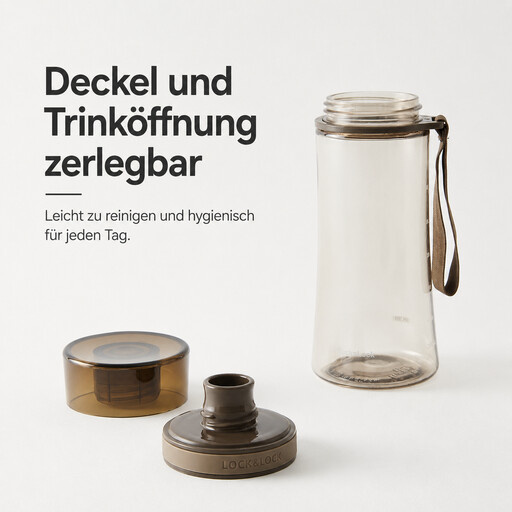
Why this product suits this profile: Its compact format is designed for drinks holders, rucksacks and sports bags. The integrated drinking opening supports one-handed drinking in everyday situations.
The product information specifies a silicone seal and a leak-proof design. The lid must still be closed securely before transport.
380 ml capacity, BPA-free plastic, integrated drinking opening and compact dimensions.
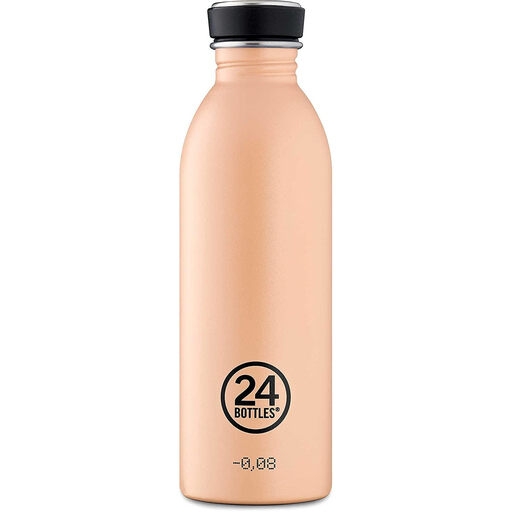
Why this product suits this profile: This single-wall stainless steel bottle weighs around 117 g and is described as suitable for the office, the gym and use on the go.
The product description explicitly states that it is not insulated and excludes hot and carbonated drinks.
500 ml capacity, stainless steel, low weight and a silicone seal in the lid.
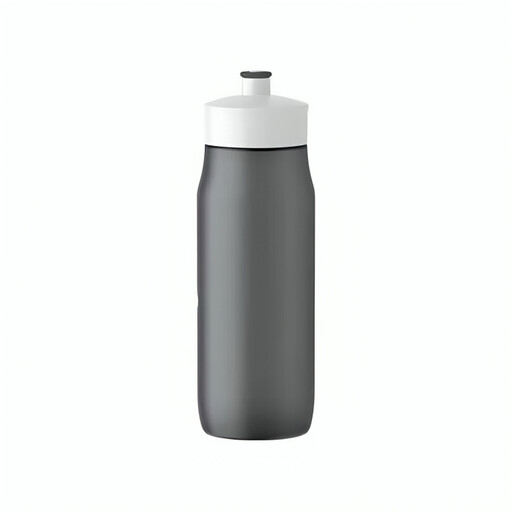
Why this product suits this profile: For cyclists, commuters and gym-goers, the squeeze function enables quick one-handed use.
The manufacturer specifies a temperature range of -20 °C to 70 °C. According to the safety instructions, drinks above 60 °C and carbonated drinks are not suitable.
600 ml, BPA-free PE/PP, dishwasher-safe in the top rack and a screw cap with drinking nozzle.
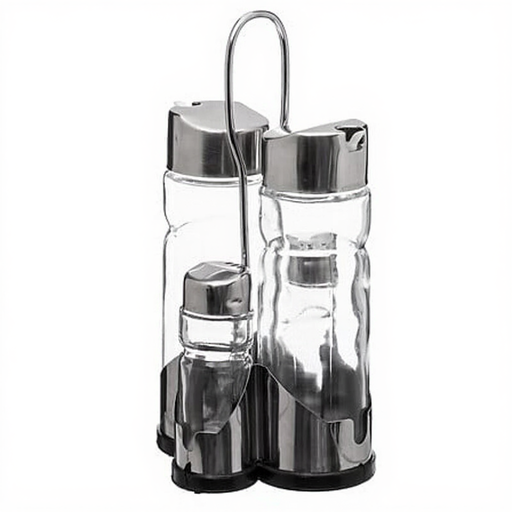
Why this product suits this profile: The set includes two bottles for oil and vinegar, plus two shakers for salt and pepper. It is ideal for keeping these items neatly organised on the kitchen table or worktop.
The separate containers make it easier to identify different seasonings. Before buying, check that the capacity and pourers suit the quantity you want to dispense.
Four-piece glass set, 0,17 l per oil or vinegar bottle and compact storage.
We have put together a complete, regularly updated list of products that fully meet these strict selection criteria and the safety regulations applicable in the EU.
For homemade jam, chutneys or small supplies, jam jars with a suitable capacity are a sensible choice. The LOT JAM JAR X6 GLASS 0.3L JARRO set contains six jars, each with a capacity of 0.3 l. Their transparency makes it easier to check the contents and organise stored supplies.
If you are looking for a SodaStream replacement bottle, compare the appliance model before ordering. According to the product information, the SodaStream DuoPack Fuse contains two 1-litre bottles and is compatible with DUO, Easy, Power and Easy One Touch. The bottles are dishwasher-safe up to 70 °C. You should still check compatibility and the temperature limit against your own appliance and its instruction manual.
For outdoor activities, a sports bottle with a 1-litre capacity, straw, time markers and carrying loop can be a practical choice. For everyday journeys, however, smaller models are easier to store. Kitchen bottles for oil, vinegar and seasonings need a precise pourer and a stable base.
For the office, commuting and short journeys, 380 to 500 ml is usually easy to handle. For sport, hiking or longer journeys, 600 ml to 1 litre provides more capacity. Weight, drinks-holder compatibility and cleaning requirements are also important.
Models with a wide opening and few separate parts are generally easier to access. A dishwasher-safe bottle can make care easier. Regardless of this, the mouthpiece, straw and silicone seal should be cleaned and dried thoroughly on a regular basis.
Their lifespan depends on the material, how they are used, cleaning and the condition of the seals. Glass can break if knocked, plastic can be affected by intense heat or damage, and seals can wear out over time. If the bottle has cracks, deformation or a leaking closure, it should no longer be used.