
Lieferung heute & morgen

Qualitätsgarantie

Willkommens-Angebote freischalten: KOSTENLOSE Lieferung | Bis zu 80 % RABATT | Kostenlose 30-Tage-JoyPlus-Testphase
App herunterladen
Children’s toys should provide entertainment, suit the child’s development, and be practical for family life. However, product descriptions often highlight individual features: bright elements, lots of pieces, or terms like Montessori and STEM. What really matters is not the number of promises, but whether the age recommendation, safety information, materials, and intended use all work together.
A toy with music, lights, and numerous buttons may seem versatile at first. For a toddler, however, too many stimuli can be overwhelming. So check whether the features are easy to access and whether the child can actively engage with them. With a baby activity cube, for example, spinning elements, buttons, and a well-placed carry handle are practical criteria.
“Ages 3+” is not just marketing information. Sets with small parts or magnets may be unsuitable for younger children. Likewise, a building set for children with many individual pieces does not automatically suit every child of the stated age. You should also consider the child’s abilities, the level of supervision required, and where the toy will be used.
The CE mark means the manufacturer declares or takes into account the relevant EU requirements. It is not an independent quality seal. So look for specific warnings, manufacturer details, material information, and guidance on checking for damaged parts. Particular care is needed with magnetic toys: loose or swallowed magnets can be dangerous.
The age recommendation should match the child’s developmental stage. For baby toys from 1 year, simple, easy-to-grip elements without loose small parts are ideal. Products for ages 3 or 4 and above may include more complex play sequences and smaller components. Read the safety instructions fully and keep the packaging for a while.
For sets with many pieces, a storage solution is also a good idea. A sorting box or bag reduces lost items and makes it easier to check everything after playtime.
Look for clear information such as ABS plastic, rounded edges, and sturdy connections between parts. “BPA-free” should be understood as a specific manufacturer claim, but it does not replace checking for sharp edges, cracks, or loose components.
For craft products, different criteria apply: are glue or scissors needed? Is water sufficient? A creative craft kit for children can be especially practical for travel if it is compact and requires no elaborate preparation.
Electronic toys often need batteries, which are not always included. So check the battery type, volume control, and ease of use. A musical instrument toy with adjustable volume can be used more easily in a flat than one without this option. Even so, the volume should remain appropriate during play.
For larger sets, measure the space you have available. A Playmobil playset with many figures and accessories needs not only room for display but also suitable storage.

Why this product fits the profile: The cube combines several play options in a compact format and, according to the product details, is designed for children aged 1 to 3 years.
The features are combined in a single cube, rather than requiring many separate toys. Still, you should check the age and material details before buying.
Eight described play modes, carry handle, and ABS plastic with rounded edges according to the product description.
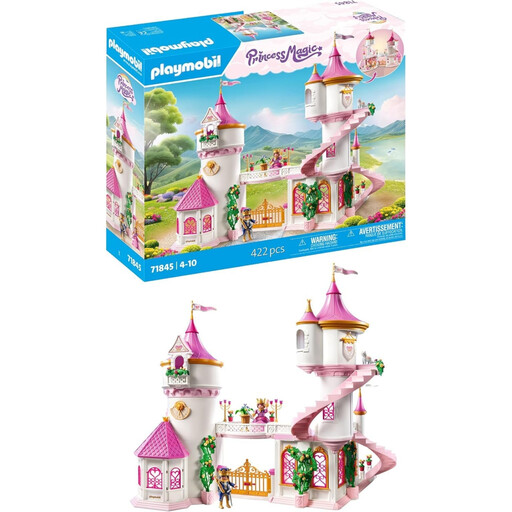
Why this product fits the profile: According to the product details, this set is aimed at children aged 4 and above and offers a clearly defined play world for role-play and building together.
The number of pieces, dimensions, and warnings are clearly stated. Small parts mean the age limit and supervision are important.
422 pieces, manual turntables, and several play areas according to the product description; no batteries required.

Why this product fits the profile: The 100 pieces are suitable for children aged 3 and above who enjoy building, rebuilding, and exploring spatial shapes repeatedly.
The product details state the piece size, base material, and how to handle loose magnets. Damaged elements must be removed.
100 transparent ABS pieces with magnetic connection and, according to the product details, rounded corners; no batteries required.
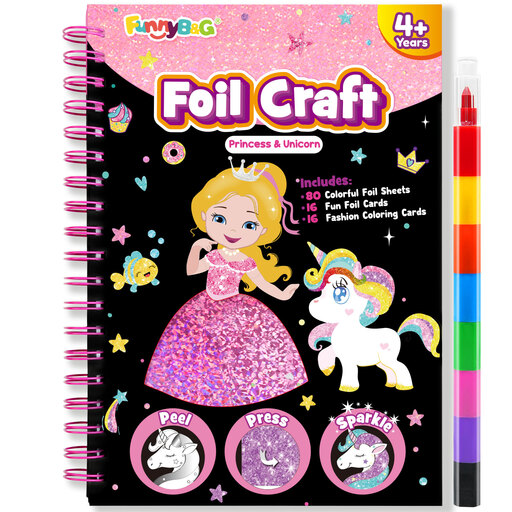
Why this product fits the profile: According to the product details, this set is designed for children aged 4 to 10 and can be used without glue or scissors.
The application is described as “peel, place, and press”. This means no preparation with liquid glue is needed for the intended use.
112 pieces, compact dimensions, and no batteries according to the product description; suitable as an activity for on the move.
We have put together a full, regularly updated list of products that fully meet these strict selection criteria and the safety regulations in force in the EU.
For a birthday, the gift should be immediately understandable and, ideally, require no complicated assembly. A birthday toy such as an activity cube, craft kit, or musical instrument can be tried out straight away. As a Christmas gift for children, larger role-play or building sets can also work, provided the storage and age limit suit the family.
For children aged 3 and above, magnetic building blocks for children, dinosaur building sets, or Playmais offer different approaches: building, creating, and storytelling. For older children, STEM learning toys can be interesting if geometry, construction, or cause and effect are at the heart of the play. The educational value should come from the actual play activity, not just from a label on the packaging.
Products with a clear age recommendation, large firmly attached elements, and easily accessible features are suitable. A baby activity cube or a simple musical instrument could work. Small parts, magnets, and removable accessories should be kept away from children of this age.
The lifespan depends on the material, construction, use, and storage. Regularly check edges, connections, battery compartments, and, for magnetic toys, the magnet covers. Damaged parts should not be used. For craft sets, the duration of use also depends on how many projects the set allows.
Check the age, interests, space requirements, noise level, and the supervision needed. For a gift for children, complete information about what is included in the set and straightforward storage are also helpful. For electronic toys, you should check whether batteries are included.