
Lieferung heute & morgen

Qualitätsgarantie

Willkommens-Angebote freischalten: KOSTENLOSE Lieferung | Bis zu 80 % RABATT | Kostenlose 30-Tage-JoyPlus-Testphase
App herunterladen
Cocoa powder is a staple in many British households: children enjoy hot chocolate with milk, home bakers use cocoa powder for cakes and desserts, while others look for a sugar-free cocoa powder or convenient single-serve sachets. The range stretches from classic drinking chocolate through organic cocoa to blends with coffee or matcha.
When buying cocoa powder, however, similar packaging and marketing terms can quickly lead to the wrong choice. A high cocoa content does not automatically mean a low sugar content. Likewise, "instant" mainly describes how easily it dissolves, not necessarily what is in it. What is more, some products are not pure cocoa powders but drink mixes containing sugar, flavourings or other ingredients.
Drinking chocolate often contains significantly more sugar than pure cocoa powder. For example, Nesquik Original states 23% fat-reduced cocoa powder, while the sugar content according to product data is 75.4 g per 100 g. Kaba lists 18% fat-reduced cocoa powder and 80 g of sugar per 100 g.
This is not necessarily a problem, but it should suit how you plan to use it. If you want to prepare a less sweet chocolate drink, you can opt for pure baking cocoa and sweeten it to your own taste.
A sugar-free cocoa powder can contain sweeteners or other ingredients. The product YONGPU Factory KOSEI Zero Sugar, Zero Fat Ultra-Strong Cocoa & Matcha Black Coffee is described as containing no sugar or fat. However, it is not pure cocoa powder but a blend of cocoa, matcha and coffee in individual sticks.
So before you buy, it is worth checking the full ingredients list and the serving size. "Zero sugar" alone tells you very little about the taste, cocoa content or the rest of the recipe.
Baking cocoa, also called cocoa powder for baking, is usually unsweetened and intensely flavoured. It often dissolves less easily in cold milk than instant cocoa and can be slightly alkaline depending on the recipe. That is often fine for cakes, brownies and desserts, but not always convenient for a quick cup of hot chocolate with milk.
Another stumbling block: the product listed as "Em-eukal 150g classic sugared cocoa powder" contains sugar, glucose syrup, caramel, menthol and eucalyptus oil according to the product data provided, and is described as a lozenge. It is therefore not a cocoa powder and not a drinking chocolate. You should always check the product name, ingredients list and intended use together.
With a drink mix, the cocoa content shows how much cocoa powder is actually in it. With pure cocoa powder, cocoa is usually listed first or as the only ingredient on the ingredients list. Additives such as sugar, glucose, emulsifiers, flavourings or salt change the taste and nutritional values.
For families, a classic drinking chocolate can be practical when you want a quick preparation. If you prefer to control the recipe yourself, unsweetened cocoa powder with individually adjusted sweetness gives you more flexibility.
Do not just compare the values per 100 g, but also the recommended serving size. A product with 20 g of powder per cup can contribute significantly to your daily sugar intake if it has a high sugar content. With pure baking cocoa, the fat content is often higher, while the sugar content is much lower.
You should also consider the information in relation to how you prepare it: milk, plant-based alternatives and water all change the nutritional value of the finished drink.
Cocoa powder absorbs moisture and odours. After opening, the bag should be sealed tightly and stored in a dry place. Refill bags such as Kaba, Suchard Express or Nesquik can be economical for regular users, but they need a suitable airtight container.
For occasional use, 100 to 125 g of baking cocoa is enough. Families or heavy users are better off with 400 g or 700 g packs. Individual sticks are practical for the office, travel or precisely portioned preparation.
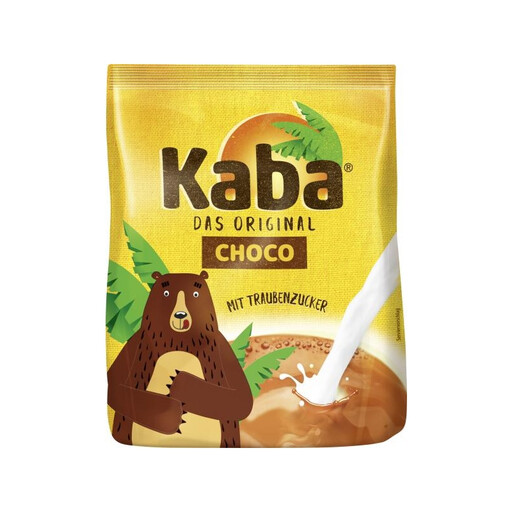
Why this product fits the profile: The 400 g pack is designed for regular preparation and can be used with cold or warm milk.
The stated cocoa content of 18% prevents the false expectation of getting a pure cocoa powder. The ingredients list clearly names sugar and dextrose.
400 g refill bag, can be prepared with hot or cold milk and contains a soya-based emulsifier.
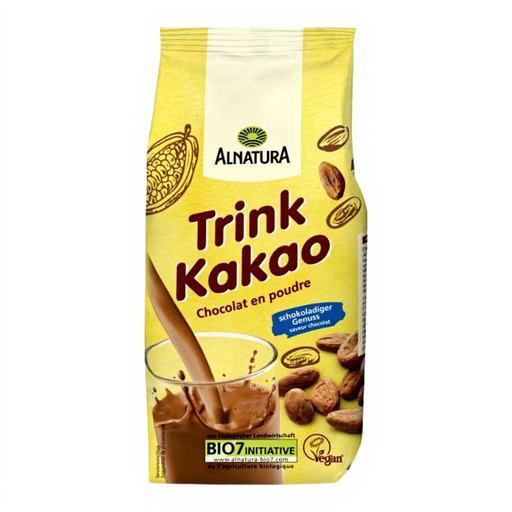
Why this product fits the profile: The recipe is labelled as an organic drink powder and contains 40% organic cocoa and 60% raw cane sugar according to the product data.
The organic labelling and certification according to DE-ÖKO-001 make the choice more transparent than vague sustainability claims.
400 g pack, suitable for cold and warm liquids, vegan and lactose-free according to product data.
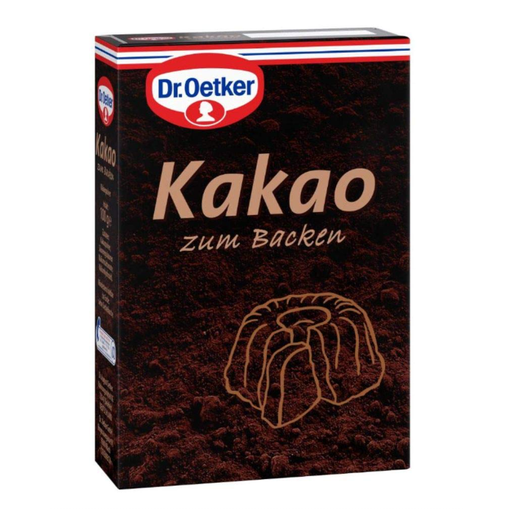
Why this product fits the profile: The 100 g pack is ideal for smaller baking projects, desserts and recipes that call for unsweetened cocoa.
The ingredients list names cocoa powder and acidity regulators, but no added sugar. This means you can control the sweetness in your recipe yourself.
Unsweetened recipe, 21 g fat and 28 g fibre per 100 g according to product data, suitable for baking.
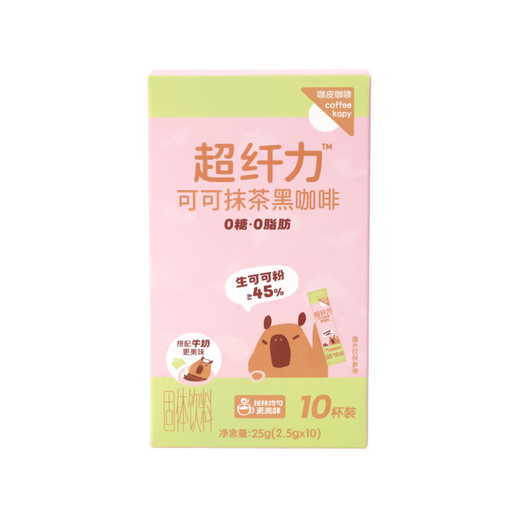
Why this product fits the profile: Ten individual sticks of 2.5 g each are designed for the office, on the go or controlled portioning.
The product name explicitly states the combination of cocoa, matcha and coffee. It is therefore not a pure cocoa variant.
Stated as sugar-free and fat-free, approximately 8 kcal per 2.5 g stick according to the description, and can be prepared with water or milk.
We have put together a complete, regularly updated list of products that fully meet these strict selection criteria and the safety regulations in force in the EU.
For cakes, brownies and desserts, unsweetened baking cocoa is usually the best choice. You can measure it precisely and it does not alter the sweetness of the recipe. Check the ingredients list: pure cocoa powder should contain no sugar.
The specific shelf life is printed on the packaging. Unopened, cocoa powder should be stored in a dry, cool place away from heat. After opening, a tightly sealed bag or container will prevent it from absorbing moisture and foreign odours.
Drinking chocolate often contains sugar and additives to help it dissolve more easily. Baking cocoa is usually unsweetened and intended for recipes. For hot chocolate with milk, instant cocoa is convenient; if you prefer to control the sugar and flavour yourself, you can mix baking cocoa with milk and add sweetness separately.