
Lieferung heute & morgen

Qualitätsgarantie

Willkommens-Angebote freischalten: KOSTENLOSE Lieferung | Bis zu 80 % RABATT | Kostenlose 30-Tage-JoyPlus-Testphase
App herunterladen
Anyone looking to buy a coffee machine will quickly come across terms such as 20 Bar, aroma technology, multifunctionality or an especially compact design. However, not every advertised feature is relevant to your everyday routine. For single people, small households, students, working professionals or travellers, other factors often matter more: a suitable serving size, easy cleaning, compatible coffee capsules and realistic space requirements.
The following tips will help you avoid common bad buys and compare a coffee machine for home, the office or on the go objectively.
An espresso machine or portable coffee machine will often feature a rating of “15 Bar” or “20 Bar”. This usually refers to the maximum pump pressure. The finished drink also depends on the grind size, amount of coffee, water temperature, brewing time and portafilter design. A 20-Bar espresso machine is therefore not automatically the right choice for every household.
A large water tank may initially seem practical, but it takes up more space and needs to be emptied regularly if the machine is used infrequently. For one person, a coffee machine for 1 to 4 cups may be more suitable than a machine with a pot for ten or more cups. With capsule machines, you should also check how many used capsules the container holds and whether the water tank can be removed.
Permanent filters, removable drip trays and dishwasher-safe parts can reduce the effort involved in care and maintenance. With capsule machines, however, the system you choose is crucial: a machine for Nespresso Original capsules will not automatically accept other formats. Hob compatibility is also important with a moka pot. Aluminium models are often not suitable for induction hobs, so check the manufacturer’s information before buying.
With a coffee machine for small kitchens, consider its width, depth and the height required when opening the lid. It must not only fit on the worktop, but also have sufficient clearance from wall units and power sockets.
Practical features include a removable water tank, an easy-to-read water-level indicator, automatic shut-off and a removable drip tray. A milk frother expands the range of drinks you can prepare, but requires additional cleaning after every use. A coffee machine with milk frother is therefore particularly worthwhile if you regularly make cappuccinos or lattes.
Bean-to-cup machines and electric coffee machines should be placed on a stable, heat-resistant surface. The power cable must not run over hot surfaces. Disconnect the machine from the mains before cleaning; electrical components must not be submerged in water.
With glass pots, check their heat resistance. With French presses and moka pots, make sure that the glass, seals, filter and handle are fitted correctly. A moka pot is generally cleaned by hand. Instructions such as “not dishwasher-safe” or “not suitable for induction” are not minor details; they directly affect everyday use.
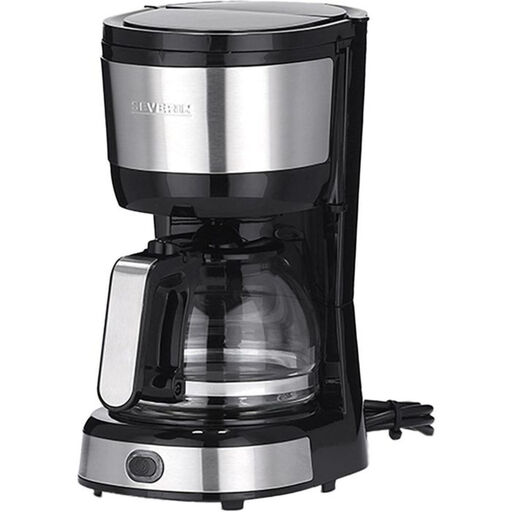
Why this product suits this profile: This filter coffee machine is designed for small households and, according to the product information, prepares up to four cups or 500 ml. Measuring 19.5 × 27.0 × 14.0 cm, it takes up very little space.
Its capacity is clearly limited, making it more suitable for individuals or couples than an oversized pot. The permanent swing-out filter reduces the need for disposable paper filters.
500 ml capacity, drip stop, keep-warm function and automatic shut-off.
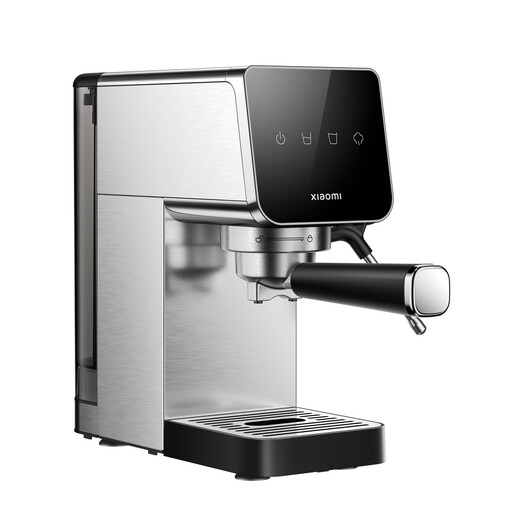
Why this product suits this profile: According to the specifications, this semi-automatic model combines a 20-Bar pump with single and double shots, a pre-infusion function and a steam wand. The machine is listed as being 14 cm wide.
The pressure rating is supported by a range of additional technical features. Alongside the pump, users can also consider pre-infusion, temperature control and the milk-frothing function.
Single and double shots, 0.9-litre tank, steam wand and NTC temperature control according to the product description.
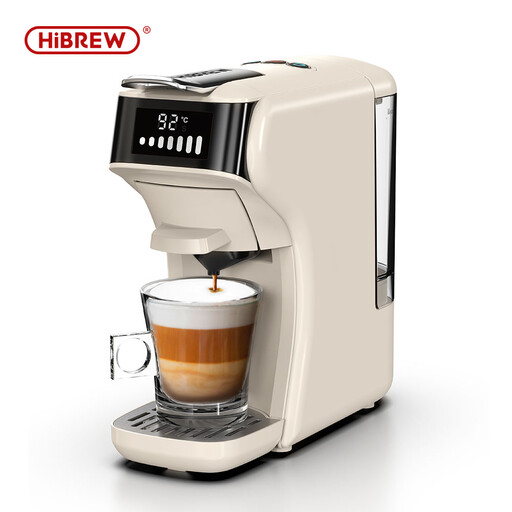
Why this product suits this profile: According to the specifications, this compact machine is compatible with several capsule types as well as ground coffee. This makes it suitable for households where different drinks or systems are used.
The compatibility information clearly shows which capsule and coffee formats are supported. Before buying, users should check their existing supplies against these formats.
600 ml water tank, 20-Bar pump according to the specifications, and support for several capsule types as well as ground coffee.
We have put together a complete, regularly updated list of products that fully meet these strict selection criteria and the safety regulations applicable in the EU.
For one or two people, compact models with a 0.3 to 0.7-litre water tank or a capacity of one to four cups are often sufficient. A French press, moka pot, capsule machine or small filter coffee machine generally takes up less space than a model with a large pot.
With filter coffee and a French press, the main cost is ground coffee. A moka pot also requires ground coffee and does not use electricity for the actual brewing process. Capsule machines incur additional system-dependent capsule costs. Electric machines may also involve electricity consumption, descaler and, where applicable, replacement filters.
The water tank, drip tray, filter holder and pot should be cleaned regularly in accordance with the user instructions. How often the machine needs descaling depends on the hardness of the water and how frequently it is used. If you live in an area with hard water or prepare several drinks every day, pay particular attention to the manufacturer’s guidance.