
Lieferung heute & morgen

Qualitätsgarantie

Willkommens-Angebote freischalten: KOSTENLOSE Lieferung | Bis zu 80 % RABATT | Kostenlose 30-Tage-JoyPlus-Testphase
App herunterladen
Choosing the right baby diapers can quickly prove more complex than you might first think. Faced with a vast array of brands, sizes, and types, it's understandable that many parents feel uncertain. The wrong choice not only leads to unnecessary costs but can also affect your baby's well-being. This guide highlights the crucial criteria to help you make an informed decision and avoid common buying mistakes.
As a Joybuy Product Recommendation Officer, my job is to filter through market information and provide you with objective, practical advice that goes beyond marketing promises.
Before we dive into the details, let's look at three common pitfalls that often lead to frustration and extra expense:
To avoid these mistakes, you should focus on a few key parameters. These will help you objectively evaluate product claims and find the right diaper for your child's needs.
The right size is the foundation for leak protection and comfort. Manufacturer specifications are almost always based on the child's weight.
A high-performance absorbent core is the heart of every diaper. Modern baby diapers use a superabsorbent polymer (SAP) that can hold many times its own weight in liquid.
As your child becomes more mobile, the demands on a diaper change.
Here are some product recommendations tailored to the specific needs of parents and children.
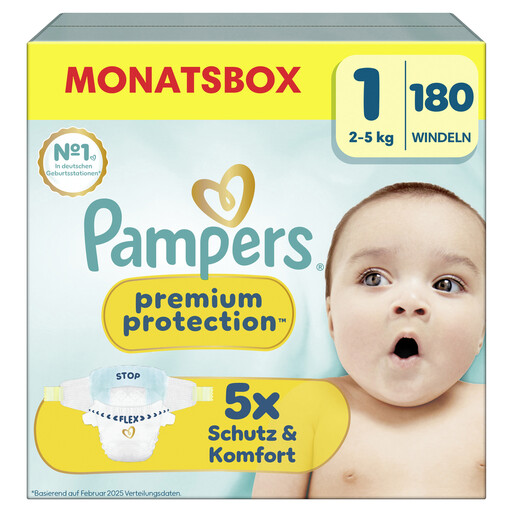
Why it's a good fit: This monthly box of diapers is designed for the needs of newborns (2–5 kg). It combines the convenience of a large supply with features specifically tailored for sensitive skin.
Directly addresses skin compatibility concerns. According to the manufacturer, the diapers are dermatologically tested and contain 0% EU fragrance allergens, which minimises the risk of irritation.
The DermaComfort inner fleece with absorbent pores draws wetness and liquid stool away from the skin. The wetness indicator shows when a change might be due.
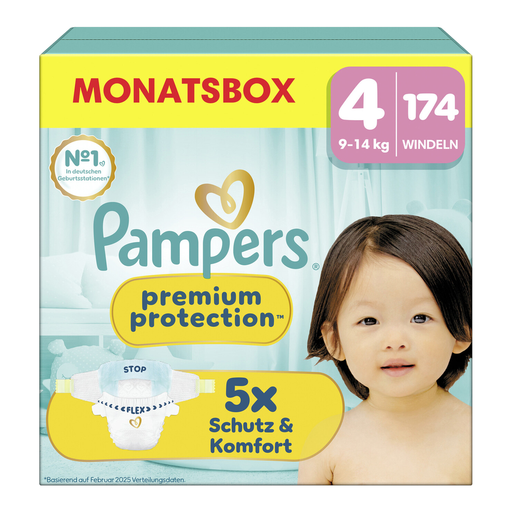
Why it's a good fit: A value pack of diapers in the popular Size 4 (9–14 kg) is ideal for parents who plan ahead. The bulk pack lowers the effective unit price without compromising on key features like leak protection and skin-friendliness.
Debunks the unit-price-only fallacy by offering high reliability. Fewer leaks mean lower overall consumption and, therefore, effective cost savings.
The Stop & Protect pocket at the back of the diaper helps prevent leaks—a common problem with active babies. The monthly box also reduces the number of shopping trips.
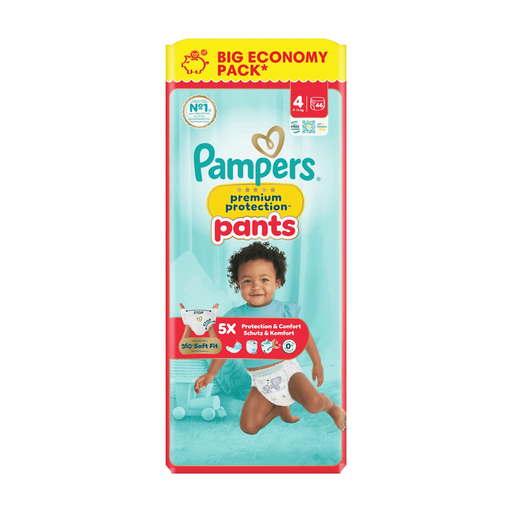
Why it's a good fit: These diaper pants are designed for mobile babies (9–15 kg). The 360° waistband adapts to their movements and makes it easier to change children who no longer want to lie still.
Solves the fit problem for active children. Where traditional diapers can slip, the flexible waistband of the pants ensures a secure fit, preventing leaks during movement.
Easy on and off: Pull up to put on, tear the sides to take off. A disposal tape makes cleanup easy. This significantly simplifies the changing process.
We have compiled a complete, up-to-date list of products that fully meet these strict selection criteria and German safety regulations.
1. When should you move up to the next diaper size? Look for two main indicators: First, when your child's weight reaches or exceeds the upper limit of the current size. Second, if the diaper regularly leaks or leaves red marks on their tummy and thighs. These are clear signs it's time for the next size, for example, moving from Size 4 diapers to Size 5 diapers.
2. What is the difference between regular diapers and diaper pants? Regular diapers are fastened with adhesive tabs on the sides and are well-suited for newborns and infants. Diaper pants (or 'pants') have an elastic, all-around waistband and are pulled on like underwear. They are ideal for active babies and toddlers as they offer more freedom of movement, a secure fit, and allow for changing while standing.
3. How can you save money when buying diapers? Buying in bulk, such as a monthly box of diapers or a value pack, usually lowers the price per diaper significantly. Also, keep an eye out for diapers on sale. Choosing a high-quality, leak-proof diaper can also save money, as you'll need to change them less frequently and do less laundry.