
Lieferung heute & morgen

Qualitätsgarantie

Willkommens-Angebote freischalten: KOSTENLOSE Lieferung | Bis zu 80 % RABATT | Kostenlose 30-Tage-JoyPlus-Testphase
App herunterladen
Anyone looking to buy a freezer should consider more than just capacity and price. Available space, usable storage capacity, energy consumption and day-to-day operation are all important. A model may look suitable on paper, yet prove impractical in the kitchen, cellar or garage.
The stated litre capacity usually refers to the net or gross volume. Drawers, flaps and baskets also take up space. A 60-litre freezer, for example, is suitable for single people, couples or use as an additional appliance, while a 200-litre freezer or a 244-litre freezer is more suitable for families and storing larger supplies.
With a chest freezer, there is another consideration: although the interior is often used efficiently, it is less easy to organise. Small packs can disappear beneath larger supplies. A removable basket makes access easier, but does not replace proper compartmentalisation.
The energy efficiency class E is found on many current freezers. For a meaningful comparison, you should also check the stated annual consumption in kilowatt-hours. A larger appliance does not automatically use twice as much electricity as a smaller one, but the specific manufacturer’s figures should always be checked.
A simple calculation helps:
An energy-saving freezer should also be positioned with sufficient ventilation. If heat cannot escape from the rear, energy consumption may increase.
A NoFrost freezer circulates cold air and significantly reduces ice formation. Depending on the design, this can make manual defrosting easier or eliminate the need for it altogether. Appliances with Low Frost or MinFrost systems also reduce ice formation, but still require occasional defrosting.
NoFrost appliances should still be cleaned regularly. The door seal, ventilation openings and interior all require attention. With a conventional chest freezer or static mini freezer, defrosting remains part of routine care.
An upright freezer often has several drawers or flaps. Food can be organised by category and removed more quickly. Models with a reversible door are useful when the opening direction needs to be adapted to the layout of the room.
A chest freezer makes efficient use of floor space and is suitable for larger quantities, such as meat, seasonal vegetables or prepared meals. However, it needs clear space for the lid to open. A chest freezer with cooling function or switchable operating mode can also be used as a refrigerator. Before buying, check that the changeover function is genuinely intended for your planned use.
A mini freezer with a capacity of 31 to 60 litres fits into small flats, offices, holiday homes or beneath certain worktops. Pay attention to the external dimensions, the distance from the wall and the position of the door hinge. A compact freezer only saves space if the door can be opened fully.
The following selection categorises specific appliances by capacity, design and features. The information is based on the respective product details.

Why this product suits this profile: The 60-litre appliance is designed for single people, small households, offices or use as additional storage. Three interior sections make basic organisation easier.
The transparent layout prevents the compact interior from becoming completely disorganised. The reversible door makes positioning easier.
60-litre usable capacity, 4-star freezing performance, three compartments and adjustable temperature.
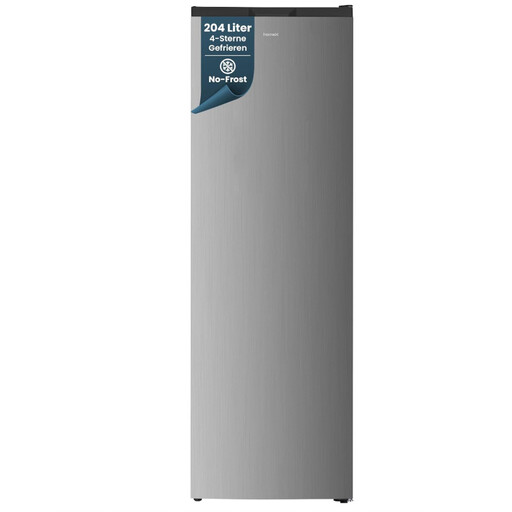
Why this product suits this profile: This upright freezer offers 204 litres of usable capacity, NoFrost, a fast-freeze function and several drawers for households that regularly buy supplies in bulk.
The NoFrost system reduces the effort associated with ice formation. The reversible door prevents restrictions when planning the room layout.
204 litres, NoFrost, Super-Frost function, 39 dB and energy efficiency class E.

Why this product suits this profile: This chest freezer can be switched between cooling and freezing modes, making it suitable for flats, garages, small cafés or changing storage requirements.
The switchable function prevents the appliance from being limited to just one application. A basket and drain for defrost water make organisation and maintenance easier.
95 litres, seven temperature settings, 38 dB, energy efficiency class E and removable basket.
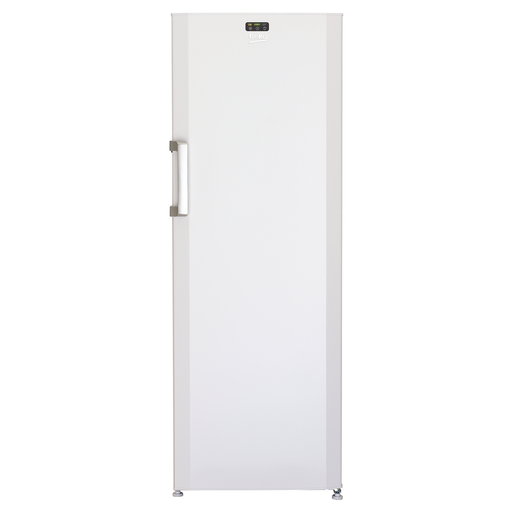
Why this product suits this profile: The spacious interior with five drawers and two flaps is designed for families and households that want to store larger quantities separately.
Transparent fronts make it easier to see the contents at a glance. The temperature alarm and reversible door address safety and positioning concerns.
244 litres, five drawers, two flaps, 36 dB, fast-freeze function and MinFrost system.
We have put together a complete, regularly updated list of products that fully meet these strict selection criteria and the safety regulations applicable in the EU.
Before connecting a freezer, leave it standing upright for several hours, particularly after transport. The exact waiting time is specified in the operating instructions. The appliance needs a level surface and sufficient clearance from walls or heat sources.
For stable operation, you should:
For garages and cellars, the stated climate class is crucial. A model specified for unheated rooms down to -15 °C offers different usage options from an appliance without a corresponding specification.
For one person or a small amount of additional storage, 31 to 60 litres is often sufficient. Couples and smaller households can plan for around 85 to 140 litres, depending on the quantity of supplies they store. Families or frequent users should consider models from 168 litres upwards. The right size depends more on your actual shopping habits than on the number of people in the household alone.
The key factors are the stated annual consumption and your electricity price. Multiply the two figures together. An appliance with annual consumption of 165 kWh would cost around 57,75 euros per year in electricity at 0,35 euros per kWh. This calculation is a guide only and is not a guaranteed forecast of actual consumption.
Lifespan depends on build quality, usage, ambient temperature, care and maintenance. Regular cleaning, an intact door seal and sufficient ventilation can support reliable operation. If you notice unusual noises, a rising temperature or repeated alarm messages, consult the operating instructions or contact customer service.