
Lieferung heute & morgen

Qualitätsgarantie

Willkommens-Angebote freischalten: KOSTENLOSE Lieferung | Bis zu 80 % RABATT | Kostenlose 30-Tage-JoyPlus-Testphase
App herunterladen
A frying pan is part of the everyday kitchen kit in many UK homes. Yet unclear information about materials, exaggerated claims about coatings and unsuitable sizes often lead to disappointing purchases. If you’re looking to buy a frying pan, don’t focus only on the price or appearance. Consider your hob, the pan’s weight, how much care it needs and its temperature limits.
An induction pan needs a magnetic base. Aluminium and lightweight coated pans usually have a magnetic stainless steel plate built into the base. If this isn’t mentioned, the pan may not work on an induction hob, or may work unreliably.
On gas and ceramic hobs, the base should sit as flat as possible. An uneven or undersized base can reduce heat transfer and make the pan unstable.
Terms such as “stone”, “granite” or “ceramic” don’t tell you much about how a pan is actually made. Check whether the manufacturer specifies the type of coating, the materials used and how to care for it.
With a coated frying pan, the recommended utensils matter too. Metal turners or abrasive sponges can damage the surface. Many models aren’t suitable for the dishwasher, even if they seem easy to clean at first glance.
Some product descriptions state that certain substances are not used. According to its product information, the ZEROPAN pan has a ceramic coating without PFAS, PFOA or PTFE. SENSARTE’s product information states that certain substances, including intentionally added PFOA, PFOS, APEO, lead and cadmium, are not used. These details refer to the respective manufacturer’s declaration and shouldn’t be taken as medical claims.
A small frying pan with a diameter of 12 to 16 cm is suitable for individual portions, side dishes or small desserts. For two or three people, 20 to 24 cm is often more practical. A 26 cm pan gives you more cooking space, but also takes up more storage space and can become much heavier when full.
Aluminium heats up relatively quickly and is often lighter than cast iron. An aluminium non-stick pan is therefore a good choice for eggs, pancakes, vegetables and gentle frying. Look for a sturdy base, especially if you have an induction hob.
Multi-layer stainless steel pans combine different metals. According to the product information, the ZEROPAN Standard Frying Pan has an inner layer of 304 stainless steel, an aluminium core and a base made of 430 stainless steel. The aluminium core is designed to help distribute heat, while the stainless steel base makes the pan suitable for induction hobs.
A cast iron pan retains heat for longer. However, it’s heavier and takes longer to respond to changes in temperature. Enameled cast iron doesn’t need traditional seasoning, but should be protected from sudden changes in temperature.
If you’re considering a PFAS-free pan, check the manufacturer’s specific details about the coating. “PFAS-free” doesn’t automatically mean “scratch-resistant” or “dishwasher-safe”. Use wooden, silicone or plastic utensils with coated pans, and cook mostly over a low to medium heat.
Uncoated cast iron needs different care: after cleaning, dry the surface completely and usually apply a thin layer of oil. Otherwise, rust can form. Uncoated cast iron is less suitable for highly acidic or very salty foods.
A wooden handle can feel comfortable to hold, but that doesn’t automatically mean it’s suitable for the oven. For an oven-safe pan, check the maximum temperature and whether the handle is suitable. According to the product information, the ZEROPAN pan is oven-safe up to 260 °C. The STAUB models are suitable up to 230 °C, while the Le Creuset pan has a stated maximum temperature of 350 °C.
A glass lid can be useful for braising or keeping food warm. However, it adds to the overall weight and takes up extra storage space.
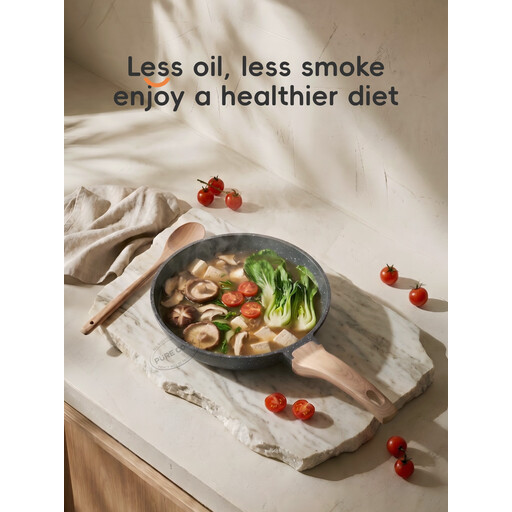
Why it suits this type of shopper: Its 20 cm size, light weight and included glass lid make it a good match for everyday portions and simple meals. According to the product information, the pan is suitable for induction, gas and ceramic hobs.
The product information clearly lists the compatible hob types and says the pan should be hand-washed. This makes it easier to assess the care it needs before you buy.
Aluminium body, 20 cm diameter, glass lid and wooden handle; according to the product information, it isn’t dishwasher-safe.
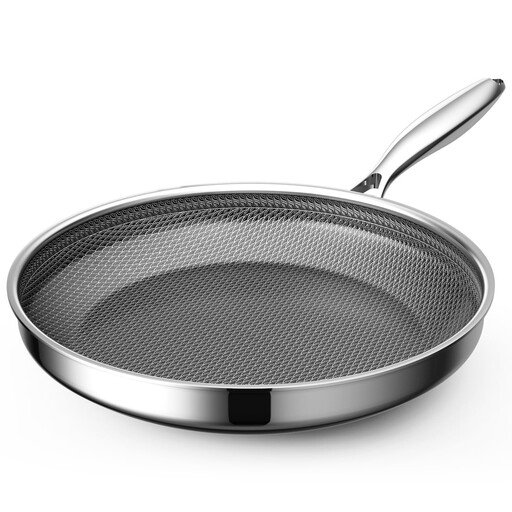
Why it suits this type of shopper: Its three-layer construction, with stainless steel, an aluminium core and a stainless steel base, will appeal if you want to compare material details and oven suitability carefully.
According to the product information, the coating is specifically described as ceramic and free from PFAS, PFOA and PTFE. The compatible hob types and maximum temperature are also listed.
304 stainless steel inner layer, aluminium core, induction-compatible and, according to the product information, oven-safe up to 260 °C.
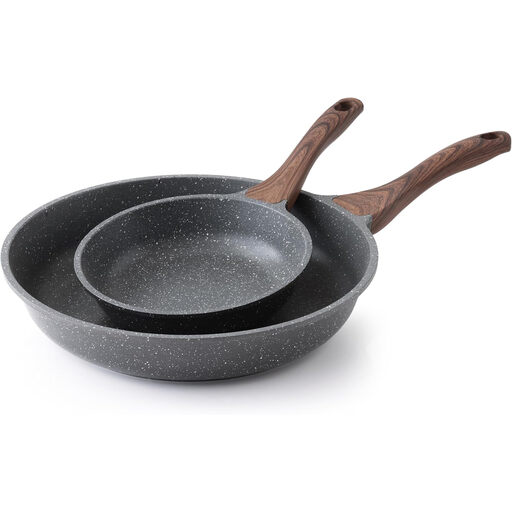
Why it suits this type of shopper: Two different diameters cater for everything from small portions to larger meals. According to the product information, the set is suitable for induction, gas and electric hobs.
The different sizes mean you don’t have to use one pan for every portion. The coating should still be cared for using suitable utensils.
Two cast iron-aluminium pans, according to the product information, with magnetic stainless steel bases and Swiss-ILAG coating without intentionally added PFOA.
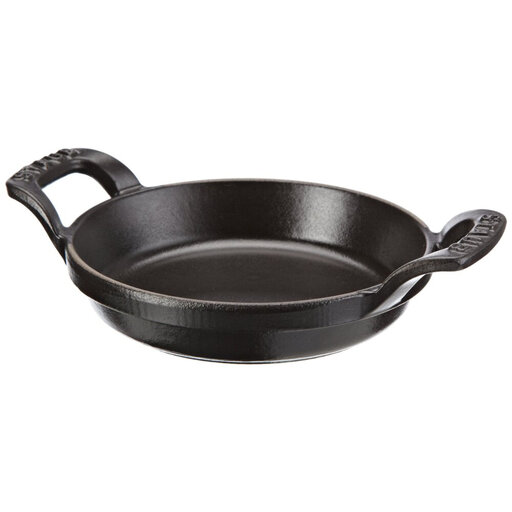
Why it suits this type of shopper: According to the product information, this compact enameled cast iron pan is suitable for individual portions and can be used on all common hob types, including induction.
Its small size keeps the weight and storage needs down. The enamel makes it easier to care for than uncoated cast iron, but sudden temperature changes should still be avoided.
12 cm diameter, enameled cast iron and, according to the product information, suitable for the oven and all hob types.
We’ve put together a complete, regularly updated list of products that meet these strict selection criteria and the safety regulations in force in the EU.
Look for the “induction-compatible” label and a magnetic base. On aluminium models, this feature is usually provided by a stainless steel plate. The manufacturer’s information should specify the compatible hob types as well as the exact diameter of the base.
Its lifespan depends on the coating, the temperature and how you care for it. Avoid overheating the pan when it’s empty, using metal utensils and cleaning it with abrasive products. If the surface is noticeably damaged or the coating starts to come away, stop using the pan.
For one person or small side dishes, a small frying pan measuring 16 to 20 cm is often enough. A 24 to 26 cm pan gives you more room for several portions. If you regularly cook different quantities, consider a set with two pan diameters.