
Lieferung heute & morgen

Qualitätsgarantie

Willkommens-Angebote freischalten: KOSTENLOSE Lieferung | Bis zu 80 % RABATT | Kostenlose 30-Tage-JoyPlus-Testphase
App herunterladen
A frying pan needs to do more in everyday cooking than simply get hot. It should be compatible with your hob, be the right size for your household and, depending on the dish, either cook delicate ingredients gently or withstand high temperatures when searing. Many disappointing purchases are not caused by the price, but by unclear product information.
1. “Suitable for all hob types” is not checked carefully
A pan suitable for all hob types should be explicitly stated as compatible with induction, gas, ceramic or electric hobs. With some models, this does not automatically mean they are suitable for use in the oven. The handle can also limit oven use. Specific temperature information is therefore crucial, rather than relying solely on general marketing claims.
2. Non-stick coating is mistaken for unlimited durability
A non-stick frying pan is often ideal for eggs, pancakes and delicate fish. However, it should not be heated intensely while empty. Metal utensils, abrasive cleaners and high temperatures can damage the surface. If you regularly sear food at very high temperatures, you may be better served by a stainless steel, cast iron or carbon steel pan.
3. Weight and cleaning requirements are underestimated
Cast iron retains heat for a long time, but is considerably heavier than aluminium. Carbon steel needs some care before first use and regularly thereafter to preserve its seasoning. A dishwasher-safe pan reduces cleaning effort, but is not automatically suitable for every cooking method.
Your choice of material should depend on the dishes you most enjoy preparing:
A small frying pan measuring around 10 to 16 cm is useful for individual eggs, small side dishes or serving individual portions. Sizes from 20 to 24 cm suit smaller households and everyday dishes. A large frying pan measuring 26 to 28 cm provides more room for several portions, but requires a sufficiently large cooking zone.
Also pay attention to the base diameter. A 28 cm pan, for example, may have a significantly smaller contact area with the hob. On an induction hob, this area should ideally match the size of the cooking zone.
A frying pan with a lid is helpful when reducing sauces, steaming vegetables or slowly finishing dishes. A glass lid lets you keep an eye on the food without losing heat and moisture through frequent lifting.
With an ovenproof pan, it is not just the pan itself that matters. You also need to consider the handle material, lid and maximum temperature. Dishwasher suitability is likewise specific to each product: even when enamelled cast iron is approved for dishwasher use, hand washing is often recommended to protect the surface.
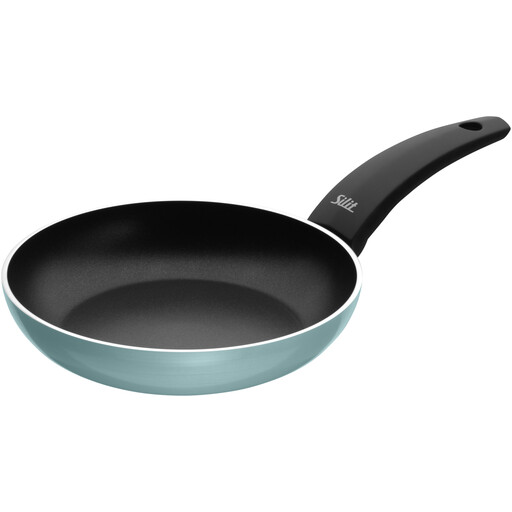
Why this product suits this profile: This 20 cm aluminium pan with Silitan non-stick coating is designed for gas, electric, ceramic and induction hobs. It is suitable for smaller households and delicate foods.
The specifications state hob compatibility, coating type and a maximum oven temperature of 70 °C. This makes it easier to assess how the pan can realistically be used.
20 cm diameter, Bakelite handle, aluminium body and a stated 5-year manufacturer's warranty.
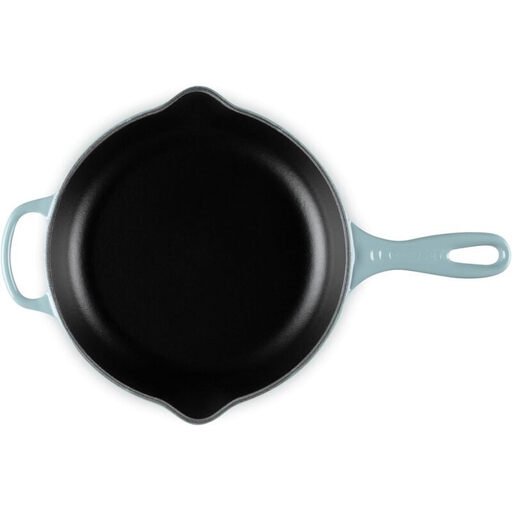
Why this product suits this profile: Enamelled cast iron, two handles and a stated oven temperature of up to 350 °C make this model suitable for searing, oven cooking and serving.
The 1.93 kg weight and care instructions make it clear that excellent heat retention comes with additional handling effort.
Suitable for all hob types, including induction; enamelled surface and stated suitability for barbecue and oven use.
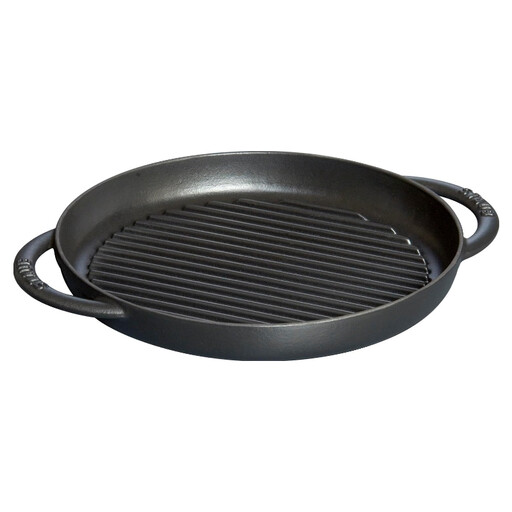
Why this product suits this profile: This 26 cm cast iron grill pan, with two handles and raised grill ridges, is designed for steaks, fish and vegetables.
The specifications state a weight of 2.7 kg and recommend hand washing. This makes the cleaning and handling effort clear before purchase.
Suitable for all hob types, including induction, and for use in the oven; grill ridges create clearly defined sear marks.
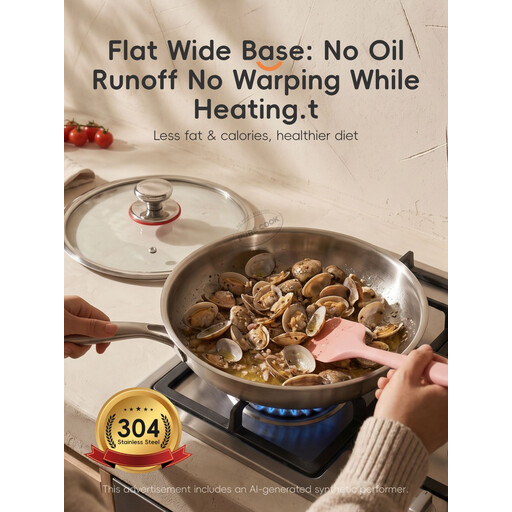
Why this product suits this profile: This large stainless steel pan has an aluminium core, a glass lid and stated suitability for gas, induction, ceramic and halogen hobs.
The lid, compatible hob types, dishwasher suitability and oven temperature of up to 220 °C are all clearly specified. This makes it easier to check whether it suits your household.
28 cm cooking surface, Tri-Ply construction combining stainless steel and aluminium, plus a glass lid for easy viewing.
We have put together a complete, regularly updated list of products that fully meet these strict selection criteria and the safety regulations applicable in the EU.
An induction frying pan requires a magnetic base suitable for induction cooking. Cast iron, many stainless steel models and suitably designed non-stick pans work on induction hobs. However, the manufacturer’s statement “suitable for induction” should be clearly provided before you buy.
Sizes from 20 to 24 cm are often sufficient for two smaller portions. If you regularly prepare vegetables, meat or pan dishes for several people, a 26 to 28 cm pan offers greater flexibility. Make sure the cooking surface is not significantly smaller than the advertised diameter.
The service life depends on the material, use and care. With proper treatment, cast iron and stainless steel are designed for long-term use. For non-stick models, temperature, utensils and cleaning have a major impact on how well the surface is preserved. Carbon steel can also last for many years with the right care, but it needs to be dried and oiled regularly.