Whether it's a velvety panna cotta, a firm cake filling, or a savoury aspic, the right texture is often the crucial detail that separates a good dish from an excellent one. But choosing the right gelling agent can be a challenge. Sheet or powder? How much do I need for my recipe?
My name is Joy, and as a Joybuy Product Recommendation Officer, my mission is to provide you with clear, objective information. This guide will help you find the right gelatine for your culinary projects and use it correctly, ensuring your creations turn out perfectly every time.
What to Look for When Buying Gelatine
The right product choice depends on your recipe and your personal handling preferences. Here are three key points to make your decision easier.
1. Form: Sheet Gelatine or Powdered Gelatine?
The most common forms are sheet gelatine and powdered gelatine (also known as gelatine powder). Both serve the same purpose but differ in how they are handled.
- Sheet gelatine: The sheets are soaked individually in cold water, squeezed out, and then dissolved in a warm liquid. Many home cooks appreciate the easy portioning, as each sheet has a standardised gelling strength. This makes measuring the gelatine particularly straightforward when recipes specify amounts in "sheets."
- Powdered gelatine: The powder is mixed with a specific amount of cold liquid and must be left to bloom for a few minutes. It is then dissolved just like sheet gelatine, either by heating it or stirring it into a hot mixture. Powdered gelatine can be weighed to the exact gram, which is often an advantage for recipes that require highly precise measurements.
2. The Right Amount for Guaranteed Firmness
Incorrect measurements are the most common reason for results that are too soft or too firm. As a general rule of thumb:
- 6 sheets of gelatine or one 9-gram packet of powdered gelatine are generally sufficient to set 500 ml of liquid.
This is a general guideline. Acidic ingredients (e.g., lemon juice) or certain enzymes (found in raw pineapple, kiwi, mango, or papaya) can impair the gelling strength. Therefore, always follow the specific instructions on the product packaging and in your recipe. Brands like Dr. Oetker Gelatine often provide precise ratios tailored to their products.
3. Proper Preparation: Dissolving Gelatine Without Lumps
The correct dissolving technique is crucial for a smooth final product.
- Bloom: Place the sheets in cold water for about 5 minutes, or mix the powder with the amount of cold water specified in the recipe and let it bloom for about 10 minutes.
- Dissolve:
- For cold dishes (e.g., quark cream): Dissolve the squeezed or bloomed gelatine in a small saucepan over very low heat, stirring constantly. Important: Do not let it boil, as this will destroy its gelling power. Next, add a few spoonfuls of the cold mixture to the dissolved gelatine (this is called tempering), stir, and then fold this mixture into the rest of the cold base.
- For hot dishes (e.g., aspic broth): Stir the bloomed gelatine directly into the hot, but no longer boiling, liquid until it has completely dissolved.
Recommended Gelatine Products
Here is a selection of trusted gelatine products suitable for a wide range of kitchen applications.
Dr. Oetker Sheet Gelatine, White, 10 g
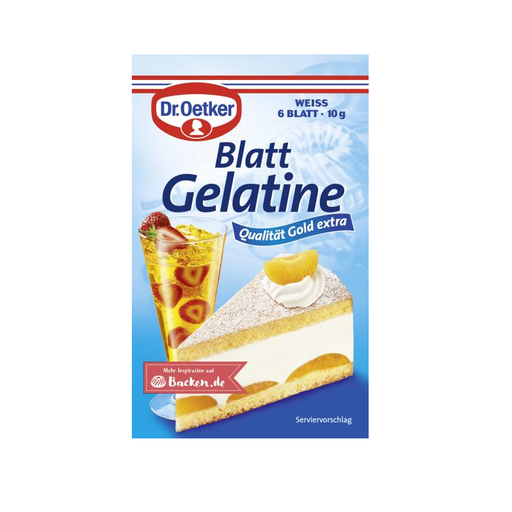
- What makes it special: Dr. Oetker's sheet gelatine is a kitchen staple. The package contains 6 sheets, which the manufacturer states is enough for 500 ml of liquid. This corresponds to the common standard measurement in many recipes, making it especially easy to use.
- Advantages:
- Easy measuring with pre-portioned sheets.
- Suitable for both cold and hot preparations.
- Clear and straightforward instructions.
- Who it's for: Ideal for anyone who enjoys baking and cooking with traditional recipes where quantities are given in "sheets." Especially practical for beginners and for preparing gelatine for cakes.
View Dr. Oetker Sheet Gelatine Now
Ruf Powdered Gelatine, White, 27.6 g
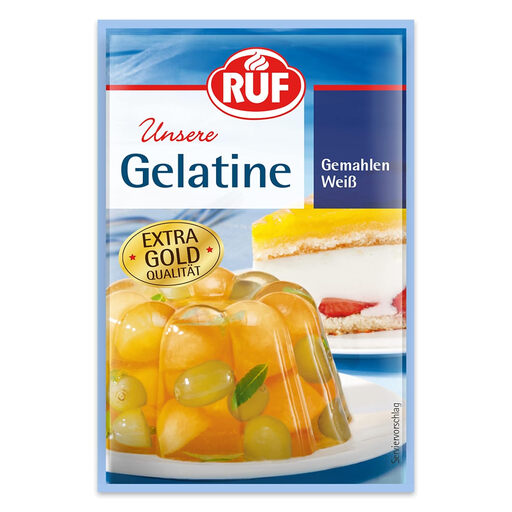
- What makes it special: This powdered gelatine from Ruf comes in a resealable pouch, allowing for flexible and precise gram-by-gram measuring. It's a versatile aid for desserts, cakes, and savoury dishes.
- Advantages:
- Flexible measuring by weight for precise recipes.
- Dissolves reliably after blooming.
- Convenient packaging for storage.
- Who it's for: For experienced home cooks who prefer to weigh their ingredients exactly or frequently prepare larger quantities and are looking for a flexible alternative to sheets.
View Ruf Powdered Gelatine Now
Dr. Oetker Powdered Gelatine, White, 3-Pack
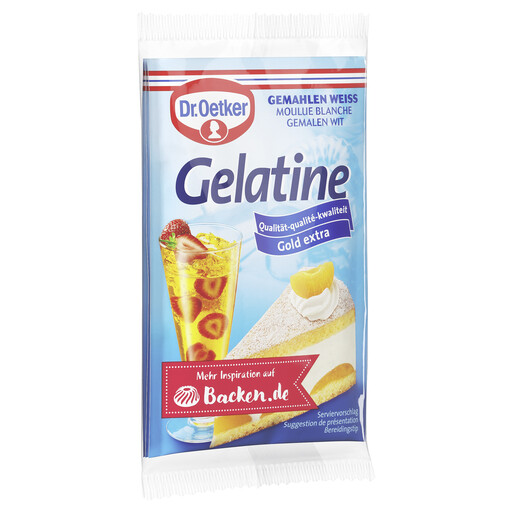
- What makes it special: This product combines the benefits of powdered gelatine with the easy portioning of sheet gelatine. Each of the three sachets contains 9g of gelatine powder, which the manufacturer states has the gelling power of 6 sheets of gelatine and is sufficient for 500 ml of liquid.
- Advantages:
- Conveniently pre-portioned in 9g sachets.
- No weighing necessary; easy conversion for recipes.
- Combines the precision of powder with the convenience of easy handling.
- Who it's for: Perfect for those who prefer the consistency of powder but appreciate the convenience of a pre-defined amount for standard recipes. A great choice for foolproof results.
View Dr. Oetker Powdered Gelatine 3-Pack Now
Other Ingredients for Your Baking Projects
Besides the right gelatine, other high-quality basic ingredients are often crucial for successful desserts. If you're looking to stock your pantry for your next project, you can also find a curated selection of white sugar and other baking essentials with us.
Frequently Asked Questions (FAQ)
1. How many sheets of gelatine equal one packet of powdered gelatine?
As a rule, one 9-gram packet of powdered gelatine has the same gelling power as 6 sheets of sheet gelatine. Both quantities are typically designed to set 500 ml of liquid. However, always check the information on the specific product packaging to be sure.
2. Why isn't my gelatine setting?
There could be several reasons for this:
- Incorrect ratio: Too much liquid or not enough gelatine.
- Overheating: Gelatine must never be boiled, as this destroys its gelling power.
- Enzyme-rich fruits: Raw pineapple, kiwis, mangos, papayas, and figs contain an enzyme (bromelain or papain) that breaks down the gelatine's proteins and prevents it from setting. These fruits should be briefly blanched or used from a can before being added.
- Acidity: A very high acid content (e.g., from a lot of lemon juice) can also slightly weaken the gelling strength. You may need to slightly increase the amount of gelatine.
3. Can you substitute agar-agar for gelatine?
Yes, agar-agar is a plant-based gelling agent made from algae and is a common alternative. However, its handling and gelling properties are significantly different from gelatine. Agar-agar must be mixed into a cold liquid and then brought to a boil for a few minutes to activate its gelling power. The resulting gel is also firmer and less elastic than one made with gelatine. A direct 1:1 substitution is not possible; follow the dosage instructions on the agar-agar packaging.


