
Lieferung heute & morgen

Qualitätsgarantie

Willkommens-Angebote freischalten: KOSTENLOSE Lieferung | Bis zu 80 % RABATT | Kostenlose 30-Tage-JoyPlus-Testphase
App herunterladen
The search for the right adhesive can quickly become overwhelming. Whether for a quick household repair, a creative craft project, or a high-strength bond in model making, the selection is vast, and the differences are crucial. This guide will help you understand the various types of adhesives and make an informed decision, ensuring your next project is a reliable and long-lasting success.
Before you buy an adhesive, three factors are critical: the materials to be bonded, the application, and the required working time.
Not every glue adheres equally well to every surface. The material's properties are the most important indicator for choosing the right product.
The intended use further narrows down the selection. Do you need a quick fix or a bond that can withstand heavy loads?
Time is another critical factor. A distinction is made here between the open time (how long the adhesive is workable after application) and the curing time (how long it takes to reach full final strength). Fast-setting glues are practical but offer little room for adjustments. Slower-curing adhesives allow for more precise alignment of the parts to be bonded.
Based on the criteria mentioned, we have compiled a selection of adhesives for various applications.
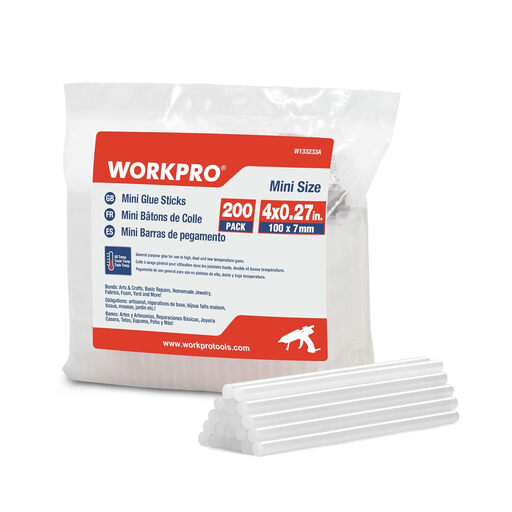
Why This Product Stands Out These hot glue sticks are designed for universal use in all common 7mm hot glue guns. The material (EVA) is low-odour and allows for clean work. With 200 pieces per pack, this set offers an extensive supply for numerous projects.
Benefits
Who Is It For? Ideal for crafters, DIY enthusiasts, and anyone who regularly uses a hot glue gun for DIY projects, decorations, or minor repairs and needs a reliable supply of glue sticks.
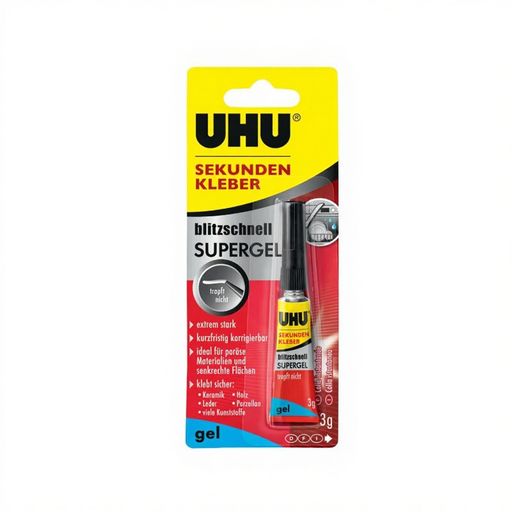
Why This Product Stands Out The key advantage of this adhesive is its gel consistency. Unlike liquid super glue, the super glue gel does not drip, making it excellent for work on vertical surfaces or overhead. The formula is also shock-resistant, which makes the bond more resilient to vibrations and impacts.
Benefits
Who Is It For? Perfect for users who need to perform quick and precise repairs on small objects or on vertical surfaces where conventional glue would drip.
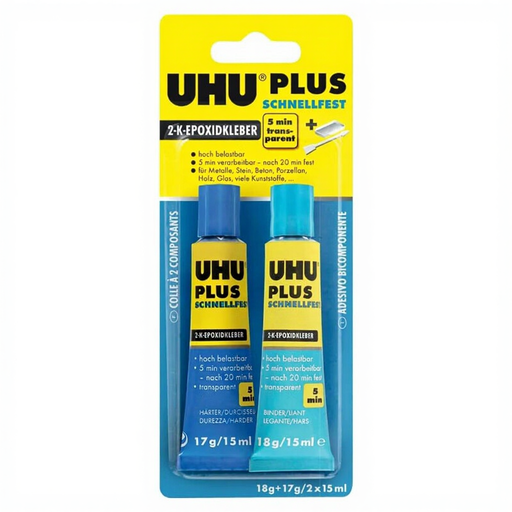
Why This Product Stands Out This 2-part adhesive based on epoxy resin is designed for bonds that must withstand the highest loads. Mixing the hardener and binder creates a chemical reaction that results in an extremely strong, durable, and transparent bond. It is a strong adhesive for metal and plastic as well as many other materials.
Benefits
Who Is It For? For demanding DIY enthusiasts, model makers, and professionals who require maximum bonding strength for repairs or constructions, especially with materials like metal, stone, or hard plastics.
The products presented here cover many, but not all, applications. Sometimes, special properties such as high flexibility or specific heat resistance are required. For example, if you need an adhesive for shoe soles or seals, a special rubber adhesive is the right choice.
Discover more adhesive solutions here
Super glue (cyanoacrylate) cures within seconds through contact with air moisture and is suitable for quick, small-area repairs. A 2-part adhesive (usually an epoxy resin adhesive) consists of a resin and a hardener that must be mixed before application. This process starts a chemical reaction that leads to significantly higher final strength and resistance to water, chemicals, and stress.
For a high-strength bond between plastic and metal, a 2-part adhesive based on epoxy or polyurethane is often the most reliable solution. For less stressed connections, a strong super glue may also be suitable. It is important to thoroughly clean and lightly roughen the surfaces beforehand to improve adhesion. Always observe the manufacturer's instructions regarding material compatibility.
The method depends on the type of glue and the surface. Cured glue residue can often be removed mechanically (by careful scraping or sanding). For super glue, acetone (found in nail polish remover) can help dissolve the adhesive. However, always test solvents on an inconspicuous area first to avoid damaging the material. For hot glue, reheating it or cooling it with ice to make it brittle and break it off often helps.