
Lieferung heute & morgen

Qualitätsgarantie

Willkommens-Angebote freischalten: KOSTENLOSE Lieferung | Bis zu 80 % RABATT | Kostenlose 30-Tage-JoyPlus-Testphase
App herunterladen
Korean cuisine is enjoying growing popularity in the UK, and at the heart of many of its signature dishes is one key ingredient: gochujang. This fermented Korean chilli paste is the soul of recipes like bibimbap, tteokbokki, and spicy marinades. Yet, when it comes to buying gochujang, many home cooks face a challenge: the selection is vast, and the differences between brands are not always apparent at first glance.
This guide serves as a helpful resource. It provides objective information to make it easier for you to choose the right gochujang paste for your culinary projects. We will examine the essential characteristics and present a selection of products that serve as an excellent foundation for Korean cooking.
To find the right red pepper paste for your kitchen, some basic knowledge of its properties is helpful. The following points provide an objective basis for your decision.
Gochujang is more than just spicy. Its complex flavour comes from fermentation, combining heat with sweetness, saltiness, and a deep umami taste. The main ingredients are typically chilli powder (gochugaru), fermented soybeans (meju), glutinous rice or other grains, and salt.
Different pastes can be advantageous depending on the dish you plan to prepare.
For home use, the Gochujang 500g pack has established itself as a practical standard. This quantity is sufficient for numerous dishes without the paste needing to be stored for too long after opening. Unopened, gochujang has a long shelf life. After opening, the container should always be tightly sealed and stored in the refrigerator to preserve its freshness and flavour.
Based on objective criteria such as ingredients, flavour profile, and intended use, we have compiled a selection of gochujang products. These products represent various established brands on the market.

Why it stands out:Bibigo Gochujang is known for its balanced flavour profile, offering a pleasant equilibrium between sweetness and heat. The base of fermented soybeans, combined with sun-dried chilli powder, ensures an authentic and versatile taste. The paste is ready to use and suitable for a wide range of applications.
Advantages:
Who is it for? This product is a great choice for newcomers to Korean cuisine as well as for home cooks looking for a reliable all-purpose paste that works well in many different recipes.
View Product: Bibigo Gochujang 500 g

Why it stands out:Sempio Gochujang is distinguished by its high content of fermented and aged rice paste (46.7% according to the manufacturer). This gives the paste a special depth and a rich, spicy-hot flavour profile based on traditional fermentation techniques.
Advantages:
Who is it for? Ideal for cooks who appreciate an authentic and deep umami flavour and are looking for a paste that can hold its own in complex dishes like stews and braises.
View Product: Sempio Gochujang 500g
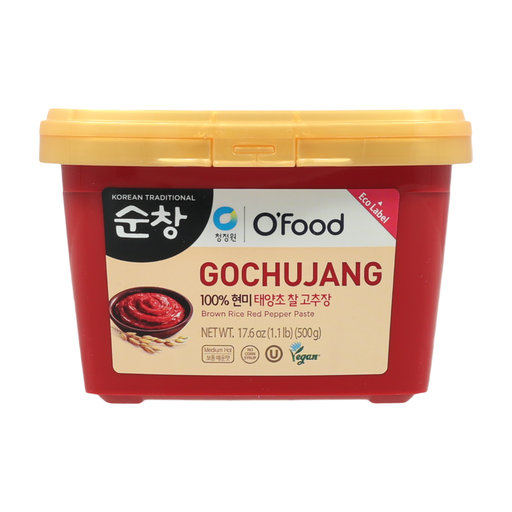
Why it stands out: This Korean chilli paste from Chung Jung One, a well-known brand from the Daesang corporation, uses glutinous rice as one of its main ingredients. This contributes to a smooth texture and a subtle sweetness that complements the heat of the chilli powder.
Advantages:
Who is it for? This product appeals to cooks who prefer a paste with a slightly thick consistency and a well-rounded, full-bodied flavour profile. It is a solid choice for a variety of traditional Korean cooking ingredients.
View Product: CHUNG JUNG ONE Chilli Sauce 500g
The selection presented here offers a great introduction to the world of gochujang. However, if you wish to compare other brands or discover special varieties for your recipes, you can find additional alternatives in our broader product category.
Discover our entire range of Korean hot sauce and find the perfect ingredient for your next culinary project.
1. What is the difference between Gochujang and Gochugaru? Gochujang is a fermented paste with a complex, sweet-spicy-salty flavour. Gochugaru, on the other hand, is the Korean word for chilli powder or chilli flakes and is one of the main ingredients in gochujang. Gochugaru provides pure heat and colour, while gochujang gets its deep umami flavour from fermentation.
2. How do I store Gochujang after opening? After opening, the gochujang container should be tightly sealed and stored in the refrigerator. This slows down the fermentation process, prevents it from drying out, and preserves the freshness and flavour of the paste for several months.
3. Can I use Gochujang in non-Korean dishes? Yes, absolutely. Gochujang is extremely versatile. You can use it to add a spicy depth to soups and stews, mix it into salad dressings or dips, or use it as a zesty marinade for grilled meat and vegetables. A spoonful of gochujang can also add an interesting flavour note to a simple tomato sauce or mayonnaise.