
Lieferung heute & morgen

Qualitätsgarantie

Willkommens-Angebote freischalten: KOSTENLOSE Lieferung | Bis zu 80 % RABATT | Kostenlose 30-Tage-JoyPlus-Testphase
App herunterladen
A compressor cooler operates on technology similar to that of a standard home refrigerator. A gaseous refrigerant is compressed by a compressor, causing it to liquefy, and is then expanded in an evaporator. This physical process extracts heat from the cooler's interior, enabling consistent and powerful cooling that is largely independent of the ambient temperature. Unlike thermoelectric models, compressor units can reach and maintain temperatures down to the freezing range of -20°C. This makes them a highly effective solution for keeping food and drinks chilled or frozen on the go.
Selecting the right model depends on objective parameters aligned with your intended use. The following criteria are relevant for making an informed decision.
The core component is the compressor. Its efficiency determines the cooling speed and energy consumption. Models capable of reaching temperatures as low as -20°C also function as portable 12V freezers. Some units also offer separate cooling zones, allowing for simultaneous use as a refrigerator and freezer. A crucial factor is the housing's insulation. Thick, high-density foam insulation reduces the compressor's runtime, thereby lowering power consumption.
The usable volume, specified in litres (L), defines the amount of food that can be stored.
Versatile power options are a key feature. Most models are designed as 12V/230V electric coolers.
An integrated battery protection system is a crucial feature. It monitors the vehicle battery's voltage and automatically shuts off the cooler before the battery is too deeply discharged, ensuring the vehicle can still start. Three adjustable protection levels (high, medium, low) are standard.
Here, we present three models that stand out for their technical specifications and application areas.
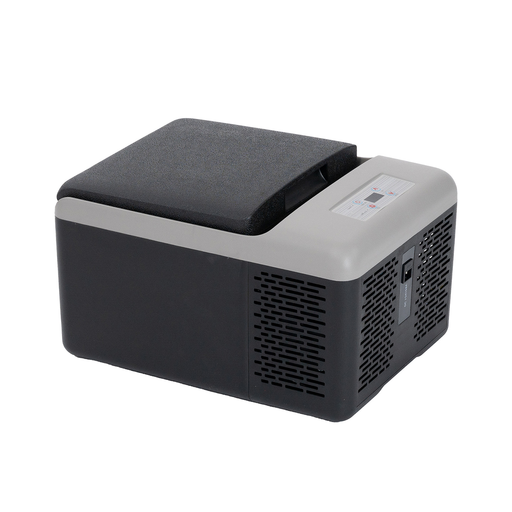
Technical Specification Analysis: This model is distinguished by its extremely compact design and low weight. With a 9-litre capacity and a weight of 6.7 kg, it is engineered for maximum portability. Its cooling performance down to -20°C also allows for freezing smaller items.
Advantages:
Ideal For: This unit is a functional solution for individuals, truck drivers needing a cooler for their cab, or for day-trippers looking for a compact car cooler.
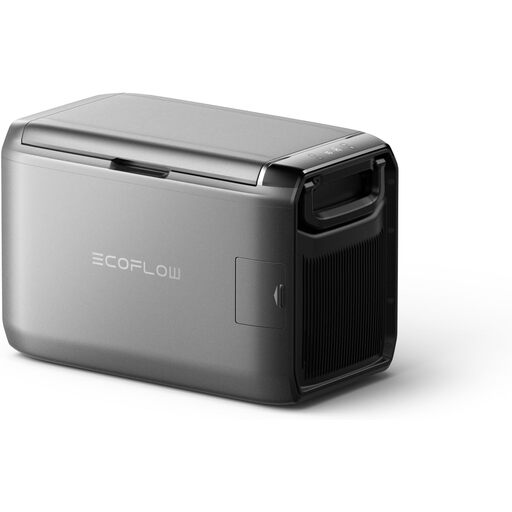
Technical Specification Analysis: The ECOFLOW GLACIER is a multifunctional device with a 45-litre capacity and an option for off-grid operation. Its dual-zone technology and multiple charging options position it in the high-performance segment.
Advantages:
Ideal For: This model is designed for discerning users such as campers, van-lifers, and boat owners who require a flexible, high-performance, and potentially self-sufficient cooling and freezing solution for extended trips.
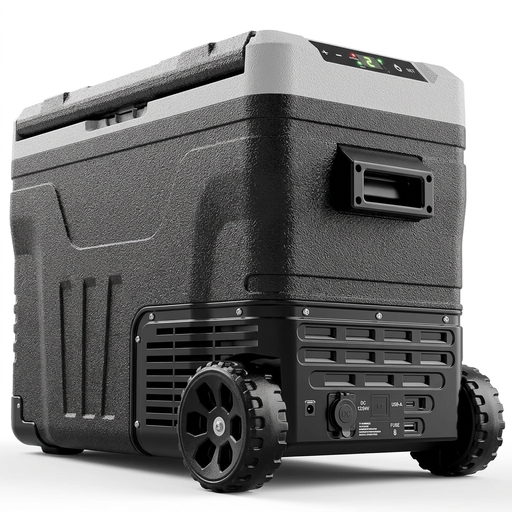
Technical Specification Analysis: With a 50-litre capacity, this model offers ample storage and combines it with practical mobility features like wheels and handles. App control and rapid cooling performance are further technical highlights.
Advantages:
Ideal For: Perfect for families, groups, anglers, or festival-goers who need a large camping fridge with high capacity and easy handling. The wheels make the unit transportable despite its weight.
The products presented here cover specific requirement profiles. For users seeking different capacities, dimensions, or feature sets, the market offers a wide selection. You can find an overview of other devices in our Portable Coolers for Camping category.
1. How does a compressor cooler work? A compressor cooler operates with a closed refrigerant circuit. A compressor pressurises a gaseous refrigerant, causing it to heat up and liquefy. In the condenser, this heat is released into the environment. The liquid refrigerant then flows through an expansion valve into the evaporator inside the cooler. There, it expands, turns back into a gas, and in doing so, extracts heat from the interior. This process enables efficient and powerful cooling.
2. How much power does a 12V compressor cooler use? Power consumption depends on several factors: the usable volume, the set temperature, the ambient temperature, and the quality of the insulation. An average 30-40 litre cooler consumes about 0.5 to 1.5 amp-hours (Ah) per hour in cooling mode (approx. 5°C). The compressor does not run continuously but cycles on as needed to maintain the temperature. Consumption is higher in freezer mode.
3. Can a compressor cooler also heat? No, the operating principle of a compressor cooler is designed exclusively for heat extraction, i.e., cooling. A heating function is not technically included. Models with a heating function are typically based on thermoelectric technology (Peltier elements), which, however, has significantly lower cooling performance and is highly dependent on the ambient temperature.