
Lieferung heute & morgen

Qualitätsgarantie

Willkommens-Angebote freischalten: KOSTENLOSE Lieferung | Bis zu 80 % RABATT | Kostenlose 30-Tage-JoyPlus-Testphase
App herunterladen
A good non-stick frying pan is a kitchen essential. It allows for low-fat cooking, prevents food from sticking, and is easy to clean. However, the market is crowded, and many products don't live up to their promises. A pan that loses its non-stick coating or warps on the stovetop after just a few months is a wasted investment.
As your Joybuy Product Recommendation Officer, I'm here to help you identify the common pitfalls and make an informed decision. We'll focus on the objective features that define a durable and functional pan.
Common Pitfalls When Buying a Pan:
To avoid a bad purchase, you should focus on three key technical parameters instead of marketing buzzwords.
The body material determines how quickly and evenly the heat is distributed.
The non-stick coating is the most crucial, yet most delicate, part of the pan.
The base is crucial for stability and energy efficiency, especially on induction stovetops.
Here are some models that represent a considered choice for specific user profiles based on their objective features.
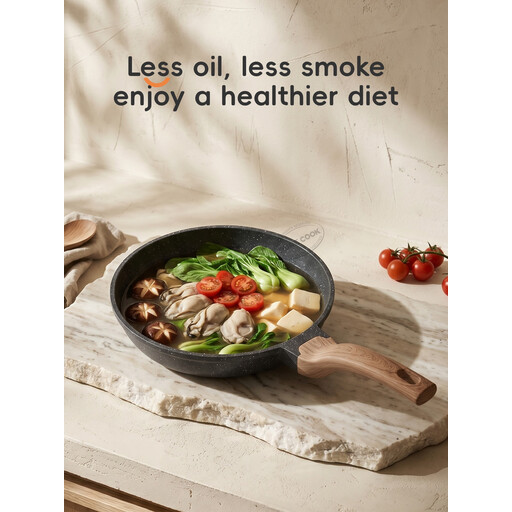
Why This Fits Their Persona: Ideal for cooking novices or small households looking for a straightforward, lightweight, and universally usable pan. The aluminium body ensures fast heating, and the 24 cm size is perfect for everyday dishes.
The pan is clearly declared as suitable for all stovetops, including induction, and relies on a proven stone-look non-stick coating without making exaggerated durability claims.
Very lightweight pan due to its aluminium alloy; fast and even heat conduction; universal stovetop compatibility.
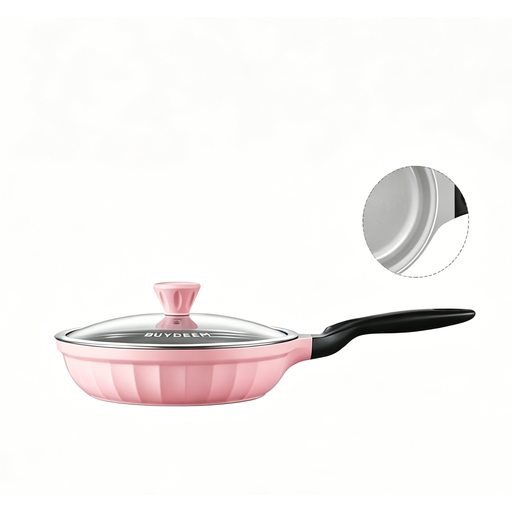
Why This Fits Their Persona: Perfect for users who value health-safe materials and are looking for a versatile pan with a lid for daily use. Ideal for gentle cooking and low-fat frying.
This product goes beyond the standard "PFOA-free" claim and specifies that its Swiss ceramic pan coating is free from the entire PFAS group. This offers greater transparency for health-conscious buyers.
According to the manufacturer, it features a PFAS-, PFOS-, and PFOA-free Swiss ceramic coating; cast aluminium for even heat distribution; suitable for all stovetops.
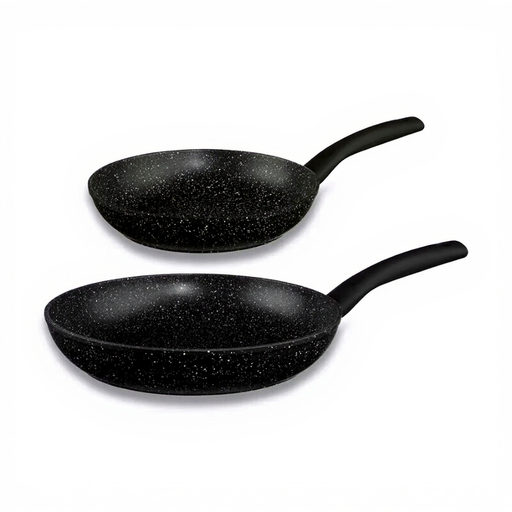
Why This Fits Their Persona: This pan set is a practical starter kit or addition for families. With the two most common sizes (including the 28 cm frying pan), you're equipped for almost any cooking scenario, from a fried egg to a family meal.
Instead of promoting a single, expensive "do-it-all" pan, this set offers a pragmatic solution. The stone-look coating is positioned as a design feature for low-fat cooking, not as a technological revolution.
Two pans (24 cm and 28 cm) for high flexibility; forged aluminium for good durability and heat distribution; stone-look non-stick coating.
We have compiled a complete, up-to-date list of products that fully meet these strict selection criteria and relevant safety standards.
1. How long does a non-stick frying pan last? The lifespan of a non-stick pan depends heavily on the quality of the coating, frequency of use, and care. With daily use and proper maintenance, a high-quality pan can last 2 to 5 years. To maximise its lifespan, you should follow these tips:
2. Is a ceramic pan really better than a PTFE pan? There's no single 'better' choice; it depends on your priorities. A ceramic pan is PTFE-free and often resistant to higher temperatures. However, its non-stick properties can degrade more quickly. A modern, multi-layer PTFE pan often offers a longer-lasting and more robust non-stick performance but is more sensitive to overheating and scratches. Both types are safe for your health when used correctly.
3. How can I identify a good pan for induction? Besides the official induction symbol (a stylised coil), there are two practical indicators. First, the magnet test: if a simple magnet sticks firmly to the bottom of the pan, it's ferromagnetic and therefore suitable for induction. Second, the weight and thickness of the base. A good pan for induction has a thick, heavy, and completely flat base. This ensures optimal energy transfer and even heat distribution without 'hot spots'.