
Lieferung heute & morgen

Qualitätsgarantie

Willkommens-Angebote freischalten: KOSTENLOSE Lieferung | Bis zu 80 % RABATT | Kostenlose 30-Tage-JoyPlus-Testphase
App herunterladen
The right office chair is the foundation of a functional workspace, whether it's in a home office, a teenager's room, or at a vanity table. Sitting for extended periods places significant demands on your seating. Choosing the right model can improve concentration and contribute to a more pleasant working atmosphere. This article serves as a guide to help you make an informed decision. We'll introduce different types of chairs and explain which features are most important for various needs and spaces.
With so many options available, finding the perfect desk chair can be a challenge. To make a well-informed choice, it's important to consider several objective criteria focusing on functionality, material, and safety.
An ergonomic office chair can be adjusted to fit the user's body. Key adjustment features include height adjustability. A height-adjustable swivel chair allows you to set the seat height so your feet rest flat on the floor and your knees form a 90-degree angle. Other ergonomic features may include an adjustable backrest or integrated lumbar support. This supports the lower back and helps promote an upright posture.
The material affects not only the look of the chair but also its comfort and maintenance. Mesh fabric is breathable and ideal for long periods of sitting, while velvet or other fabric covers create a more homely atmosphere. Plastic backrests are often low-maintenance and durable.
The size of the chair should suit the available space. An armless chair offers more freedom of movement and can be pushed completely under the desk, making it a practical solution for smaller rooms or multi-purpose workspaces.
The stability of an office chair is a crucial safety feature. Pay attention to the manufacturer's specified maximum weight capacity to ensure the chair is designed for your body weight. Certifications can also indicate tested quality. For example, SGS certificates for gas lifts or compliance with standards like EN 12520 indicate tested strength and durability.
Here is a selection of models that cater to different needs—from space-saving basic solutions to design-focused chairs for the modern home office.
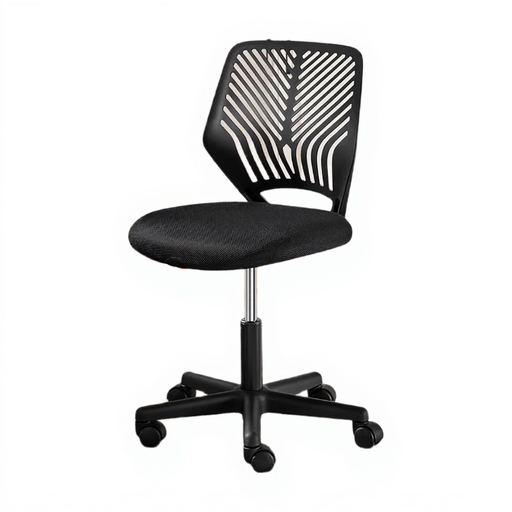
Why it stands out: This model is distinguished by its armless design. It offers maximum freedom of movement and can be easily adjusted to desks of various heights or tucked away to save space when not in use.
Advantages:
Who is it for? This chair is an excellent choice for users with limited space, for workstations requiring a lot of freedom of movement (e.g., for playing music or drawing), or as a functional seat for a teenager's room or vanity table.

Why it stands out: With its petal-shaped backrest and soft velvet cover, this chair makes a clear design statement. It combines the functionality of a swivel chair with the aesthetics of a modern piece of furniture.
Advantages:
Who is it for? Ideal for design-conscious users looking for a functional chair for the bedroom, dressing room, or a stylish home office. It appeals to those who value a homely aesthetic.

Why it stands out: This model is designed for comprehensive ergonomic support. With an adjustable lumbar and headrest, as well as flip-up armrests, it offers numerous customisation options for long hours of sitting.
Advantages:
Who is it for? This task chair is designed for people who spend many hours at their desk and place a high value on ergonomic adjustments to prevent strain.
If you need a chair for a compact workspace or prefer the freedom of movement of an armless design, there are many other models to discover. A chair without side rests can be the ideal solution to combine flexibility and space-saving.
Discover our selection of armless swivel chairs and find the right solution for your desk.
A good ergonomic office chair offers multiple adjustment options to fit an individual's body. These typically include adjustable seat height, a customisable backrest, and ideally, seat depth adjustment. Features like lumbar support, adjustable armrests, and a synchronous mechanism, where the seat and backrest move in a coordinated manner, also contribute to its ergonomics.
The decision depends on your personal work habits and the available space.
For a basic ergonomic setup, you should follow these steps: