
Lieferung heute & morgen

Qualitätsgarantie

Willkommens-Angebote freischalten: KOSTENLOSE Lieferung | Bis zu 80 % RABATT | Kostenlose 30-Tage-JoyPlus-Testphase
App herunterladen
Whether you are a DIY enthusiast, installer, mechanic, electrician or running a vehicle workshop: hand tools need to suit the specific task, material thickness and available working space. A cheap individual purchase can prove expensive if the pliers do not open wide enough, the ratchet requires too much room or a tool is used incorrectly for safety reasons.
A tool set with numerous pieces may seem practical at first glance. However, what matters is whether the sizes included are actually suitable for your intended applications. For example, a pliers set containing water pump pliers, side cutters and long-nose pliers covers different tasks from a ratchet spanner set with metric sizes.
When choosing multifunction pliers, buyers should also check the specified cable cross-sections, cutting capacities and gripping ranges. Cable pliers designed for thin wires are not suitable for hardened wire or screws.
A large jaw opening alone says little about safe use. With water pump pliers or pipe wrenches, the tooth geometry, adjustment mechanism and suitable tool length are also important. A model that is too small may slip; one that is too large may be difficult to control in confined spaces.
Cr-V steel, or chromium-vanadium steel, is used in many types of pliers, socket tools and ratchets. However, this designation does not describe the overall quality of the tool on its own. Heat treatment, surface finish, joint construction and handle design also affect how practical the tool is in everyday use. For cutting pliers, the specified hardness and maximum cutting capacity are also relevant.
First, match the planned job to the appropriate type of tool:
Check the following before buying:
According to DURATECH product specifications, a 72-tooth ratchet spanner requires a working angle of 5 degrees. This can be practical in confined spaces, but it does not replace a suitable extension or torque wrench.
For Cr-V steel tools, specifications such as heat-treated, corrosion-protected or forged are only useful when they are clearly assigned to the specific product. Handles made from TPR, PVC or plastic can improve grip, but are not automatically electrically insulated. Never use non-insulated pliers on live cables.
After use, hand tools should be wiped dry and stored in a dry place. Moving joints and adjustment mechanisms can be lightly oiled if the tools are to be stored for an extended period. Cutting capacities and maximum torque values must not be exceeded.
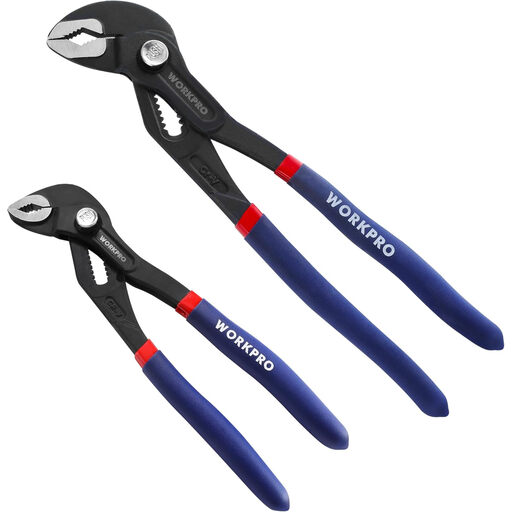
Why this product suits this profile: Two lengths cover smaller assembly jobs as well as larger pipe or fitting tasks. According to the product specifications, the maximum openings are 33 and 43 mm respectively.
The two clearly specified sizes reduce the risk of using an unsuitable one-size-fits-all pair of pliers for every application. The push-button adjustment is clearly described on the tool itself.
Two Cr-V steel tools, serrated gripping surfaces and non-slip plastic handles.
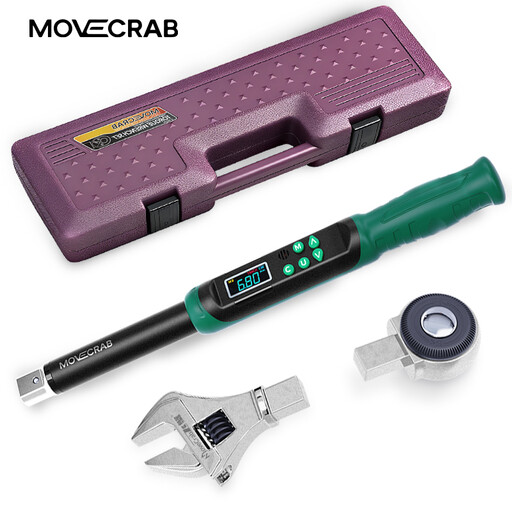
Why this product suits this profile: For vehicle maintenance and machine assembly where torque values need to be documented or repeatedly set. According to the product specifications, the range is from 6.8 to 135 Nm.
The product specifications state the measuring range, units and warning signals. This makes it easier to match the tool to the required fastening than with a conventional handle without a display.
Ratchet and open-ended heads, four selectable units and storage for up to 500 data records according to the product description.
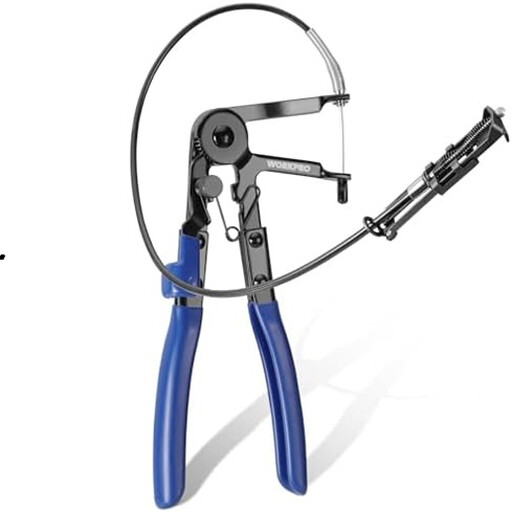
Why this product suits this profile: These hose clamp pliers are designed for work on fuel, oil and coolant lines when the clamp is deep inside the engine compartment. The flexible cable measures 67 cm.
The length and opening range of 10 to 50 mm are clearly specified. The locking mechanism keeps the clamp compressed during installation.
Cable-operated access to hard-to-reach areas, carbon steel construction and PVC-coated handle.
We have put together a complete, regularly updated list of products that fully meet these strict selection criteria and the safety regulations applicable in the EU.
For occasional repairs, a set containing several spanner sizes, a small ratchet, side cutters, combination pliers and screwdrivers is practical. For plumbing work, you should also have water pump pliers or a pipe wrench. The key is to ensure that the sizes and intended applications are clearly specified.
Service life depends on the material, workload, storage and maintenance. Cr-V steel tools can remain usable for a long time when stored in a dry place and used appropriately. Rust, damaged teeth, loose joints or deformed cutting edges are signs that the tool should be replaced.
A torque wrench is useful when the manufacturer of an assembly specifies a particular tightening torque, for example for vehicle, machine or bicycle components. The set range must match the fastening. After use, the wrench should be stored in accordance with the operating instructions.