
Lieferung heute & morgen

Qualitätsgarantie

Willkommens-Angebote freischalten: KOSTENLOSE Lieferung | Bis zu 80 % RABATT | Kostenlose 30-Tage-JoyPlus-Testphase
App herunterladen
Whether for your commute, working from home, sport, gaming or long evenings of music, headphones differ significantly in design, connection, battery life and noise control. Marketing terms like "Hi-Res", "ANC" or "long battery life" are only helpful when the technical specifications match your own usage.
With Bluetooth headphones, the battery life often refers to a specific setting. Activated noise cancellation, high volume, phone calls and using the app can all affect the actual battery life. With TWS earbuds, you also need to distinguish between the playback time of the individual earbuds and the additional capacity of the charging case.
ANC headphones work electronically against certain ambient noises. Low, constant sounds like engines or train noise can usually be handled differently from voices or sudden signals. With in-ear headphones, the size of the ear tips also affects the passive seal. If the fit isn't right, the noise reduction can be weaker and wearing comfort decreases.
A heavy pair of over-ear headphones can feel very different on long journeys compared to a lightweight model for short phone calls. For sports headphones, a secure fit and appropriate sweat resistance are key. Open-ear headphones let ambient noise in, but offer less acoustic isolation. The controls should also suit your daily life: buttons, touch surfaces, in-line remote or app control each have their own pros and cons.
Bluetooth headphones are practical for smartphones, tablets and laptops. Check the supported profiles and codecs if a specific audio transmission is important to you. Multipoint can make switching between two devices easier, but it's not available on every model.
USB-C headphones transmit audio signals via a cable and don't require Bluetooth pairing or their own battery charge. The device must support USB-C audio. With a wired model like the Sony IER-EX15C, an integrated microphone and in-line remote control are also part of the package. For users who prefer a simple plug-and-play connection, this can be more practical than wireless headphones.
Compare playback time per charge, total battery life with the charging case and fast charging function separately. A USB-C port is common on many current models. For sports headphones, the stated IP rating is relevant. An IPX5 rating, for example, describes protection against water jets under certain test conditions, but does not replace full waterproofing. Charging contacts should be dried clean after sweaty activities.
A headphone with a microphone is not automatically optimised for noisy environments. Pay attention to the number and position of the microphones, as well as details about ENC, beamforming or wind noise reduction. Such features can support voice capture, but their effectiveness depends on the environment, fit and software.
With ANC headphones, you should check whether a transparency or aware mode is available. When cycling, driving or crossing busy roads, your perception of warning signals must not be impaired.
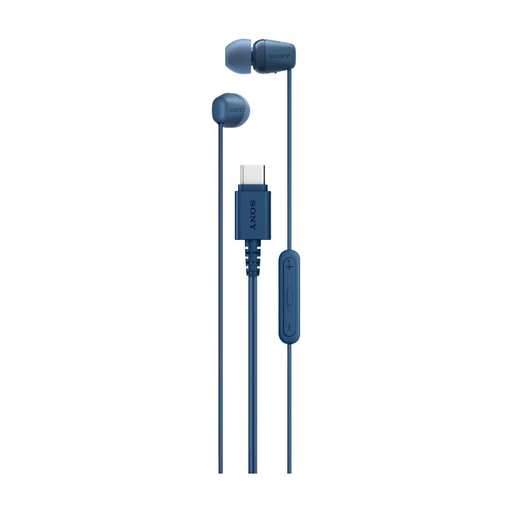
Why this product fits the profile: These wired in-ear headphones require neither a battery nor pairing and can be connected to compatible smartphones, tablets, laptops and PCs.
The USB-C connection prevents charging and pairing issues. Before buying, you only need to check the audio compatibility of your device.
5 mm drivers, integrated microphone, in-line controls and multiple ear tip sizes.
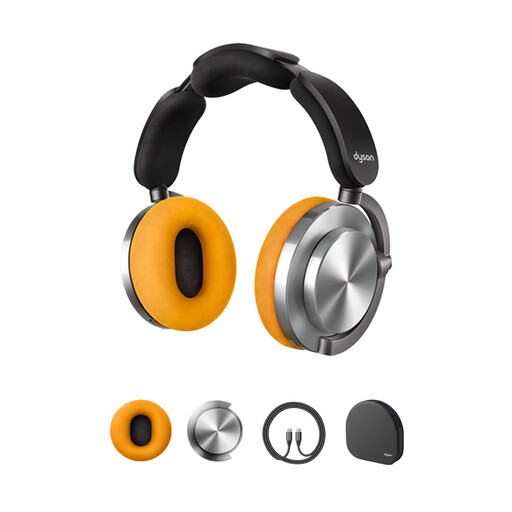
Why this product fits the profile: This over-ear model is aimed at users who value long battery life, customisable elements and active noise cancellation.
The battery life with active noise cancellation is stated as up to 55 hours. However, the weight and over-ear design remain personal points to check for fit.
Bluetooth 5.0, USB-C, 40 mm drivers, ANC up to 40 dB and app control.
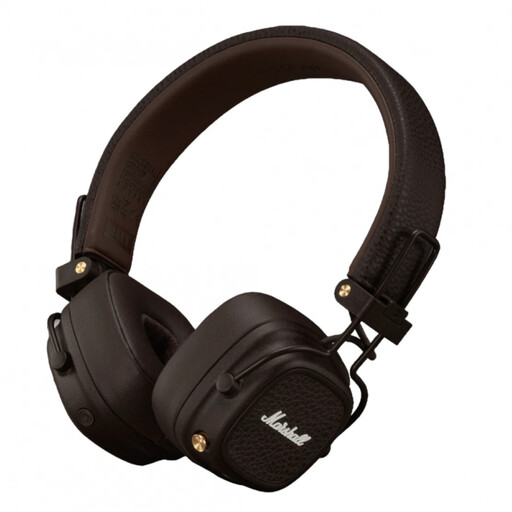
Why this product fits the profile: For heavy listeners, commuters and travellers, the stated battery life, foldable design and additional cable connection are key features.
The stated playback time of over 100 hours reduces the need for frequent recharging. A 3.5 mm audio cable is included for when the battery runs out.
40 mm drivers, USB-C charging, fast charging, foldable design and support for Bluetooth LE Audio.

Why this product fits the profile: Open-ear headphones can be interesting for the office, everyday life and movement when you need to stay aware of your surroundings.
The open design avoids complete isolation. However, it is not suitable for situations where full attention to traffic is required.
Bluetooth connection, 12 mm drivers, four microphones for phone calls and a flexible open-ring design.
We have compiled a complete, regularly updated list of products that fully meet these strict selection criteria and the safety regulations in force in the EU.
For train and air travel, closed-back over-ear headphones or well-fitting in-ear headphones with ANC are good options. Sufficient battery life, a transparency mode and a comfortable fit are important. If you frequently switch between devices, multipoint can be useful.
The lifespan depends on the battery, charge cycles, care and design. TWS earbuds, with their small batteries, are particularly reliant on the charging case. Models with a USB-C port are usually straightforward to recharge. Extreme heat, moisture and consistently high volume should be avoided.
No. The smartphone must support USB-C audio. Some devices may also require an adapter or a system setting. Therefore, check the technical specifications of both your smartphone and the headphones before buying.