
Lieferung heute & morgen

Qualitätsgarantie

Willkommens-Angebote freischalten: KOSTENLOSE Lieferung | Bis zu 80 % RABATT | Kostenlose 30-Tage-JoyPlus-Testphase
App herunterladen
A highlighter should make key points stand out without obscuring the text, bleeding through thin paper or drying out after a short time. But eye-catching colours and marketing claims don’t automatically mean you’ve found the right one. If you’re buying highlighters for school or the office, look out for these three common pitfalls.
1. Assuming neon colours are always easy to read
A bright neon highlighter certainly catches the eye, but on densely printed pages it can make the text look cluttered. Light shades of yellow, orange or green are often easier to read than very dark or heavily pigmented colours. A multi-colour highlighter set can also be useful for study notes, letting you assign different colours to different subjects or priorities.
2. Expecting one line width to suit every task
A fine pen is ideal for highlighting individual words, while larger sections of text call for a broader tip. A highlighter with a variable line width can be more practical. The maximum width isn’t the only thing to consider: think about how easily you can control the tip when holding it flat or at an angle.
3. Taking “no bleed-through” as a blanket guarantee
Paper quality, absorbency and the amount of ink all affect the result. Even a highlighter that doesn’t bleed through thin paper may show on the reverse of some documents. According to its product description, wax-based options such as the STAEDTLER Textsurfer Dry are designed for thin paper, legal texts, newspapers and Bible pages. Whenever you use a new type of paper, it’s worth testing the highlighter on an inconspicuous area first.
Traditional highlighter pens usually have a chisel tip. Depending on the angle, you can use it for fine underlining or broader highlighting. Models with a line width of around 1 to 5 mm are suitable for both. A soft round tip of around 1 to 4 mm can be a good alternative if you often switch between fine and broad lines.
A fine tip is useful for individual words and margin notes. If you’re working through lots of pages, look for a larger ink reservoir and a tip that holds its shape under regular pressure.
Water-based fluorescent ink is common in highlighters. Look for claims such as quick-drying, lightfast or suitable for inkjet printouts. These should be understood as specific statements from the manufacturer, not a guarantee that the highlighter will work perfectly on every type of paper.
For important documents, check whether the ink smudges when you copy, scan or highlight over it. Wax-core highlighters work differently from conventional ink highlighters: they don’t need an ink flow and, according to the product description, are suitable for paper where show-through is a concern. However, you’ll need to sharpen them when necessary.
An ergonomically shaped highlighter can feel more comfortable to hold during long study sessions or extensive marking. Triangular barrels also help stop the pen rolling off the desk. If you use a highlighter frequently, a securely closing cap, a sturdy barrel and a generous ink reservoir are also worth considering.
Read claims about protection against drying out carefully. For example, the Pelikan 490 Eco is said to resist drying out for up to eight hours with the cap off. Even so, replacing the cap straight after use will help extend its life. High-capacity highlighters should still be stored with the cap on.
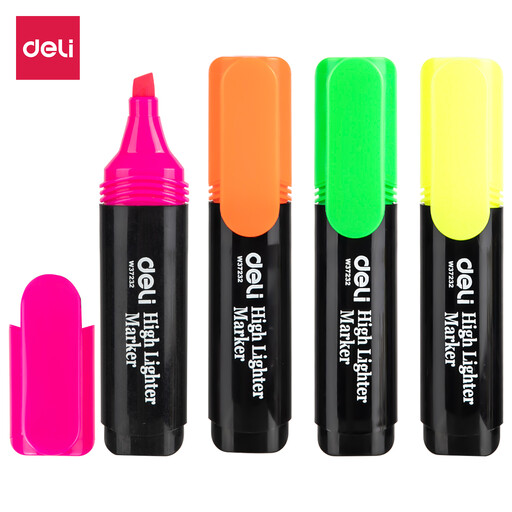
Why it suits this profile: This four-colour set includes yellow, green, pink and orange highlighters for school, university or everyday filing. The range of colours makes it easy to assign different colours to different subjects.
Several colours in one set mean you don’t need to buy different pens individually. However, it’s still worth testing the water-based fluorescent ink on your paper.
Four colours in one set; chisel tips for different line widths, depending on the angle you hold the pen.
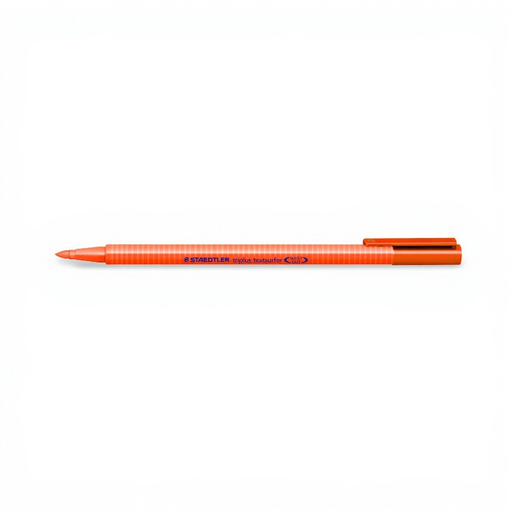
Why it suits this profile: The triangular shape helps you maintain a controlled grip during longer highlighting sessions. According to the product details, the soft round tip offers a variable line width of around 1 to 4 mm.
The variable line width means you’re less likely to need pens with different tips. The product description also specifies water-based, lightfast ink that’s suitable for inkjet printouts.
Triangular barrel; variable line width of around 1 to 4 mm; automatic pressure stabilisation, according to the product details.
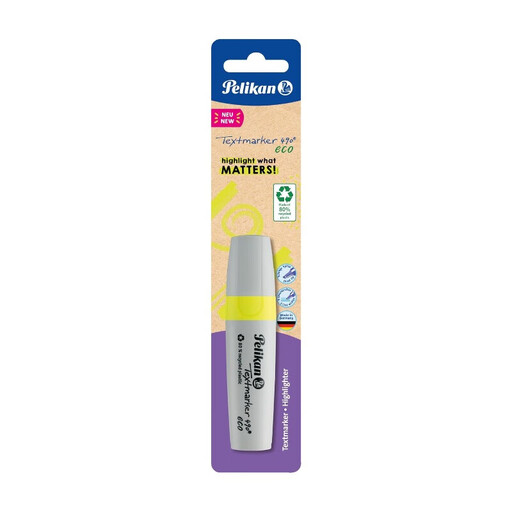
Why it suits this profile: Its three stated line widths of 1, 2 and 5 mm work for both underlining and broad highlighting. This model is designed for regular use at school, university and in the office.
The tip isn’t limited to a single line width. The integrated grip area and claimed protection against drying out for up to eight hours address common comfort and durability concerns.
Three line widths; barrel made from 80% recycled plastic, according to the product details; can be opened with one hand.
For very thin pages, the STAEDTLER Textsurfer Dry in orange or yellow could be a good alternative. Its triangular wooden barrel contains a 4 mm wax core, but it needs sharpening with a suitable twin-hole sharpener. According to the product description, the neon-coloured wax core doesn’t bleed through thin paper.
Conventional models such as the STAEDTLER Textsurfer or a Pelikan highlighter are ready to use straight away and work well for highlighting large amounts of text. If you need several colours, you could choose a highlighter set. Cosmetic products described as “highlighters” aren’t included here, as they’re designed for use on skin rather than paper.
We’ve put together a complete, regularly updated list of products that meet these strict selection criteria and fully comply with the safety regulations in force in the EU.
Wax-based models such as the STAEDTLER Textsurfer Dry are designed for thin types of paper, according to the product details. With ink highlighters, the result depends more on the paper’s thickness and absorbency. Testing on a separate sheet can help you decide before you buy.
How long it lasts depends on the ink reservoir, how often you use it, the tip and the cap. Always click the cap fully into place after use. Models with protection against drying out can be left uncapped for longer, but should still be stored with the cap on and in suitable conditions.
A set can be better value if you regularly need several colours. For occasional use, a single pen may be enough. So don’t just compare the price per pen: consider which colours you actually need, the amount of ink and the line width that suits your tasks.