
Lieferung heute & morgen

Qualitätsgarantie

Willkommens-Angebote freischalten: KOSTENLOSE Lieferung | Bis zu 80 % RABATT | Kostenlose 30-Tage-JoyPlus-Testphase
App herunterladen
A hob needs to suit the way you cook, your kitchen and the cookware you already own. Poor purchases are often caused not by missing features, but by unsuitable dimensions, an underestimated connection load or incompatible pans. Our guide explains which details are particularly important before buying an induction hob, ceramic hob or electric hotplate.
A 60 cm hob is usually around 59 cm wide. However, the crucial measurement is the cut-out in the worktop. With built-in appliances, the dimensions can differ considerably:
A hob that is too large will not fit the existing cut-out. A cut-out that is too small can affect secure installation and ventilation.
A high wattage describes the maximum power consumption, but on its own it says little about everyday use. A portable hob with 1,500 or 2,000 watts is often suitable for a single frying pan or saucepan. A 4-zone hob with up to 6,000 or 7,200 watts, on the other hand, requires a suitably rated electrical installation.
For built-in appliances without a plug, installation in Germany must be carried out by a qualified electrician. Before buying, check the following:
An induction hob generates heat using an electromagnetic field. This means that only pans and saucepans with a magnetic base will work. A simple magnet test on the base of the pan will provide clarity. Cast iron, iron and magnetic stainless steel are often suitable. Aluminium, ceramic or copper cookware without a magnetic coating will not be detected by an induction hob.
A ceramic hob or electric hotplate is generally less demanding when it comes to cookware. However, the base should be flat, clean and suitable for the cooking zone. Unsuitable cookware can reduce heat transfer or scratch the glass surface.
An induction hob heats the base of the pan directly. It often responds quickly to changes in power and may offer features such as automatic pan detection. However, magnetic cookware is required.
A ceramic hob, also known as a glass-ceramic hob, heats the cooking zone first. The surface remains hot for some time after the hob has been switched off. A residual heat indicator is therefore practical and should be considered when choosing a model.
An electric hotplate with a visible heating element is often available as a single or double hotplate. It does not require special cookware and is suitable as an additional appliance, for small flats, the office or camping. Models with 1,500 watts and a continuously adjustable thermostat are designed for straightforward cooking tasks.
For a single-person household, a single hotplate or portable hob may be sufficient. If you regularly prepare side dishes and a main course at the same time, a double induction hotplate or built-in 2-zone hob is likely to be more useful.
Families and keen home cooks should consider the number, size and arrangement of the zones. A 4-zone hob allows you to cook several dishes at once, but requires more space and a suitably rated power supply. Multiple power levels make it easier to switch between frying, boiling and keeping food warm. Some appliances also include a timer, boost function or pre-set programmes.
Touch controls save space and are easy to clean when the surface is smooth. However, they only respond reliably when the control panel is dry and free from grease. Rotary controls can be particularly straightforward and convenient on a basic electric hotplate.
Useful safety features include:
Safety features do not replace supervision while cooking. Hot surfaces should not be touched immediately after the appliance has been switched off.
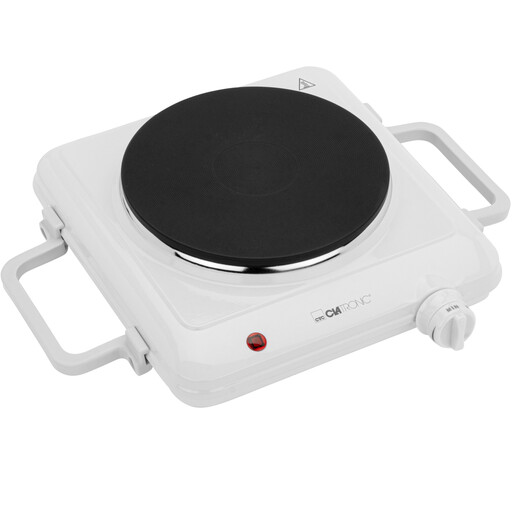
Why this product suits the profile: This compact single hotplate requires no installation and is suitable for the kitchen, office, student accommodation or occasional camping.
The continuously adjustable thermostat is described more clearly than an imprecise simple on/off control. The cooking surface measures around 180 mm.
1,500 watts, indicator light, overheating protection, excellent stability and heat-resistant coating.
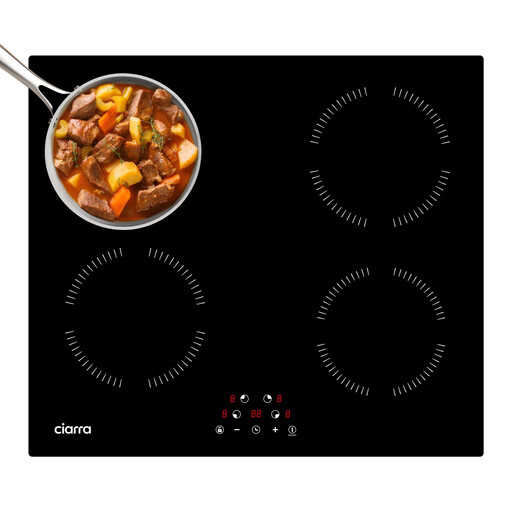
Why this product suits the profile: This 60 cm built-in hob is designed for households that use several pans at once and prefer a permanent solution.
The external dimensions and cut-out are specified as 590 × 520 mm and 560 × 490 mm respectively. This reduces the risk of incorrect installation planning.
Four zones, nine power levels, individual timer up to 99 minutes, pan detection, residual heat indicator and child lock.
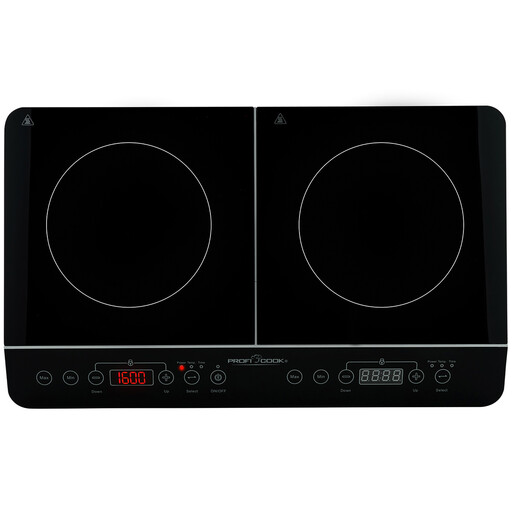
Why this product suits the profile: This portable induction hotplate provides two cooking surfaces, making it a flexible addition for temporary kitchens or larger quantities of food.
Automatic pan detection highlights the need for induction-compatible cookware. The timer and switch-off functions help limit unintended running times.
3,500 watts total power, ten temperature settings from 60 to 240 °C, 180-minute timer and sensor touch control panel.
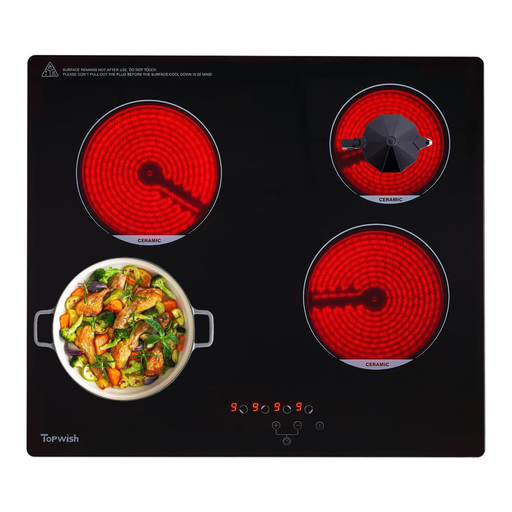
Why this product suits the profile: This ceramic hob has four zones and works with various cookware bases made from iron, aluminium, stainless steel, copper or ceramic, provided they are smooth.
It does not require magnetic pans. The residual heat indicator and automatic switch-off help you keep track of the hot surface.
Four cooking zones, nine power levels, timer up to 99 minutes, child lock and overheating protection.
We have put together a complete, regularly updated list of products that fully meet these strict selection criteria and the safety regulations applicable in the EU.
Running costs depend on the power rating, usage time and electricity tariff. The maximum wattage does not automatically correspond to actual consumption, as the appliance may switch off temporarily or reduce its power depending on the temperature control. For a rough calculation:
Power in kilowatts × operating time in hours × electricity price per kilowatt-hour = electricity cost.
A portable hob rated at 2,000 watts running at full power for 30 minutes uses the equivalent of 1 kWh. In everyday use, consumption may be lower. After cooking, allow the surface to cool down completely. Glass-ceramic surfaces can be cleaned with a soft, damp cloth; a suitable glass scraper is useful for burnt-on residue. Abrasive cleaners and rough sponges can damage the surface.
First, the external dimensions, cut-out size, installation depth and ventilation clearance must all match. Appliances without a plug must be connected by a qualified electrician. The installation instructions for the specific model are definitive.
Service life depends on use, care, installation and electrical load. Keeping the control surface dry, using suitable pans and following the manufacturer's instructions can reduce strain on the appliance. If the glass surface is cracked, cables are damaged or the fuse trips repeatedly, stop using the appliance.
There is no simple answer. The key factors are power rating, cooking time, pan size, temperature and electricity tariff. Induction heats a suitable pan base directly, whereas a ceramic hob heats the cooking zone first. For a meaningful comparison, both appliances should be assessed under similar conditions.