
Lieferung heute & morgen

Qualitätsgarantie

Willkommens-Angebote freischalten: KOSTENLOSE Lieferung | Bis zu 80 % RABATT | Kostenlose 30-Tage-JoyPlus-Testphase
App herunterladen
The idea of fresh-squeezed juice in the morning is tempting. But the path to the right appliance is often cluttered with marketing promises and technical specs that confuse more than they clarify. As your Joybuy Product Recommendation Officer, I'll help you identify the crucial features and make a choice that fits your daily life, ensuring your new juicer doesn't end up collecting dust in a cupboard after just a few weeks.
Many appliances advertise features that disappoint in practice. Pay close attention to these three points to avoid a bad buy.
To buy the right juicer, you should focus on the technical fundamentals that match your needs.
The most fundamental decision concerns the appliance's operating principle. Both systems have specific pros and cons.
Centrifugal Juicer: These devices shred fruits and vegetables with a cutting disc at very high speeds (often over 10,000 RPM) and spin the juice out through a fine sieve.
Slow Juicer (Cold Press Juicer): These models, also known as masticating or auger-style juicers, crush and press ingredients slowly (typically 40–100 RPM).
The size of the feed chute determines how much you need to pre-cut fruits and vegetables. A diameter of 75 mm or more allows you to process whole small apples or peeled oranges, saving significant time in your daily routine. Smaller openings require more prep work, which can become tedious, especially when processing large quantities.
Look for materials that are food-safe and durable. BPA-free plastics and stainless steel components are good indicators. For straightforward cleaning, the following features are advantageous:
Here are a few models that represent a smart choice for specific use cases, based on objective criteria.
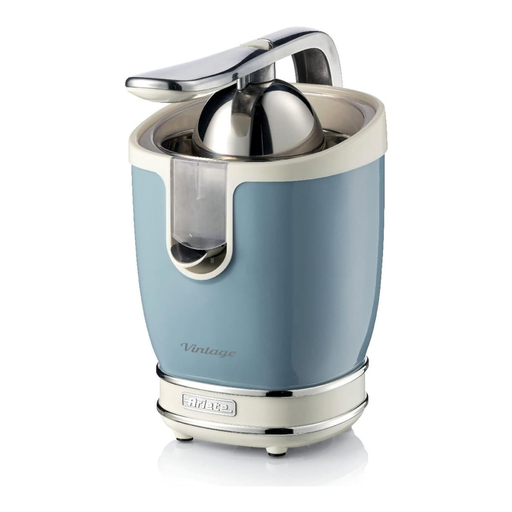
Why This Fits Their Persona: Ideal for anyone who primarily wants to make fresh orange, lemon, or grapefruit juice without much effort. The retro design also makes this electric citrus press an eye-catcher in the kitchen.
This appliance is specialised and doesn't promise to do everything. Cleaning is quick and uncomplicated thanks to a few removable parts, which lowers the barrier to daily use.
The lever mechanism allows for effortless pressing. Two press cones for large and small fruits ensure a good juice yield. The 85-watt motor is sufficiently powered for this purpose and operates quietly.
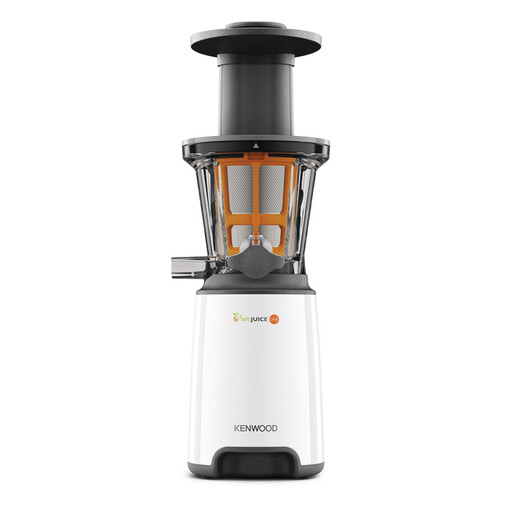
Why This Fits Their Persona: For users who value gentle processing and want to juice a variety of ingredients, including leafy greens. This cold press juicer is designed for nutrient retention through slow mastication.
The appliance sidesteps the "wattage trap" by operating at 140 watts and a slow 55 RPM, which is optimal for slow-juicing technology. A rinse function and the included brush directly address the problem of difficult cleaning.
The slow-press technology ensures a high juice yield and minimal oxidation. Its slim design has a small footprint, and the anti-drip spout keeps your countertop clean.

Why This Fits Their Persona: When speed is essential and you need a juicer for fruits and vegetables in larger quantities, this model is designed for efficiency and minimal prep time.
The large 75 mm feed chute reduces pre-cutting to a minimum. Key parts are dishwasher-safe, which significantly simplifies cleanup after the morning rush and bypasses the "cleaning trap."
The 900-watt motor processes even hard vegetables quickly. The 1.25-litre juice jug with a foam separator and the anti-drip system ensure clean and convenient handling.
We have compiled a complete, up-to-date list of products that fully meet these strict selection criteria and all relevant safety regulations.
1. Which juicer is best for leafy greens like spinach or kale?Slow juicers (cold press juicers) are generally the better choice. Their slow, masticating action extracts juice from the fibres more efficiently than fast-spinning centrifugal juicers, where much of the leafy green can end up in the pulp.
2. How long does fresh-pressed juice last? Freshly pressed juice should ideally be consumed immediately to get the full nutritional benefit. Stored in an airtight container in the refrigerator, juice from a centrifugal juicer will last for about 24 hours. Juice from a slow juicer can often be stored for up to 48 hours without significant loss of quality, due to lower oxidation.
3. Does a loud juicer make a difference in juice quality? The noise level itself doesn't directly affect juice quality. However, it is a strong indicator of the technology being used. Loud appliances are almost always centrifugal juicers that operate at high speeds. The associated heat and oxygen exposure can accelerate oxidation. Quieter appliances are typically slow juicers, whose gentle process is considered beneficial for the stability of nutrients and enzymes.