
Lieferung heute & morgen

Qualitätsgarantie

Willkommens-Angebote freischalten: KOSTENLOSE Lieferung | Bis zu 80 % RABATT | Kostenlose 30-Tage-JoyPlus-Testphase
App herunterladen
A juicer can make it easier to prepare fresh juice at home. However, not every appliance will give you the results you want. Models are often chosen for their high wattage, large feed chute or broad claims about juice yield. What really matters is whether the design, cleaning requirements and capacity suit your daily routine.
A powerful juicer with a high-wattage motor can process hard ingredients quickly. However, wattage alone tells you little about the juice’s consistency, how noisy the appliance is or how well it handles fibrous foods. A slow juicer with lower power consumption may also be perfectly capable of handling apples, cucumbers or carrots.
So, also look at:
A juicer with a large feed chute can reduce the need to chop ingredients. But this is only the case if the chute is actually suitable for the ingredients you want to use. You’ll usually still need to remove pips and tough skins, or cut particularly fibrous foods into smaller pieces.
A 75 to 80-millimetre chute is large enough for many pieces of fruit. Models with a 130 or 135-millimetre chute may be more practical for whole apples or larger pieces of vegetables. You should still check the manufacturer’s guidance on the maximum size of ingredients.
Fruit pulp and plant fibres collect in a juicer’s filter, auger or sieve. If these parts are difficult to reach, daily use can quickly become a chore. Before you buy, check that the removable parts are clearly listed and find out whether a cleaning brush is included.
“Easy to clean” doesn’t automatically mean that every part is dishwasher-safe. The motor housing must never be immersed in water. Filter surfaces can also be sharp, so take care when cleaning them.
A slow juicer, also known as a cold press juicer, usually crushes and presses ingredients at a low speed. This can affect the texture of the juice and reduce foaming. Preparation often takes a little longer, and how well fibrous ingredients are processed depends on the design.
A centrifugal juicer grates the ingredients and separates the juice using a sieve. These appliances are a good choice for larger quantities and quick preparation. However, the filter usually needs a thorough rinse straight after use.
A juice press or citrus press is designed for oranges, lemons, grapefruit and similar fruit. It isn’t intended for carrots, celery or apples. A manual 2-in-1 model with a 200-millilitre container is better suited to individual portions than to serving a whole family.
A 600 to 700-millilitre juice container may be enough for one person. Families can benefit from larger juice containers and a roomy pulp container. Don’t forget to consider the space it will take up: tall appliances won’t fit under every kitchen cabinet, while wider models need more worktop space.
Noise levels are given in decibels, but can only be compared under the same test conditions. An appliance rated at 60 decibels may seem more pleasant to use than one with a higher rating, but the ingredients, surface it’s placed on and operating time also make a difference.
Look for:
Fresh juice is no substitute for a balanced diet. Your individual needs should guide your choice of ingredients and what you can comfortably consume.
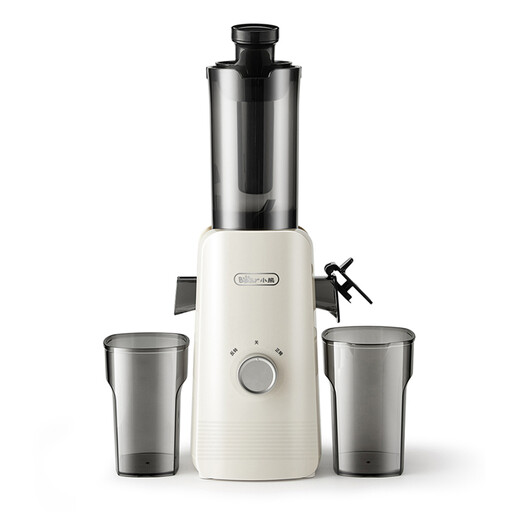
Why it suits this profile: According to the product information, this compact model has an 80-millimetre feed chute, 130 watts of power and three removable main components. It’s a good fit for smaller households and regular single servings.
The clearly listed components and included cleaning brush make it easier to assess the cleaning involved before you buy.
80-millimetre feed chute, separate juice and pulp containers, and a compact design.
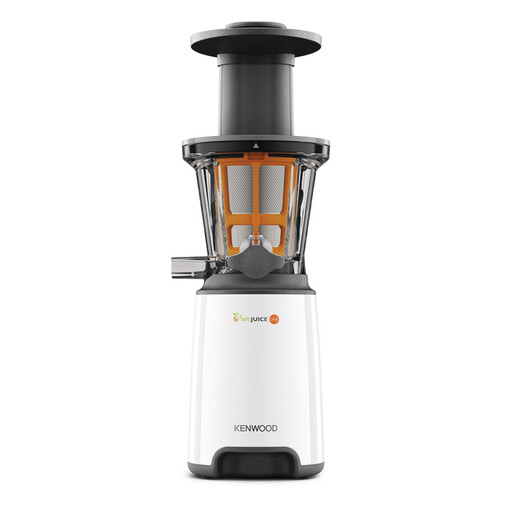
Why it suits this profile: According to the manufacturer, this slow juicer runs at 55 revolutions per minute and comes with a 700-millilitre juice container, a 1.3-litre pulp container and a rinse function.
Clear information about the speed, containers and rinse function gives you specific features to compare, rather than relying on broad performance claims.
55 revolutions per minute, anti-drip stopper, cleaning brush and a slim footprint.

Why it suits this profile: This electric juicer is designed for quick preparation. According to the product information, it has an 800-watt motor, two speed settings, a 75-millimetre feed chute and a 1.25-litre juice jug.
The two speed settings and specific container capacities show you the quantities and ingredients the appliance is designed for.
800 watts, 1.25-litre juice jug, 2-litre pulp container and removable parts that are dishwasher-safe according to the product information.
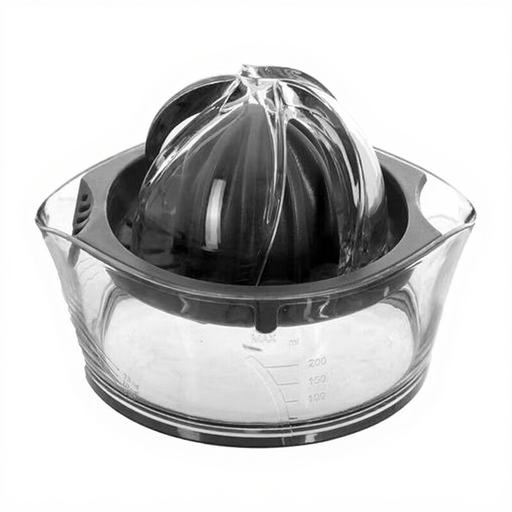
Why it suits this profile: This manual citrus press has an integrated 200-millilitre container and is designed for lemons and oranges. It needs neither a motor nor a power supply.
Its clear specialisation helps you avoid expecting it to juice a wider range of fruit and vegetables.
Compact design, 200-millilitre container and suitable for two types of citrus fruit.
We’ve put together a complete, regularly updated list of products that meet these strict selection criteria and fully comply with the safety regulations in force in the EU.
Ideally, rinse the filter, auger, sieve and collection containers straight after every use. Dried-on fruit fibres are much harder to remove. Use the brush provided and check the guidance on whether parts are dishwasher-safe. Clean the motor housing with a slightly damp cloth only.
Its lifespan depends on how often you use it, the ingredients you juice, how you clean it and its permitted operating time. Hard pips, ice cubes, frozen ingredients or very fibrous plants can damage the appliance if they aren’t recommended in the instructions. Taking regular breaks helps protect the motor from overheating.
Energy consumption depends on the motor’s power and how long the appliance runs. A 800-watt appliance running for ten minutes would use less than 0.14 kilowatt-hours. A slow juicer with 130 to 150 watts of power may run for longer, but brief use will still keep consumption relatively low. Your running costs therefore depend on the combination of power, preparation time and how often you use it.