
Lieferung heute & morgen

Qualitätsgarantie

Willkommens-Angebote freischalten: KOSTENLOSE Lieferung | Bis zu 80 % RABATT | Kostenlose 30-Tage-JoyPlus-Testphase
App herunterladen
A kitchen knife should cut ingredients cleanly, feel secure in your hand and suit your cooking habits. Yet eye-catching marketing claims don't automatically lead to the right choice. Often, an exceptionally high level of sharpness is advertised without any details on blade length, steel type or care requirements. Similarly, an ergonomic handle may be comfortable for one hand, yet offer little control for someone with a different hand size.
Three common buying mistakes crop up particularly often with kitchen knives:
Blade length should be guided by the ingredients you use and the space you have available. For many households, 17 to 20 cm on a chef's knife or Santoku knife offers a versatile range. A wider blade makes it easier to cut larger ingredients and can help when scooping up what you've chopped.
A Santoku knife typically has a broad blade and is well suited to vegetables, fish and many types of meat. A classic chef's knife is designed for rocking, slicing and chopping. For smaller tasks, a vegetable knife or all-purpose knife around 11 to 13 cm is more manageable.
A bread knife with a serrated edge is designed for hard crusts and soft interiors. The serrations grip the surface without compressing soft foods too much. For tomatoes, rolls, sausage and cheese, a serrated all-purpose knife can be a handy addition.
When choosing a product, don't just look for "stainless steel" – try to find the specific type. Stainless steel is appealing for everyday kitchen use because it offers good corrosion resistance with proper care. Terms like "ice-hardened" or a hardness rating in HRC describe the processing or material hardness, but on their own they don't tell you whether a knife will suit your habits.
A hard blade can hold its edge for longer, but it's more sensitive to the wrong chopping board or lateral stress. Glass, stone and ceramic boards can dull the edge more quickly. Wood or suitable plastic boards are gentler on the blade for most kitchen tasks.
An ergonomic handle should feel secure to hold, even when your hands are dry or greasy. Pay attention to the balance between blade and handle, the thickness of the handle, and the transitions – there should be no sharp edges. A plastic handle is usually straightforward to clean. With wood, the rule is: don't soak it, and follow the manufacturer's care instructions.
Dishwasher suitability is a specific product feature, but not a general sign of quality. Frequent washing at high temperatures can put more strain on both the blade and the handle. Hand washing with warm water and mild washing-up liquid, followed by thorough drying and protected storage, is sensible for most kitchen knives.
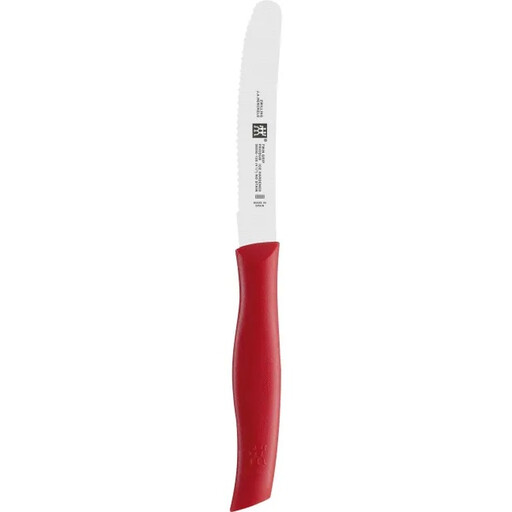
Why this product suits the profile: The 12 cm blade is compact and designed for everyday tasks like slicing tomatoes, bread or sausage. The integrated plastic handle is ready to use straight away, with no complicated assembly needed.
The product details clearly state the blade length, serrated edge and material. This makes it easier to assess its intended use before you buy.
FRIODUR ice-hardened stainless steel blade, ergonomically integrated handle and compact design.
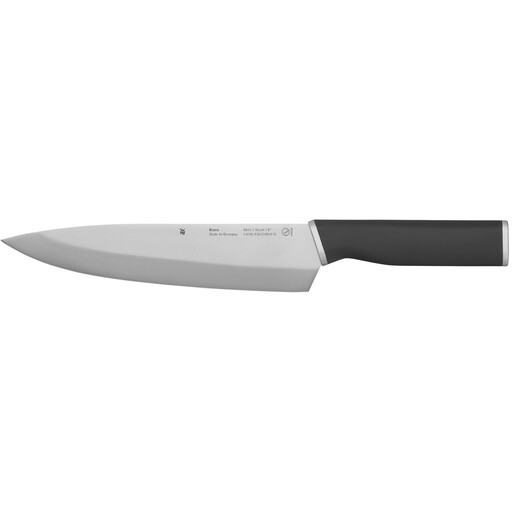
Why this product suits the profile: The 20 cm blade covers a wide range of cutting tasks, including slicing, dicing, chopping and rocking. The details on specially hardened steel and 55–58 HRC offer concrete guidance when making your choice.
Instead of a vague claim about sharpness, the blade length, steel type, hardness range and care recommendations are all provided. This makes an objective comparison much easier.
20 cm chef's knife, ergonomic handle, specially hardened steel and secondary edge bevel according to the product description.
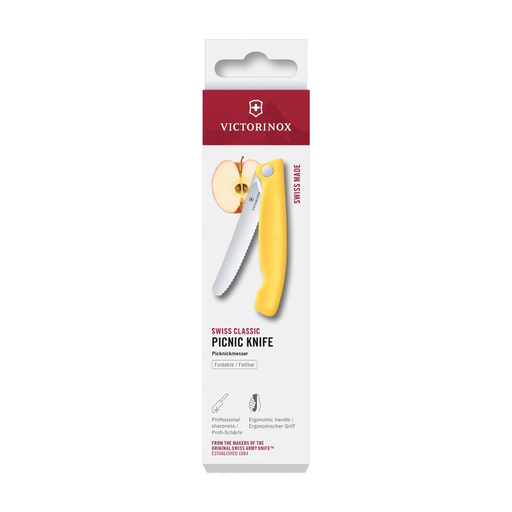
Why this product suits the profile: This folding picnic knife is designed for hikes, travel and meals on the go. According to the product description, the 11 cm serrated blade is suitable for fruit, vegetables and tomatoes, among other things.
The folding design reduces the risk of carrying the blade exposed. However, when carrying it in the UK, you must still comply with the applicable legal requirements.
42 g weight, folding 11 cm blade, polypropylene handle and stated dishwasher suitability.
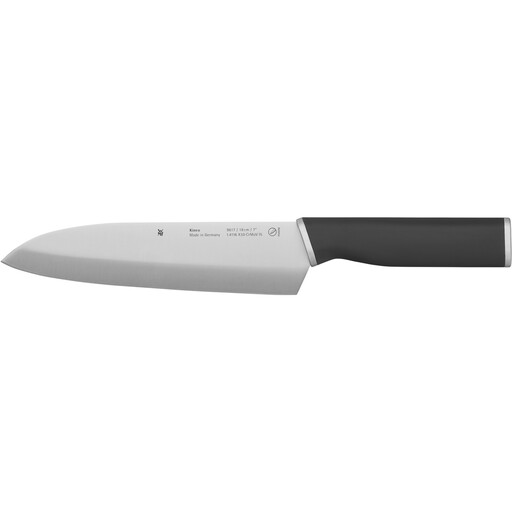
Why this product suits the profile: The 18 cm Santoku blade is designed for cutting vegetables and thin slices of fish. The wide blade shape provides space for your index finger and supports controlled guidance.
The description limits its use to suitable foods and recommends hand washing. This means the knife isn't used as an unsuitable all-purpose tool.
18 cm blade made from specially hardened, corrosion-resistant steel and an ergonomic handle with metal end caps.
Wash a kitchen knife as soon as possible after use and dry it thoroughly. Acidic foods should not be left on the blade for long periods. Sharpening tools must match the blade type; a serrated edge has different requirements to a smooth one.
Loose knives in a drawer increase the risk of injury and can damage the blades. A knife block, magnetic strip, drawer insert or blade guard are all better options. Folding knives should be fully closed before storing. Do not use knives for prying, twisting, cutting frozen food or cutting through bones, unless this is expressly stated as suitable.
We've put together a complete, regularly updated list of products that fully meet these strict selection criteria and the safety regulations in force in the UK.
For many households, a chef's knife between 18 and 20 cm is versatile. If you often cut vegetables and fish, a Santoku knife could be a good choice. For smaller ingredients or quick tasks, an all-purpose knife of 11 to 13 cm is ideal.
The edge retention depends on the steel, how you use it, your chopping board, cutting technique and care. It's impossible to give a general timeframe. Don't cut on glass or stone, and use a sharpening tool that suits the blade. If the edge becomes damaged, stop using the knife.
Not automatically. The specific manufacturer's instruction is what matters. Even when dishwasher suitability is stated, hand washing is gentler on the blade and handle. Knives with wooden handles should generally not go in the dishwasher or be left to soak in water.