
Lieferung heute & morgen

Qualitätsgarantie

Willkommens-Angebote freischalten: KOSTENLOSE Lieferung | Bis zu 80 % RABATT | Kostenlose 30-Tage-JoyPlus-Testphase
App herunterladen
A kitchen knife needs to be more than just sharp. What really matters is whether the blade shape, edge, length, handle and care instructions suit your own cooking habits. If you focus only on eye-catching marketing claims like "extra sharp", "stainless" or "dishwasher-safe", you could easily miss important details.
A large chef's knife can handle many tasks, but it isn't automatically suitable for bread, tomatoes or delicate garnishes. A smooth blade can bruise a soft tomato, whereas a serrated edge usually grips the skin much better. For bread, cakes and pastries, a sufficiently long bread knife makes sense so the blade can glide through the food in just a few strokes.
With dishwasher-safe kitchen knives, cleaning is generally possible as long as you follow the manufacturer's instructions. However, hand washing is still often recommended because high temperatures, detergents and contact with other cutlery can put extra strain on the blade and handle. Knives with wooden handles should generally not go in the dishwasher.
Stainless steel knives are corrosion-resistant, but they are not completely immune to acids, moisture or harsh cleaning agents. After cutting citrus fruits, tomatoes or other acidic foods, the blade should be cleaned and dried promptly. Likewise, the term "forged" alone doesn't tell you whether the handle, balance and blade thickness are right for your intended use.
The right blade length depends on what you're cutting, your work surface and your preferred handling:
The knife shape should match the task. A carving knife or ham knife often has a longer, narrower blade for even slices. A pizza knife or steak knife with a serrated edge, on the other hand, is suited to firm surfaces with a softer interior.
The serrated edge grips hard skins and crusts without you having to apply excessive pressure to the food. This is handy for bread, tomatoes, pizza and certain fruits. A smooth blade is better for controlled cuts, such as chopping herbs or carving.
A Granton edge (or kullenschliff), as specified on the Victorinox Santoku knife, can reduce contact between the blade and the food. This can make it easier to release slices. However, how well it works also depends on your technique, what you're cutting and how you care for the blade.
A non-slip handle supports safe control, especially during longer cutting tasks. Plastic or thermoplastic elastomers are easy to care for and lightweight. Wood can feel comfortable in the hand but requires gentler cleaning.
Loose knives in a drawer increase the risk of damage and cuts. A knife block, a magnetic strip with safe spacing or a drawer insert protects the blades better. With a knife set, you should also check whether the block actually fits in your kitchen and which slots are already taken.
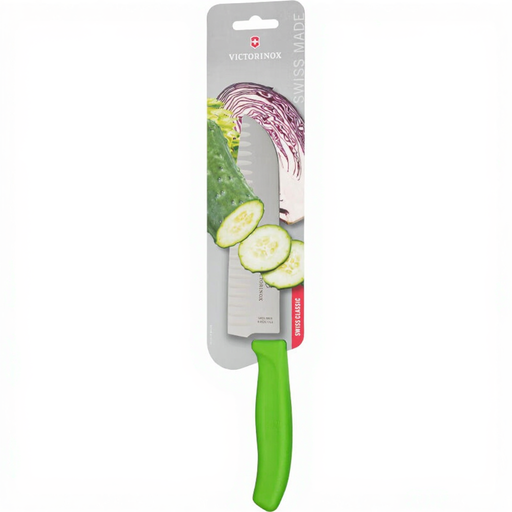
Why this product fits the profile: This compact Swiss kitchen knife covers many everyday cutting tasks and takes up little space in a drawer or knife block.
The 17 cm blade and Granton edge are clearly specified. This makes it easier to match the knife to vegetables, meat and herbs than with a generic all-purpose knife.
Stainless steel blade, plastic handle, 103 g weight and, according to the product information, dishwasher-safe.

Why this product fits the profile: This set is aimed at households that want several knife types, kitchen scissors, a sharpening steel and a fixed storage solution all in one package.
The included knives and sizes are clearly listed: a 10 cm vegetable knife, 13 cm utility knife, 20 cm chef's knife and a serrated bread knife.
Components made from rust-resistant special steel with FRIODUR ice-hardening; bamboo block for protected storage. The product information states dishwasher suitability.
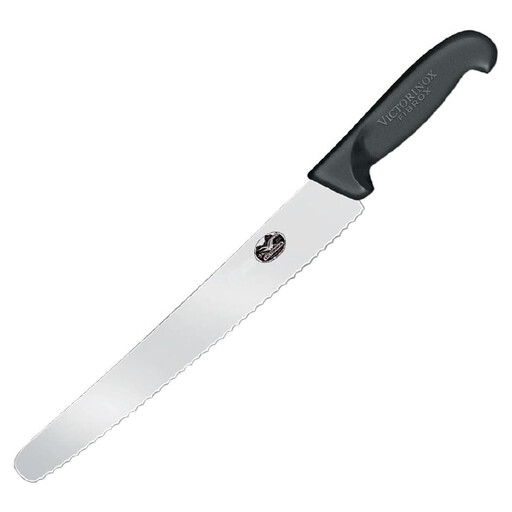
Why this product fits the profile: For households that regularly eat bread, cakes and pastries, the long serrated blade offers a clearly defined purpose.
The 26 cm blade length and serrated edge are clear selection criteria. This means the knife won't be mistakenly seen as an all-purpose tool for every kitchen task.
Stainless steel blade, ergonomic non-slip plastic handle, curved blade design and, according to the product data, dishwasher-safe.
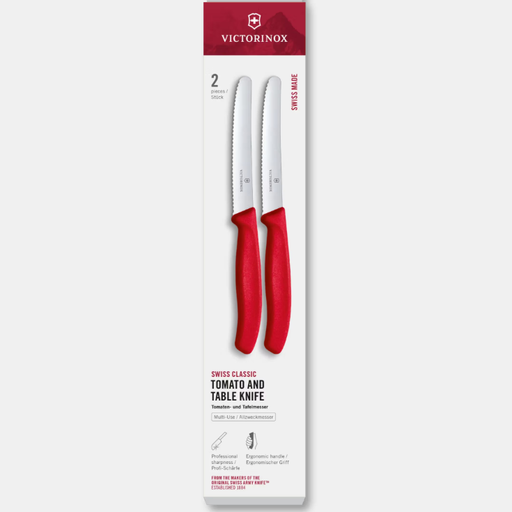
Why this product fits the profile: Two compact serrated knives are designed for tomatoes, soft fruits and use at the table.
The serrated edge is clearly specified for soft skins. This avoids the typical mistake of choosing a smooth blade for delicate foods.
11 cm stainless steel blades, ergonomic polypropylene handles and, according to the product information, dishwasher-safe.
We've put together a complete, regularly updated list of products that fully meet these strict selection criteria and the safety regulations in force in the EU.
With a ZWILLING kitchen knife or a Victorinox kitchen knife, you should always follow the specific care instructions for that product. A knife set with a block is practical if you'll actually use the knives it contains. For occasional use, a single knife can be more economical and take up less space.
A chef's knife between 18 and 20 cm or a Santoku knife around 17 cm is suitable for many daily tasks. For bread, tomatoes, pizza and steak, specialist serrated knives are a better choice, as they are designed for those particular surfaces.
If the manufacturer states dishwasher suitability, cleaning in the machine is generally intended. However, hand washing is still often recommended for gentler treatment. Knives with wooden handles should not be put in the dishwasher.
How long the edge lasts depends on the steel, how often you use it, your cutting technique, your chopping board and how you care for it. Soft wooden boards or suitable plastic boards, along with prompt cleaning and drying, can protect the blade. Regular sharpening is also part of proper maintenance.