
Lieferung heute & morgen

Qualitätsgarantie

Willkommens-Angebote freischalten: KOSTENLOSE Lieferung | Bis zu 80 % RABATT | Kostenlose 30-Tage-JoyPlus-Testphase
App herunterladen
A kitchen knife should cut reliably, feel comfortable in your hand and suit the food it is intended for. However, eye-catching colours, sweeping claims about sharpness or a supposedly versatile design do not automatically make the right choice. If you want to buy kitchen knives, you should therefore pay particular attention to blade type, length, handle and cleaning instructions.
A kitchen utility knife can be used to cut bread, sausage, fruit or vegetables. However, it is often too long for peeling small fruit, while a smooth blade may be less practical when dealing with a hard bread crust. A serrated knife often cuts soft foods with firm skins more controllably, but is not suitable for every precise cutting movement.
A dishwasher-safe kitchen knife may be placed in the dishwasher according to the product information. However, frequent washing can put more strain on the blade and handle than gentle hand washing. Detergents, high temperatures and contact with other cutlery can affect the edge. You should therefore follow the manufacturer’s instructions before buying and after use.
For small foods and delicate tasks, an 8- to 10-cm blade can be easier to control than a large chef’s knife. A vegetable knife or paring knife is designed for removing skins and cutting small pieces. On the other hand, a knife that is too small can require unnecessary force when cutting bread or larger ingredients.
The blade shape determines how the kitchen knife performs:
A tomato knife or a small serrated bread knife can be more versatile in everyday use than a smooth knife of the same length. Honeycomb- or wave-shaped edges are also common on pizza and steak knives.
For small kitchen tasks, around 8 to 11 cm is often easy to handle. A 12- to 13-cm utility knife offers greater reach and may be suitable for bread, cheese or sausage. Weight affects handling: a 20-g vegetable knife can be moved quickly, while a heavier knife may provide more stability when working with larger ingredients.
The balance between the blade and handle is just as important as the blade length. The handle should sit securely and be neither slippery nor unnecessarily bulky. Ergonomically shaped handles can make the knife more comfortable to use during longer food preparation.
Stainless steel is widely used for kitchen knives because it is corrosion-resistant and suitable for daily food preparation. Product details such as FRIODUR ice-hardened stainless steel or hardened stainless steel describe specific material or manufacturing details provided by the respective manufacturer. They do not replace checking the care recommendations.
Also look out for:
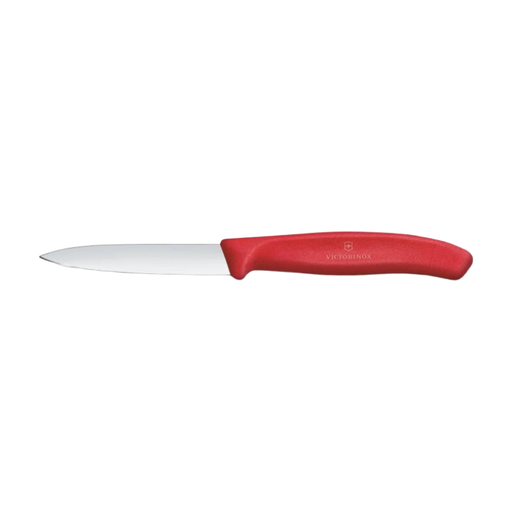
Why this product suits the profile: The 8-cm blade and low weight of 20 g are well suited to small cutting and peeling tasks in the everyday kitchen.
The short, smooth stainless-steel blade is clearly designed for vegetables, fruit and peeling tasks, rather than promising an unclear ‘all-in-one’ function.
Straight blade, polypropylene handle, 8 cm blade length and dishwasher-safe according to the product information.
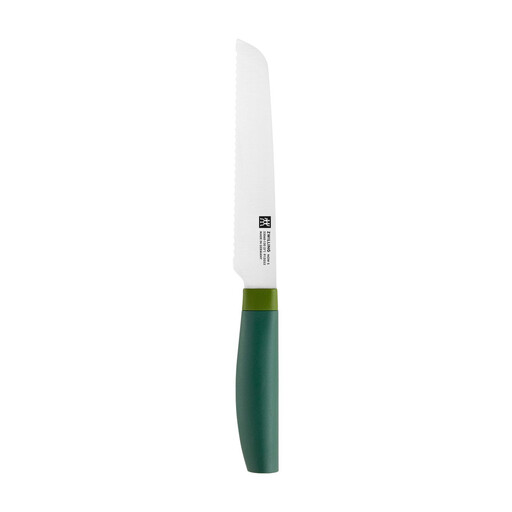
Why this product suits the profile: The 13-cm blade provides plenty of reach for bread, vegetables and other ingredients, while the ergonomic ABS handle is designed for everyday use.
The product details clearly specify the blade length, material, handle and serrated edge. This makes it easier to compare its suitability with your own kitchen routine.
13 cm blade, FRIODUR stainless steel, SIGMAFORGE technology and dishwasher-safe according to the product information; hand washing is recommended to help protect the knife.
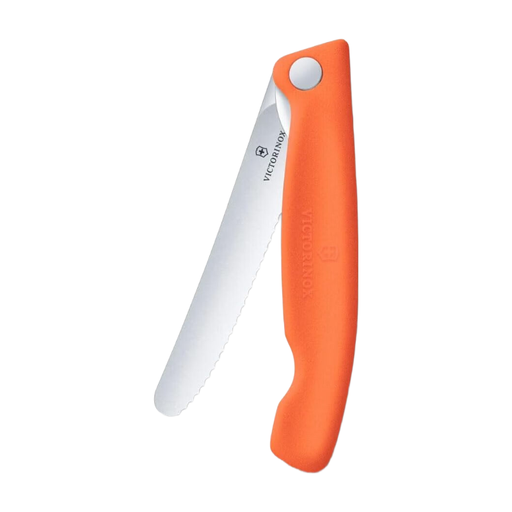
Why this product suits the profile: The folding 11-cm picnic knife is designed for outdoor meals, travel and compact storage.
The serrated edge is specifically described as suitable for firm skins, bread rolls and sausage. The folding construction reduces the exposed blade format during transport.
11 cm serrated edge, folding design, weight of 42 g and dishwasher-safe according to the product information.
For a set table, steak and pizza knives with serrated edges are a good choice, such as the Victorinox Swiss Classic Steak & Pizza Knife with an 11 cm blade. For breakfast and snacks, the WMF snack knife in a set of 2 is worth considering, as the 11-cm blades are designed for bread, cheese, sausage, tomatoes and fruit according to the product description.
If you are looking for a small knife for garnishing and peeling, you could consider the ZWILLING TWIN Grip Paring/Garnishing Knife with a 10 cm blade. For larger, more versatile tasks, a santoku knife with a 17 cm blade may be suitable. What matters is whether a smooth or serrated edge, a shorter or longer blade, and hand washing or dishwasher cleaning fit your own routine.
Knives used on the go are also subject to German regulations concerning the carrying of knives. Before transporting or using one, check the rules currently in force and carry a folding knife closed and securely.
We have put together a complete, regularly updated list of products that fully meet these strict selection criteria and the safety regulations applicable in the EU.
A utility knife with a blade length of around 12 to 13 cm can cover a range of tasks, such as cutting vegetables, sausage, cheese or bread rolls. For frequent peeling and small ingredients, a separate vegetable knife measuring 8 to 10 cm is usually easier to handle.
This depends on the steel, blade shape, usage, cutting surface and care. Hard chopping boards made from glass, stone or ceramic can put greater strain on the edge. A suitable wooden or plastic cutting board, hand washing and safe storage can help preserve the blade’s condition. Without information about how the knife is used, it is not possible to give a reliable specific lifespan.
If cleaning in the dishwasher is important for your household, this feature can be practical. For the gentlest possible care, however, you should still follow the manufacturer’s instructions and dry the knife immediately after washing. With frequent use, hand washing may put less strain on the blade and handle.