
Lieferung heute & morgen

Qualitätsgarantie

Willkommens-Angebote freischalten: KOSTENLOSE Lieferung | Bis zu 80 % RABATT | Kostenlose 30-Tage-JoyPlus-Testphase
App herunterladen
LED lamps differ in more than just shape and colour. For German households, the most important considerations are suitable brightness, sensible controls, safe installation and manageable energy consumption. If you choose based solely on design or wattage, you may only discover after purchase that the light is too dim, the app does not work with your system or the battery needs replacing more often than expected.
Wattage primarily describes power consumption, not the actual amount of light produced. For comparisons, luminous flux in lumens (lm) is more informative. A decorative LED table lamp with 30 or 40 lumens is suitable as an accent light or night light, but it cannot replace a functional LED desk lamp or ceiling light.
Before buying a smart LED lamp, check which standard it uses to connect. Wi-Fi lights often require a 2.4 GHz network, while Bluetooth Mesh lighting may require a gateway for remote access or voice control, depending on the model. Matter compatibility also does not mean that every function will be available immediately without setup.
A wireless LED lamp or battery-powered lamp does not need a socket at its installation location. However, you should consider the battery capacity, battery type, charging time and operating duration. With permanently fitted LEDs, it is also important to check whether the light source can be replaced. In many compact lights, the LED module cannot be replaced separately.
Luminous flux in lumens helps you assess brightness:
Colour temperature in kelvin (K) describes the character of the light. Warm white light typically falls within the range of around 2700 to 3000 K, while neutral white light is often around 4000 K. Models with a CCT setting allow you to choose between 3000, 4000 and 5000 K, for example. An RGBW table lamp adds changeable colours to adjustable white light tones.
The CRI or Ra value describes colour rendering. A value of Ra ≥ 80 is specified for the products mentioned and provides a relevant comparison value for indoor spaces. If you want colours to appear as accurately and distinctly as possible, this is a parameter worth checking.
A dimmable LED lamp allows you to match the brightness more closely to the situation. It is important to check how the lamp is dimmed:
These options are not automatically compatible. With a smart LED recessed spotlight, for example, dimming may only be possible via the app. A conventional wall dimmer would then not be suitable.
For an LED wall lamp or pendant light, check the wall or ceiling material, cable outlet and fixing points. With an LED recessed spotlight, the cut-out diameter is crucial. A model requiring a ceiling cut-out of 120 to 130 mm will not fit an opening of 200 mm.
The IP rating should suit the intended location. IP20 is designed for dry indoor areas and is not suitable for bathrooms, outdoor areas or damp zones. Electrical work on 220–240 V lights should be carried out by a qualified electrician. Disconnect the power supply before installation, cleaning or repositioning.
The following recommendations categorise specific LED lamps according to their intended use and the objectively stated features.

Why this product suits this profile: The compact glass lamp requires two AAA batteries and can be placed on a bedside table, shelf or side table without installation. It is designed to provide soft, decorative ambient lighting indoors.
The required batteries and compact size are clearly stated. This makes it easier to assess mobile use than with a lamp that provides no information about its power supply.
Glass housing, 15.5 cm height and battery-powered operation without a socket.
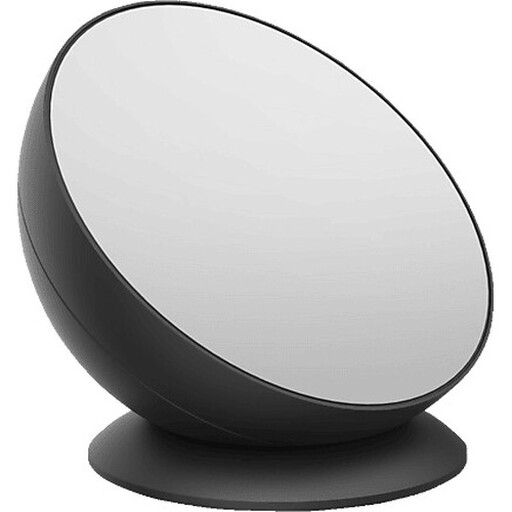
Why this product suits this profile: This freestanding smart LED lamp combines RGBW lighting, adjustable white tones and app control. It can be used on a desk, side table or bedside table.
The product specifies the required 2.4 GHz Wi-Fi and the supported voice assistants. This allows you to check compatibility with your smart home set-up in advance.
6 W power consumption, dimmable, RGBW colours, Matter compatibility and app or voice control.
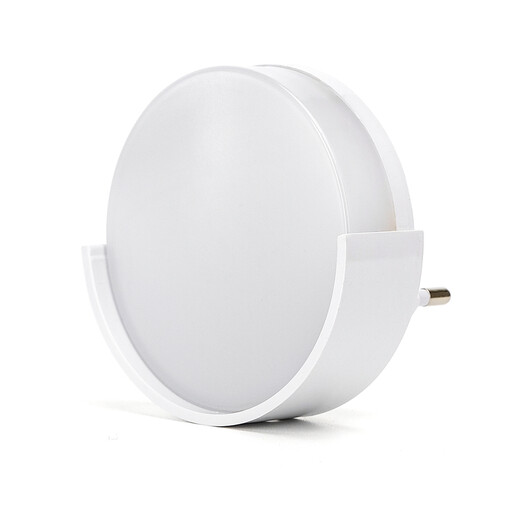
Why this product suits this profile: This LED night light is designed for hallways, children’s bedrooms or stairways and switches on automatically when the ambient light level falls.
The sensor value of under 20 lux, direct socket operation and the fact that no battery is required are clearly specified. This reduces the need for recharging and replacing batteries.
1 W, 40 lm, 6500 K, IP20 for dry indoor areas and a specified service life of 25,000 hours.
For a rough calculation of electricity costs:
Power in kW × operating hours × electricity price = cost
For example, a 6 W light uses 6 kWh over 1,000 operating hours. The exact amount depends on the electricity tariff. For battery-powered lamps, you should also factor in the cost of AAA or AA batteries, or the cost of recharging.
Figures such as 25,000 or 30,000 hours are technical manufacturer specifications for the intended service life. They are not a guarantee of a specific period of use in an individual household. Heat, frequent switching, mains quality and the surrounding environment can all affect the actual service life.
Possible options for a hallway include an LED night light with a twilight sensor, an LED wall lamp or a suitable LED ceiling spotlight. Sufficient brightness, the beam angle and an IP rating suitable for dry indoor areas are the key considerations. In longer hallways, an even distribution from several lights may be more practical than a single light source.
That depends on the communication standard. A Wi-Fi light can connect directly to a 2.4 GHz network. Bluetooth Mesh products can often be paired locally at first, but a gateway may be required for remote access or certain voice functions. Before buying, check the specifications of the relevant model against your existing smart home system.
The technical service life is given in hours and is in the tens of thousands for many models. For your purchasing decision, also consider the warranty conditions, whether the light source can be replaced, heat dissipation and the intended environment. An LED lamp designed for dry indoor areas, for example, cannot automatically be used outdoors or in damp rooms.