
Lieferung heute & morgen

Qualitätsgarantie

Willkommens-Angebote freischalten: KOSTENLOSE Lieferung | Bis zu 80 % RABATT | Kostenlose 30-Tage-JoyPlus-Testphase
App herunterladen
LED strips are ideal for indirect lighting behind the television, beneath wall units, in shelving or inside wardrobes. Before buying, however, the number of colours is not the only consideration. Power supply, IP rating, brightness, length and control options determine whether an LED strip is genuinely suitable for its intended everyday use.
A 5 m LED strip may be long enough for a wall or the back of a television. For smaller pieces of furniture, however, five metres is often too much. It is important to check whether the LED strip can be shortened at marked cut points. Cutting in the wrong place can damage the strip and, if modified incorrectly, create a safety risk.
Before installation, plan the route, the position of the power supply and the length required. The LED strip should not be sharply bent around corners. An aluminium profile may also be useful for an even lighting effect, particularly with longer installations.
An RGB LED strip can create colourful lighting effects, but it is not automatically suitable for focused work or lighting a worktop. Check the information on colour temperature in Kelvin:
Light output in lumens is also relevant. A compact LED light bar with around 150 lumens may be sufficient as supplementary lighting by a mirror or inside a cupboard. For a larger area, you will need a correspondingly higher light output or several light sources.
A self-adhesive LED strip generally adheres better to smooth, dry surfaces free from dust and grease. Rough, dusty or damp surfaces can reduce adhesion. Clean the surface before installation and press the LED strip down evenly.
With painted furniture, wallpaper or delicate surfaces, first test in an inconspicuous area to check whether the adhesive strip can be removed without leaving residue. Magnetic holders or profiles are an alternative mounting option if you expect to reposition the strip frequently.
A USB LED strip or USB LED light bar is practical when there is no fixed socket nearby. With battery-powered models, you should also compare battery capacity, charging time and operating time. An automatic shut-off function or an LED strip with a motion sensor can reduce everyday energy consumption in cupboards and hallways.
Mains-powered models typically provide a constant power supply, but they require a socket and a suitably positioned power adapter. Use the supplied power adapter and the specified voltage, and do not cover the power adapter during operation.
With an LED strip controlled by remote control, the range and technology used are important. Infrared remote controls generally require line of sight. App control via Wi-Fi, on the other hand, allows you to use scenes, schedules and voice commands. An LED strip with Wi-Fi should be compatible with your existing 2.4 GHz network.
A Smart LED Strip with Matter support can, depending on the product and setup, be connected to platforms such as Apple Home, Google Home, Amazon Alexa, Samsung SmartThings or Home Assistant. Matter simplifies the integration of compatible devices, but it does not replace checking the specific app and network requirements.
Also check whether a hub is required. According to the product information, the RGBCCT model described connects directly via your home Wi-Fi when the Hama Smart Home app is used.
The IP rating is indicated by the IP code. IP20 is intended for dry indoor areas and does not provide protection against water or high humidity. IP44 offers greater protection against splashing water, but does not mean the product is suitable for submersion. A model with IP44 may be suitable for sheltered areas, but it should not be left permanently exposed to rain.
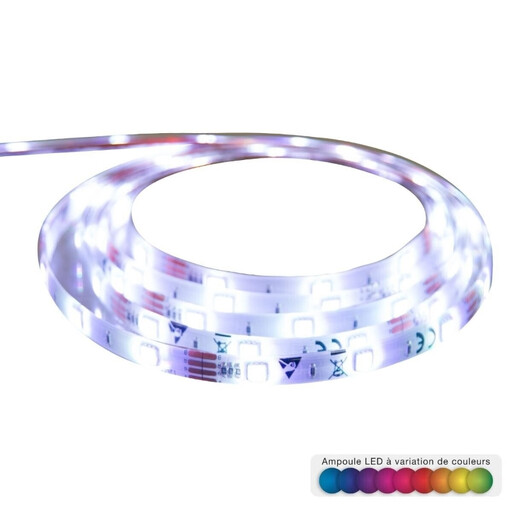
Why this product suits this profile: This mains-powered 5 m model is aimed at shoppers looking for straightforward decorative lighting with a remote control, for example behind a television, along a shelf or beside an indoor staircase.
The stated length, power adapter and IR remote control are included as part of the set. The IP20 rating also makes it clear that the product is intended for dry indoor areas.
5 m length, 150 LEDs according to the product description, self-adhesive backing and remote control.
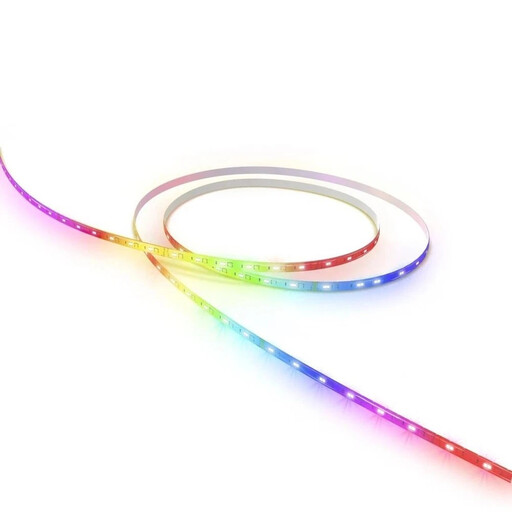
Why this product suits this profile: This model is an appealing choice for smart home users who want to combine RGB colours, adjustable white tones, dimming and app control in one LED strip.
RGBCCT covers coloured light and adjustable white tones from 2,700 K to 6,500 K. The marked cut points and 5 m length make planning easier, provided the cut points are observed.
Matter and Wi-Fi compatibility, stepless dimming, scenes and schedules according to the product information; IP20 for dry indoor areas.
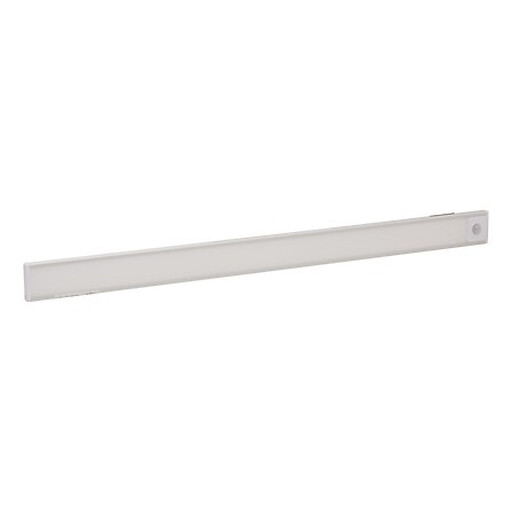
Why this product suits this profile: For wardrobes, storage areas, shelving or worktops, a compact light bar with a motion sensor is often more practical than a long LED strip.
The automatic shut-off after around 30 seconds prevents the light from staying on continuously inside a cupboard. Installation is via a magnet and 3M adhesive strip.
60 cm length, 6,000 K colour temperature, USB battery, motion detection up to around 2 m and approximately 150 lumens according to the product description.
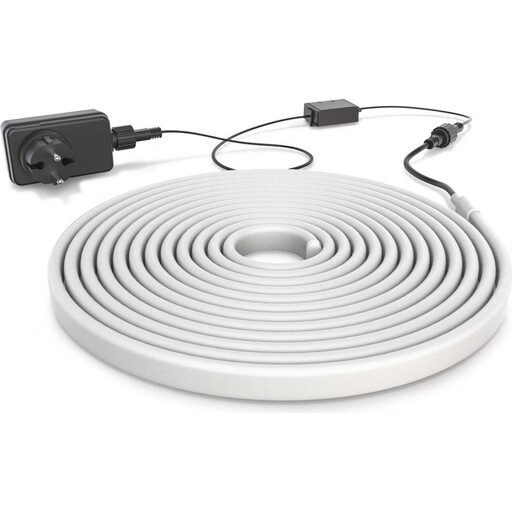
Why this product suits this profile: This 5 m model is designed for users who need dynamic multi-colour effects, app and voice control, as well as a higher IP rating for sheltered areas.
The IP44 rating gives a clearer indication of the intended protection against splashing water than IP20 models. However, the strip is not designed for submersion and should be installed in a sheltered position.
RGBIC effects, dimming, Matter, remote control and 300 lumens according to the product information; maximum power consumption 24 W.
We have put together a complete, regularly updated list of products that fully meet these strict selection criteria and the safety regulations applicable in the EU.
First, unroll the strip completely and plan its route as a trial. Clean the mounting surface, gradually peel off the protective backing and press the LED strip down evenly. Only then connect the power adapter and controller. Cut the strip exclusively at the marked points and follow the installation instructions.
The actual lifespan depends, among other things, on operating time, heat dissipation, the power adapter and build quality. A standard lifespan cannot therefore be applied to every model. Switch the product off when you will be away for an extended period, ensure sufficient ventilation and use only the specified power adapter.
Running costs depend on power consumption, daily usage time and your electricity tariff. For example, a 24 W model uses 0.12 kWh per day when operated for five hours. For a more precise estimate, multiply the power consumption in kilowatts by the operating hours and your current price per kilowatt-hour.